Chapter 9 – The Bride Who Came Back
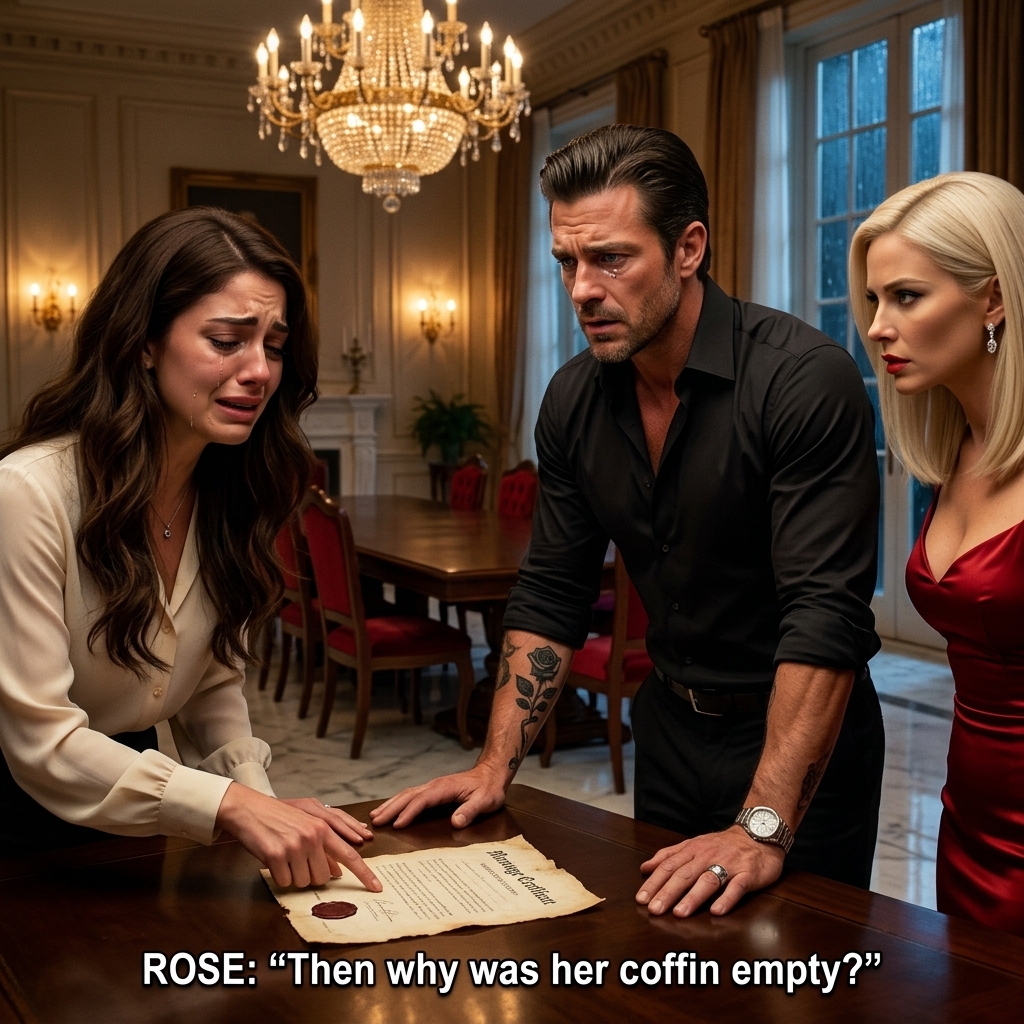
Rose arrived with a warning that someone had asked about the documents that morning. They spoke in low voices because neither trusted the walls anymore. They were not yet friends, and their disagreements were often more revealing than their agreements. Elena wanted an answer that could be used in court. Rose wanted a human explanation. Neither was willing to sacrifice one for the other.
“Don’t tell me what you think happened,” Elena said. “Tell me what you can prove.”
Elena entered the safe meeting room without the theatrical certainty Lorenzo had imagined. She was thinner than in the photographs and carried herself like someone who had learned to check exits before faces. Rose crossed the room first. The sisters held each other so tightly that neither spoke for a long time. Lorenzo remained still, afraid that moving would break the moment.
“You were there,” he finally said. “I held someone.”
“I know,” Elena answered. “Her name was Isabel Torres. She was carrying evidence for the investigators. She wore my coat and veil to get through the gate. I never meant for her to die.”
Elena described the explosion, the emergency transfer, and the false identification that followed. She had survived because Arthur moved her before the men returned. She stayed hidden after learning that Vittorio had people inside the clinic and the family law office. She had wanted to contact Rose, but the people protecting her warned that any direct approach could expose them both. Rose listened with tears and anger. Being alive did not erase the pain of choosing silence. Elena accepted that without defending herself.
At a small room overlooking the river, Elena made a small decision that felt larger than it should have: to leave the door open while Rose spoke. In the De Luca household, doors were usually closed before anyone mentioned a problem. The openness did not guarantee safety, but it meant the conversation would not become another secret hidden in a locked room. On the table lay a sealed witness affidavit. The detail looked ordinary when separated from the fear surrounding it, and that ordinariness was exactly what disturbed Elena.
“What is the difference between protecting someone and deciding their life for them?” Elena asked.
Elena entered the meeting room wearing a navy coat and shoes too practical for the bride Lorenzo remembered. Rose stood so quickly that her chair fell backward. For a moment neither sister moved. Then Elena opened her arms, and Rose crossed the room with a sob that seemed to come from eight years of waiting. Lorenzo remained by the window. He wanted to apologize, to ask why she had not called, to say he had buried her. Elena looked at him and said, “You buried a story they gave you.” The sentence struck harder than anger. She explained that she had been injured in the explosion and moved through a private clinic before investigators could secure her safety. She had not been free to contact everyone she loved.
Elena named Isabel Torres, a contract worker hired to wear a bridal gown during a diversion at the venue. Isabel had died in the blast; her identity had been obscured by the confusion, and the identification was then deliberately altered. Elena did not pretend she knew every detail of Isabel’s final minutes. She insisted the investigation treat Isabel as a person, not a convenient substitute corpse. Lorenzo recalled holding a woman with a pearl earring in the smoke. He had assumed the earring proved she was Elena. Now he understood how someone could have placed the same jewelry on another woman. Rose watched his grief change shape. He had not stopped mourning; he had discovered he had been mourning the wrong death under the wrong name.
Elena described the financial records she had copied before the explosion. Vittorio had been diverting foundation money through companies controlled by his associates, and she had arranged to give the records to an investigator. The explosion was ordered to destroy the evidence and silence her. She had survived because a staff member pulled her through a service exit. She refused to tell Lorenzo every detail of her protected years; some belonged to people who had risked their lives for her. Bianca, invited into the room only after Elena agreed, apologized without trying to claim the role of victim. Elena answered that an apology could begin a reckoning but could not end it. Then Chen entered with news that Vittorio had ordered a search for the surviving bride.
The next difficulty was not a gunman or a threat shouted from a car. It was a contradiction between two pieces of paper. Rose compared the true victim’s hospital identification against the dates already established. One entry could be explained by an error; the next required a person to have acted deliberately. Lorenzo drew a line beneath the inconsistency and asked whether the original could be obtained without warning whoever had altered the file.
The supervised meeting lasted less than an hour because Elena tired easily when she spoke about the blast. Rose wanted to ask a thousand questions, starting with why her sister had not attended their mother’s funeral. Elena answered the hardest one first. She had learned of the death too late, through a channel that could not safely be used for travel, and she had lived with the guilt ever since. Rose wanted to blame her. Instead she held Elena’s hand and felt the warmth of someone she had spent years imagining cold beneath the earth. Lorenzo asked whether they could begin again. Elena told him there was no beginning available until he acknowledged the woman who had died in her place. Isabel Torres had a family, a childhood and a name worth restoring. Elena had brought the address of Isabel’s surviving brother, but she insisted the approach be made through a victim-support liaison, not a mafia emissary. Lorenzo agreed. The meeting ended when Chen received a warning about the building’s security. Rose and Elena embraced once more, then separated into different vehicles. Rose hated the separation but understood why it mattered. Their reunion had not ended the danger; it had made the stakes human again.
By evening the argument had become personal. Bianca accused Lorenzo of caring more about a black-and-white wedding photograph than about the people who had been hurt. Lorenzo answered too sharply, then regretted it when Bianca looked away. They were both exhausted by the need to be brave in rooms where everyone else seemed to possess a hidden advantage.
A memory returned in fragments, not in the clean sequence of a confession. Bianca recalled the smell of wet wool, the scrape of shoes on stone, and someone using a name that did not belong in that room. None of it was sufficient evidence. Elena insisted they separate recollection from record. Together they wrote two columns: what someone had seen, and what someone had been told. the woman who died was an undercover courier named Isabel Torres belonged in only one of those columns until they could verify its origin.
“It’s crueler to let somebody else use that night to control them,” Elena replied.
The confrontation with Lorenzo began badly. Nobody was prepared to be generous, and each person arrived carrying a different version of the same history. Elena placed Elena had stayed hidden to protect a surviving witness where everyone could see it, then stepped back. Lorenzo reached for it, stopped, and asked permission. That small hesitation surprised them all.
“You don’t get to rewrite what happened because the truth is inconvenient,” Elena said.
They tested the new lead against the least dramatic explanation first. Could a sealed witness affidavit be a clerical mistake? Could a witness have misremembered the order of events? Could someone have copied a signature without knowing what it authorized? Rose insisted on asking those questions even when the answers might disappoint Lorenzo. A good story would have accepted the most sensational possibility. They needed a true one.
On the way back through a rain-dark street, Lorenzo noticed how easily fear could disguise itself as loyalty. A person could say they were protecting the family while protecting only its most powerful member. A person could claim to be protecting a sister while refusing to let that sister make her own choices. Bianca listened as Lorenzo struggled to say the distinction aloud.
Elena left the supervised meeting with a promise to testify and a refusal to return to the mansion. Rose understood both decisions, even though every part of her wanted to keep her sister close. Lorenzo watched the car disappear and turned toward Bianca, who had waited outside at Elena’s request. Bianca asked whether he intended to choose between them. “That isn’t the question anymore,” he said. “I need to find out who I became while I believed a lie.” Elena’s investigator arrived carrying a sealed photograph of Isabel Torres, the woman whose death had been hidden beneath Elena’s name. The photograph showed Isabel smiling beside her younger brother at a family picnic. Rose felt a new grief enter the story. Someone else’s family had spent eight years without the truth. Before they could leave, Chen received an urgent message: a search warrant had been issued for a storage unit controlled by Vittorio, and the inventory listed a second bridal gown. This one carried blood traces that did not match Isabel’s records.