Chapter 8 – The Hall of Valor
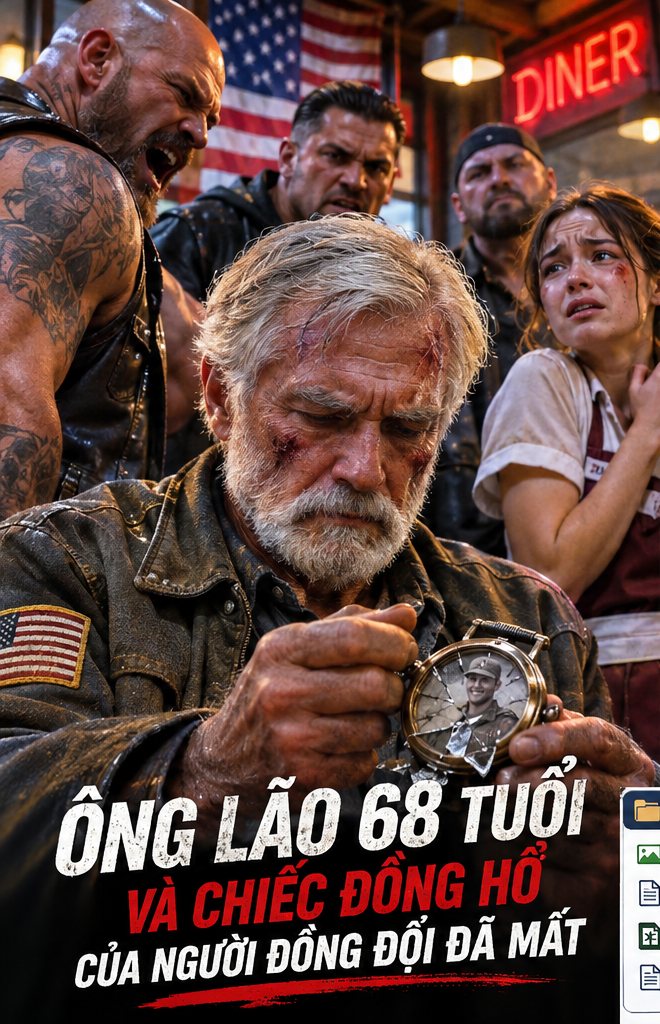
The Hall of Valor glittered beneath chandeliers and television lights. Veterans in dress uniforms shook hands with donors. A brass band played near an exhibit of military photographs, and servers carried trays past a huge portrait of Colonel Edward Vance. His speeches about sacrifice had raised millions of dollars. His private contractors had spent just as much making sure nobody asked where the money went.
Robert arrived in a plain dark suit with the old watch under his cuff. The face remained cracked, but Lily had found a watchmaker willing to secure the loose glass so it could be worn safely. Emily walked beside him. Samira and Daniel entered separately, while Pike stayed with federal officers outside the building.
Robert noticed men and women wearing ribbons from different generations, some walking with canes and others guiding family members. He felt anger that their genuine sacrifices were being used to decorate a dishonest ceremony. He reminded himself that the guests were not the enemy.
There was another layer to the scene, one that would be invisible to anyone reading only the final testimony. Pride had to be swallowed. Old arguments returned without warning. Some memories were more reliable than others, and nobody was immune to the relief of accepting an answer that made life easier. The careful choice was to keep asking what could be demonstrated, what had only been assumed, and what remained unknown. That discipline did not make the emotional pain disappear. If anything, it made the pain sharper because it prevented an easy story from taking its place. But it gave the people involved a way forward that did not require becoming like the men who had threatened them.
Vance saw Robert before the cameras did. For one second the colonel’s practiced smile disappeared. Then he crossed the room and embraced him for the photographers. “Captain Hale. What an unexpected pleasure.” Robert did not return the embrace. “You’re honoring Thomas tonight,” he said. “I thought I should hear the story.”
Emily rehearsed her question in a quiet hallway until the words no longer shook. She wanted to ask about the radio call, not accuse a man before the evidence was heard. Robert offered to stand beside her. She said he could, but she would speak herself.
The surroundings seemed to acquire a different weight once the possibility of danger was spoken aloud. Ordinary objects became reminders of vulnerability or small means of protection. A door was a way out; a window could expose someone; a scrap of paper could preserve something a powerful person wanted destroyed. It was not the knowledge of a secret that made somebody courageous. It was the decision to handle that knowledge without treating other lives as pieces in a game. The people sharing the room came from different generations, with different expectations of authority and safety. They did not agree on every method. What held them together was the simpler understanding that none of them should be asked to pay for another person’s dishonesty alone.
Vance lowered his voice. “Be careful which story you believe.”
The ceremony began. Vance recited the official history of Lantern Bridge: unpredictable enemy fire, a tragic sacrifice, desperate attempts at rescue. The audience listened in respectful silence. Emily watched the man at the lectern speak about a father he had betrayed, and her fingers tightened around the folded program.
The venue technician had read the court notice and checked its authenticity with an attorney. He did not want to risk his job, yet he knew the recording was lawful evidence. When Vance ordered him to erase it, he refused quietly and kept the system running.
The silence afterward was not empty. It contained everything nobody was ready to say and every question that could not yet be answered. Some questions belonged to the past: who had known, who had lied, and when the first chance to stop it had been lost. Others concerned the next hour and were more urgent. Was anyone being watched? Could a witness leave safely? Would a frightened friend answer a phone call? In that uncertain space, the difference between a useful plan and an angry impulse became clear. Action had to follow facts rather than replace them. That rule felt painfully slow, especially to people who had already waited too many years, but it was the only way their hard-won evidence could outlast the next confrontation.
When Vance announced a memorial scholarship in Thomas’s name, Emily stood. A camera turned toward her. “My father has a daughter,” she said clearly. “And she wants to know why you erased his last radio call.” The room fell silent. Vance tried to smile. He said there were procedures for addressing concerns and that grief could distort old memories.
Samira had worn an ordinary navy dress rather than military colors. She introduced herself by the name she had chosen to keep. When someone whispered that she was an actress, she presented her identification and the records of her resettlement without raising her voice.
Every person present carried a private version of the same question: what would happen if they refused to cooperate with the fear around them? Not everyone could risk the same thing. Age, family, money, health, and history changed the price of speaking. Recognizing those differences did not mean accepting injustice. It meant helping one another shoulder the danger with as much care as possible. The conversation moved through small practical matters as well as larger moral ones, and that was appropriate. Somebody needed to remember a telephone number, another person needed to keep the door clear, and someone had to think ahead to what investigators might need. Courage became a series of ordinary tasks performed when turning away would have been easier.
Then Samira rose from the rear of the hall. “My name is Samira Rahman. Your report says I died eighteen years ago.” The band’s instruments rested untouched. Guests began lifting phones. Vance signaled security, but two officers standing near the doors stepped into the aisle instead of approaching Samira.
Vance used phrases such as operational ambiguity and national security, words designed to make questions sound disloyal. Robert listened carefully. He had heard good officers use those words to protect real secrets, and bad ones use them to conceal ordinary greed.
What stayed with them was not merely the discovery but the way it changed familiar faces. A person who had seemed helpless could become decisive; someone thought to be certain could suddenly hesitate. Trust was not a single declaration made once and honored forever. It had to be tested against actions, especially when the truth was inconvenient. That knowledge made the hours feel longer, but it also gave structure to their choices. They could examine claims, protect the vulnerable, and refuse to let intimidation determine the order in which facts were considered. In the years to come they would remember this stretch of time as an exhausting chain of decisions, each imperfect, each made with the hope that the next person would have a fairer chance.
Daniel connected his recorder to the venue’s authorized audiovisual system with the event technician’s help. The technician had received a copy of the court preservation notice and agreed to protect the evidence. Thomas’s voice filled the hall: NEGATIVE. CIVILIANS STILL INSIDE. The crowd heard the fear, the resolve, and the command that came next.
A teenager in the back row began broadcasting the moment Samira announced her name. Within minutes relatives of lost service members were asking questions online. The ceremony could no longer be reduced to one camera operator or one official transcript.
The people involved were learning to distinguish between revenge and accountability. Revenge would have promised a brief moment of satisfaction and left the underlying danger intact. Accountability required names, evidence, witnesses, and people willing to endure the slow scrutiny of institutions that might fail them. The distinction was especially hard for those who had seen a loved one harmed. Every new fact seemed to invite an immediate response. Yet the moment also showed why restraint could be an active, demanding choice rather than a sign of weakness. Holding to the truth was not a way of avoiding a confrontation. It was the decision to make the eventual confrontation about what really happened instead of what anger wished had happened.
Vance shouted for the recording to stop. He ordered the cameras cut. But the guests had already begun streaming the testimony, and federal officers entered with warrants. Pike stood behind them. Trent came forward under escort and identified himself as the communications specialist who suppressed the evacuation call.
Vance did not surrender easily. He accused everyone of inventing a conspiracy. He spoke of classified operations, dangerous enemies, and reputations destroyed by people who did not understand war. Robert listened until Vance looked at Emily and suggested Thomas had disobeyed orders for selfish reasons.
Trent walked between two federal agents without handcuffs, visibly frightened. He had agreed to testify and was being protected, not celebrated. His presence contradicted a death notice printed eighteen years earlier and gave the audience a reason to listen to the records.
There were details in that moment that nobody would ever put into an official report: the uneven light, the scrape of fabric, the slight delay before anyone decided what to say. Those were the things memory preserved after the sharpest words had faded. It was tempting to pretend that dramatic decisions happened in isolation, with a clean distinction between the brave person and the frightened person. In reality, every choice followed dozens of smaller ones, including the decision to look carefully rather than turn away. By the time anyone recognized that the situation had changed, they were already part of it. The consequences would spread farther than the people present could imagine, and some would never know which quiet second had redirected the rest of their lives.
Robert stepped onto the stage. “He disobeyed an unlawful order to abandon civilians,” he said. “He gave his life to keep faith with the people we promised to protect. You don’t get to borrow that sacrifice for applause.”
The black case carried by the fleeing guard looked small enough for a laptop. Daniel recognized its contractor seal from Lantern Bridge. The escape turned a solemn revelation into a race to preserve evidence, and Robert understood that the truth could still be stolen even after it was spoken.
Nothing about the surrounding world had paused to respect the danger. A light continued to burn; a vehicle passed outside; somebody somewhere was preparing dinner without knowing what was happening here. That ordinary continuity made the fear feel strangely private. The people who lived through it would later disagree about the order of small events, but not about the feeling of having to act before they possessed enough information. Waiting for certainty was attractive because it sounded responsible. Yet there were moments when uncertainty was the only condition available, and a person still had to decide whom to protect. What mattered was not a perfect instinct. It was a willingness to reconsider the first impulse and choose the action that caused the least harm.
The hall erupted. Vance’s chief security officer suddenly moved toward the emergency exit, carrying a black case. Samira recognized it from the photograph of Farid’s records. The man did not wait to be challenged. He ran, striking a server and sending glass crashing across the floor.
Pike sprinted after him. Robert followed only when he saw the man’s hand reach for a small transmitter. From the control room, an alarm began to sound. Every screen in the hall went dark except one. On it appeared the word PURGE, followed by a countdown from sixty.