Chapter 7 – The Man Who Never Fired
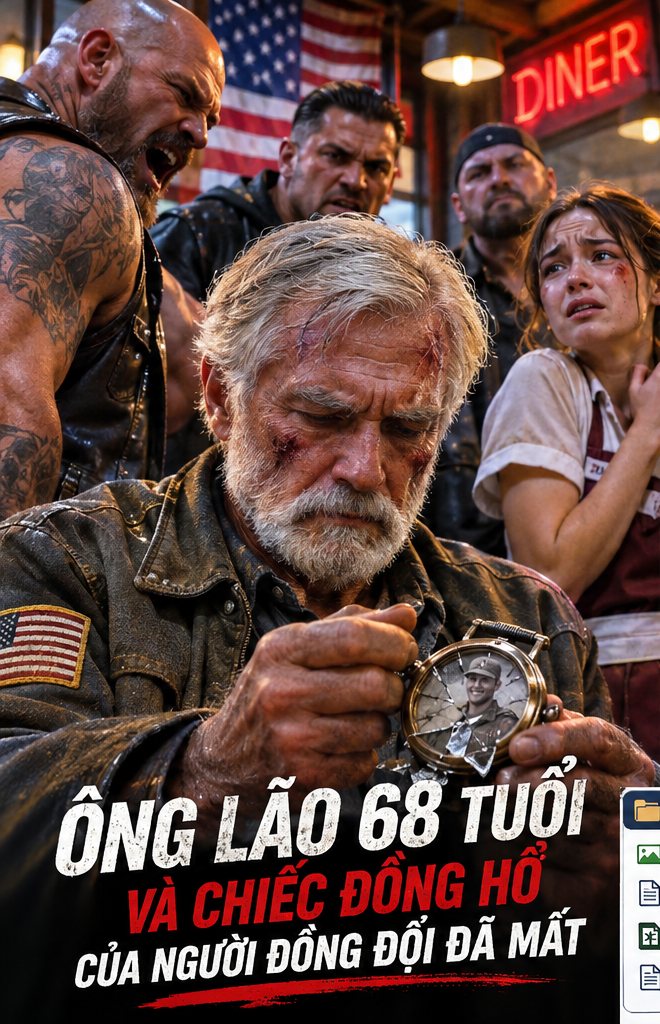
Michael Trent had spent eighteen years rehearsing the sentence he would say if he ever faced someone from Lantern Bridge again. In Samira’s apartment, that sentence vanished. The woman he had once carried through floodwater was grown now, standing opposite him with an emergency medical kit in her hands and a face full of suspicion.
“I didn’t come to hurt you,” he told her. “I came because Vance has decided you’re a liability.”
Samira placed a chair between herself and Trent, within reach of the apartment door. She had learned not to mistake a calm voice for a safe person. When he claimed to be sorry, she asked for names and documents instead of accepting the apology.
Nothing about the surrounding world had paused to respect the danger. A light continued to burn; a vehicle passed outside; somebody somewhere was preparing dinner without knowing what was happening here. That ordinary continuity made the fear feel strangely private. The people who lived through it would later disagree about the order of small events, but not about the feeling of having to act before they possessed enough information. Waiting for certainty was attractive because it sounded responsible. Yet there were moments when uncertainty was the only condition available, and a person still had to decide whom to protect. What mattered was not a perfect instinct. It was a willingness to reconsider the first impulse and choose the action that caused the least harm.
Samira kept her telephone connected to Robert and did not put it down. Trent admitted he had helped Vance manipulate communications after the mission. He had been frightened, young, and convinced that refusing would send him to prison for a crime someone else committed. Then Vance manufactured his death and gave him a new name. Trent had spent years doing favors that he called necessary, each one making the old lie stronger.
Trent said his parents had attended a closed-casket funeral for him. He watched from a car at the cemetery and did not have the courage to call them. Every year he told himself another year of silence would make the deception less painful. It never did.
A person looking in from a distance might have mistaken this exchange for a minor incident, quickly forgotten once everyone went home. To those inside it, the smallest gesture carried a meaning that did not fit into a headline. There was a difference between being silent because one had surrendered and being silent because one was listening. There was a difference between a warning delivered for show and a warning that cost someone courage to give. Later, as the evidence accumulated and the names became familiar, it would be easy to explain the scene as inevitable. It had not been inevitable. It depended on somebody noticing one detail and refusing to treat the person beside them as expendable.
Robert arrived with Emily and Pike while Trent was still talking. There was no fight. Trent put both hands on the table where everyone could see them. He said Thomas Ward had been alive when the official withdrawal order was transmitted. Vance had ordered Trent not to call for a second helicopter. Thomas used a field radio to reach the medical convoy instead. Trent heard the message and chose to remain silent.
The recording contained the distant rattle of a helicopter and someone coughing beside the microphone. Emily could hear Thomas take a breath between commands. The small human sound reached her more deeply than any medal or formal citation ever had.
For years the people at the center of this story had tried to make their lives small enough for trouble to pass them by. They learned routines, memorized faces, and made agreements with themselves about what could safely be discussed. Now those habits offered little comfort. The situation demanded something more difficult than a quick show of strength. It demanded patience, accuracy, and an understanding that fear could make otherwise decent people careless. Nobody could undo the past by being reckless in the present. Each step required thinking about the people who would have to live with its aftermath. The most important decisions were often the least cinematic: keeping a record, calling someone trustworthy, checking a door, or refusing to spread an accusation before it could be proved.
“Why tell us now?” Emily asked.
Robert asked Daniel to make three encrypted copies, then printed a plain-language timeline for the investigators. He had once relied on superior officers to preserve the record. This time the record would exist in too many places to be erased by a single order.
There was another layer to the scene, one that would be invisible to anyone reading only the final testimony. Pride had to be swallowed. Old arguments returned without warning. Some memories were more reliable than others, and nobody was immune to the relief of accepting an answer that made life easier. The careful choice was to keep asking what could be demonstrated, what had only been assumed, and what remained unknown. That discipline did not make the emotional pain disappear. If anything, it made the pain sharper because it prevented an easy story from taking its place. But it gave the people involved a way forward that did not require becoming like the men who had threatened them.
“Because I saw your son’s photograph in Vance’s briefing folder. Because the man who died that night did more to protect a stranger than I’ve done in my entire life.”
Trent provided the missing audio: thirty seconds stored on a portable recorder since the mission. Farid named Vance and described payments routed through Blackwing to senior contractors. An impact interrupted him, then Thomas shouted for the civilians to move. The sound of gunfire followed, but the last voice was clear: Thomas Ward calling coordinates for a medical evacuation while Vance ordered everyone else to stand down.
The fundraising program displayed Thomas’s photograph next to a speech written by Vance. It called Thomas a model of obedience. Emily crossed the word out with her pen and wrote a different one beneath it: conscience.
The surroundings seemed to acquire a different weight once the possibility of danger was spoken aloud. Ordinary objects became reminders of vulnerability or small means of protection. A door was a way out; a window could expose someone; a scrap of paper could preserve something a powerful person wanted destroyed. It was not the knowledge of a secret that made somebody courageous. It was the decision to handle that knowledge without treating other lives as pieces in a game. The people sharing the room came from different generations, with different expectations of authority and safety. They did not agree on every method. What held them together was the simpler understanding that none of them should be asked to pay for another person’s dishonesty alone.
Emily listened twice. On the second playback she cried without making a sound. For eighteen years she had imagined her father alone at the end. Now she heard him protecting people until the last moment. Robert stayed beside her but did not offer comfort that would make the grief seem small.
Pike said public confrontation could complicate a prosecution. Robert agreed. He would not gamble the evidence on applause. Emily accepted the legal warning while insisting she had the right to ask questions publicly, as long as she did not endanger the witnesses.
The silence afterward was not empty. It contained everything nobody was ready to say and every question that could not yet be answered. Some questions belonged to the past: who had known, who had lied, and when the first chance to stop it had been lost. Others concerned the next hour and were more urgent. Was anyone being watched? Could a witness leave safely? Would a frightened friend answer a phone call? In that uncertain space, the difference between a useful plan and an angry impulse became clear. Action had to follow facts rather than replace them. That rule felt painfully slow, especially to people who had already waited too many years, but it was the only way their hard-won evidence could outlast the next confrontation.
Trent had one more piece of information. Vance was planning a televised fundraising gala at the Hall of Valor on Friday. The event would honor Thomas Ward posthumously, using an edited account that presented Vance as the commander who tried to save the team. The gala would provide a perfect platform to announce the truth, but it was also a trap. Every entrance would be controlled by Blackwing contractors.
Trent requested a lawyer before giving his sworn statement. It was the first prudent choice he had made in years. He told investigators he expected consequences for his own actions and would no longer ask other people to carry the cost.
Every person present carried a private version of the same question: what would happen if they refused to cooperate with the fear around them? Not everyone could risk the same thing. Age, family, money, health, and history changed the price of speaking. Recognizing those differences did not mean accepting injustice. It meant helping one another shoulder the danger with as much care as possible. The conversation moved through small practical matters as well as larger moral ones, and that was appropriate. Somebody needed to remember a telephone number, another person needed to keep the door clear, and someone had to think ahead to what investigators might need. Courage became a series of ordinary tasks performed when turning away would have been easier.
Pike urged them to give the evidence directly to federal investigators and avoid the gala. Robert agreed that the records should be protected first. Emily agreed too, then added something neither man expected: “The evidence goes to the authorities. But my father deserves to hear his name spoken truthfully in the room where they have lied about him.”
The embossed invitation had no postage mark and no sign of forced entry into the parking area. Someone was tracking their vehicles closely enough to approach while they spoke upstairs. Robert left it in a sealed evidence bag rather than touch it again.
What stayed with them was not merely the discovery but the way it changed familiar faces. A person who had seemed helpless could become decisive; someone thought to be certain could suddenly hesitate. Trust was not a single declaration made once and honored forever. It had to be tested against actions, especially when the truth was inconvenient. That knowledge made the hours feel longer, but it also gave structure to their choices. They could examine claims, protect the vulnerable, and refuse to let intimidation determine the order in which facts were considered. In the years to come they would remember this stretch of time as an exhausting chain of decisions, each imperfect, each made with the hope that the next person would have a fairer chance.
The ordinary tasks demanded attention even when larger events threatened to swallow the day. Someone still needed to eat. A tired driver had to stop before fatigue became another danger. A child deserved an explanation that did not terrify him unnecessarily. These details could seem trivial beside the names of powerful men and the weight of old documents, yet they were the reason the investigation mattered. The goal was not merely to win an argument about the past. It was to make enough room for people to live without organizing every hour around fear. That was the promise hidden beneath the practical preparations, and it kept them moving when a simpler impulse would have been to give up.
At midnight, Daniel sent the archive to the federal attorney through three independent channels. The response came quickly: the documents were credible, but investigators needed a living witness prepared to testify. Trent agreed. He knew what that decision could cost.
Outside Samira’s apartment, Robert discovered that his pickup had been disabled. Under the windshield wiper lay an invitation embossed with the Hall of Valor seal. Someone had written on the back: ONE LAST HONOR FOR YOUR FRIEND. SEE YOU FRIDAY.