Chapter 4 – The Second Witness
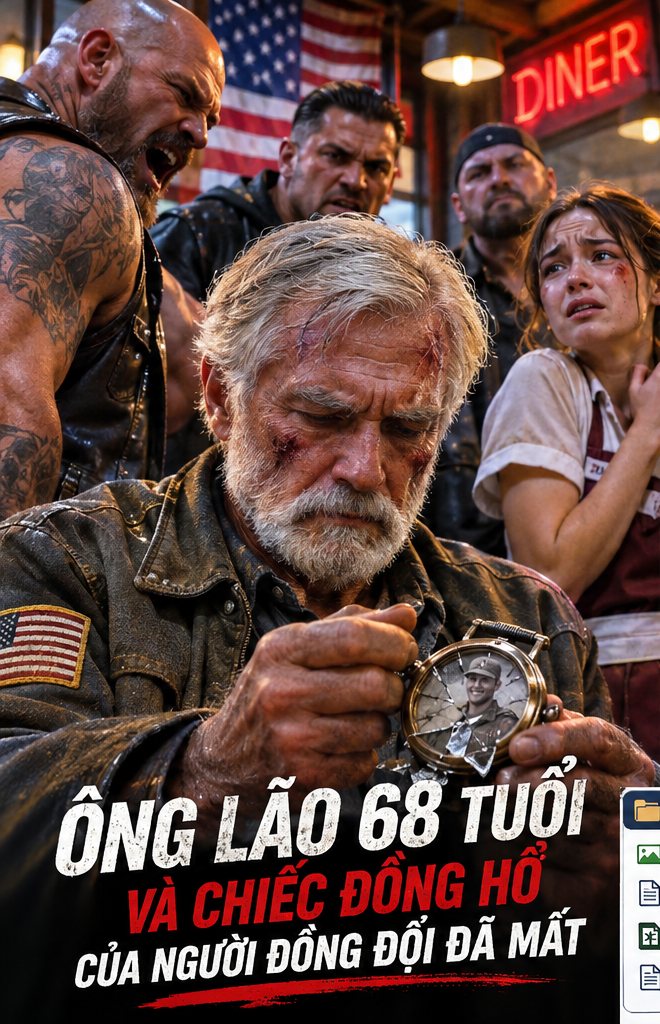
Daniel Brooks would say no more over the telephone. He gave Robert a meeting place: the abandoned chapel beside the old Veterans Memorial Hospital, two counties away. “Bring the photograph,” he said. “Bring nobody who can’t choose this danger for themselves.”
Emily insisted on coming. Robert refused until she told him that her father had died while strangers controlled the story of his death and she would not allow the same thing to happen to her son. June stayed behind with Noah, while Lily volunteered to drive because Robert’s old pickup was easy to recognize. Before sunrise, they left Mercy Diner through the rear delivery gate.
At the chapel Daniel was waiting beneath a roof that leaked in three places. He had once been solid and loud. Now he looked as if he slept sitting up, with a cane within reach and a careful glance for every passing car. When he saw the photograph, he closed his eyes.
Lily took side roads past empty farms as morning light rose behind the trees. Emily kept checking the mirror and forced herself to stop. Robert described the roads ahead without looking at a map, a skill learned before navigation systems and reinforced by years when taking the direct route was dangerous.
A person looking in from a distance might have mistaken this exchange for a minor incident, quickly forgotten once everyone went home. To those inside it, the smallest gesture carried a meaning that did not fit into a headline. There was a difference between being silent because one had surrendered and being silent because one was listening. There was a difference between a warning delivered for show and a warning that cost someone courage to give. Later, as the evidence accumulated and the names became familiar, it would be easy to explain the scene as inevitable. It had not been inevitable. It depended on somebody noticing one detail and refusing to treat the person beside them as expendable.
“The man who never fired,” Daniel said, “was not one of our enemies.”
Daniel had taped small notes beside the chapel door to remind himself of emergency numbers. He laughed when Emily noticed, then confessed he had lost friends because he assumed danger would always announce itself. He no longer treated caution as shame.
For years the people at the center of this story had tried to make their lives small enough for trouble to pass them by. They learned routines, memorized faces, and made agreements with themselves about what could safely be discussed. Now those habits offered little comfort. The situation demanded something more difficult than a quick show of strength. It demanded patience, accuracy, and an understanding that fear could make otherwise decent people careless. Nobody could undo the past by being reckless in the present. Each step required thinking about the people who would have to live with its aftermath. The most important decisions were often the least cinematic: keeping a record, calling someone trustworthy, checking a door, or refusing to spread an accusation before it could be proved.
He pointed to the blurred sixth soldier. Colonel Edward Vance, the officer who approved the operation, had traveled with them under a false identity. His job was supposed to be communications. During the ambush he ordered the team to hold position even after the evacuation route was compromised. He had a radio that could have called for help. He never transmitted the distress call.
“Thomas found the transmission records,” Daniel said. “He made a copy before Vance’s people erased the originals. Then he handed the film to the only man he trusted to outlive him.”
The newspaper article pictured Vance opening a hospital wing. Emily remembered donating twenty dollars to the same charity after seeing its televised appeal. She looked at the smiling face and wondered how many good people had unknowingly helped someone purchase a reputation.
There was another layer to the scene, one that would be invisible to anyone reading only the final testimony. Pride had to be swallowed. Old arguments returned without warning. Some memories were more reliable than others, and nobody was immune to the relief of accepting an answer that made life easier. The careful choice was to keep asking what could be demonstrated, what had only been assumed, and what remained unknown. That discipline did not make the emotional pain disappear. If anything, it made the pain sharper because it prevented an easy story from taking its place. But it gave the people involved a way forward that did not require becoming like the men who had threatened them.
Emily stared at Robert. “You.”
Robert shook his head. “He gave me a watch. He never told me why.”
Robert remembered seeing an evacuation map changed hours before the operation. He had signed the replacement because a superior officer told him the old route had become unsafe. The signature haunted him now. Ordinary obedience had given the betrayal an official shape.
The surroundings seemed to acquire a different weight once the possibility of danger was spoken aloud. Ordinary objects became reminders of vulnerability or small means of protection. A door was a way out; a window could expose someone; a scrap of paper could preserve something a powerful person wanted destroyed. It was not the knowledge of a secret that made somebody courageous. It was the decision to handle that knowledge without treating other lives as pieces in a game. The people sharing the room came from different generations, with different expectations of authority and safety. They did not agree on every method. What held them together was the simpler understanding that none of them should be asked to pay for another person’s dishonesty alone.
Daniel unfolded a newspaper clipping from his pocket. It showed Vance smiling beside a governor at a veterans charity event. After retiring, he had become a defense consultant and wealthy philanthropist. Blackwing Logistics supplied vehicles and security to his foundation. The company was dissolved on paper but its trucks continued to move at night.
The SUV’s engine stopped but nobody immediately opened a door. The pause forced everyone inside the chapel to listen to tiny sounds: a bird striking the gutter, a loose pane tapping in its frame, Daniel’s cane clicking once on stone.
The silence afterward was not empty. It contained everything nobody was ready to say and every question that could not yet be answered. Some questions belonged to the past: who had known, who had lied, and when the first chance to stop it had been lost. Others concerned the next hour and were more urgent. Was anyone being watched? Could a witness leave safely? Would a frightened friend answer a phone call? In that uncertain space, the difference between a useful plan and an angry impulse became clear. Action had to follow facts rather than replace them. That rule felt painfully slow, especially to people who had already waited too many years, but it was the only way their hard-won evidence could outlast the next confrontation.
They were not alone at the chapel. From outside came the faint scrape of tires against broken gravel. Lily, watching through a dusty window, saw a black SUV roll to a stop beside the gate. She counted four people inside. One wore the gray coat from the diner.
Daniel ushered them toward a narrow door behind the altar. Robert paused to see whether Emily and Lily had a clear route through the overgrown garden. Then he picked up the brass chapel bell clapper and struck the old bell once. Its sudden roar startled the men outside and sent pigeons exploding from the roof. Under the noise, his friends made it to the car.
Robert had attended a funeral in this chapel years earlier. He remembered that the bell rope had been cut and the clapper left in a maintenance cupboard. That seemingly irrelevant memory became their only diversion, proof that survival sometimes depended on noticing what others dismissed.
Every person present carried a private version of the same question: what would happen if they refused to cooperate with the fear around them? Not everyone could risk the same thing. Age, family, money, health, and history changed the price of speaking. Recognizing those differences did not mean accepting injustice. It meant helping one another shoulder the danger with as much care as possible. The conversation moved through small practical matters as well as larger moral ones, and that was appropriate. Somebody needed to remember a telephone number, another person needed to keep the door clear, and someone had to think ahead to what investigators might need. Courage became a series of ordinary tasks performed when turning away would have been easier.
Robert followed, but the gray-coated man was already at the side door. He pulled a pistol. “Colonel Vance says you can still walk away.”
Robert recognized him at last. Michael Trent, a young communications specialist who had been listed among the dead after Lantern Bridge. “I saw your name on the casualty report,” Robert said.
Trent had looked much younger in the photograph, with the serious face of someone desperate to impress officers. His eyes were the same. Robert understood instantly that the official casualty list had been manipulated, and that every memorial service had been built on missing evidence.
What stayed with them was not merely the discovery but the way it changed familiar faces. A person who had seemed helpless could become decisive; someone thought to be certain could suddenly hesitate. Trust was not a single declaration made once and honored forever. It had to be tested against actions, especially when the truth was inconvenient. That knowledge made the hours feel longer, but it also gave structure to their choices. They could examine claims, protect the vulnerable, and refuse to let intimidation determine the order in which facts were considered. In the years to come they would remember this stretch of time as an exhausting chain of decisions, each imperfect, each made with the hope that the next person would have a fairer chance.
“Reports can be changed.” Trent’s eyes went to the watch. “So can the dead.”
Daniel described the railway depot’s little cemetery, where numbered markers had stood without names. A groundskeeper told him that a maintenance crew had moved earth in the rain. The new soil had been smoothed over carefully, as though neatness could substitute for an explanation.
The people involved were learning to distinguish between revenge and accountability. Revenge would have promised a brief moment of satisfaction and left the underlying danger intact. Accountability required names, evidence, witnesses, and people willing to endure the slow scrutiny of institutions that might fail them. The distinction was especially hard for those who had seen a loved one harmed. Every new fact seemed to invite an immediate response. Yet the moment also showed why restraint could be an active, demanding choice rather than a sign of weakness. Holding to the truth was not a way of avoiding a confrontation. It was the decision to make the eventual confrontation about what really happened instead of what anger wished had happened.
Before he could fire, Daniel slammed the chapel’s steel fire door into his arm. The pistol clattered onto the floor. Robert pushed Daniel through the gap, and the two men ran to Lily’s waiting car.
As they drove, Daniel admitted the truth he had kept for eighteen years: the person buried at the depot was not a soldier. It was the informant’s daughter, or so he had believed. But the cemetery record showed no name, no birth date, and no death certificate. The grave had been opened three nights earlier.
Daniel touched Emily’s shoulder. “Your father did not die protecting a secret,” he said. “He died protecting a child. And someone thinks she’s alive.”