Chapter 5 – The Girl Who Survived
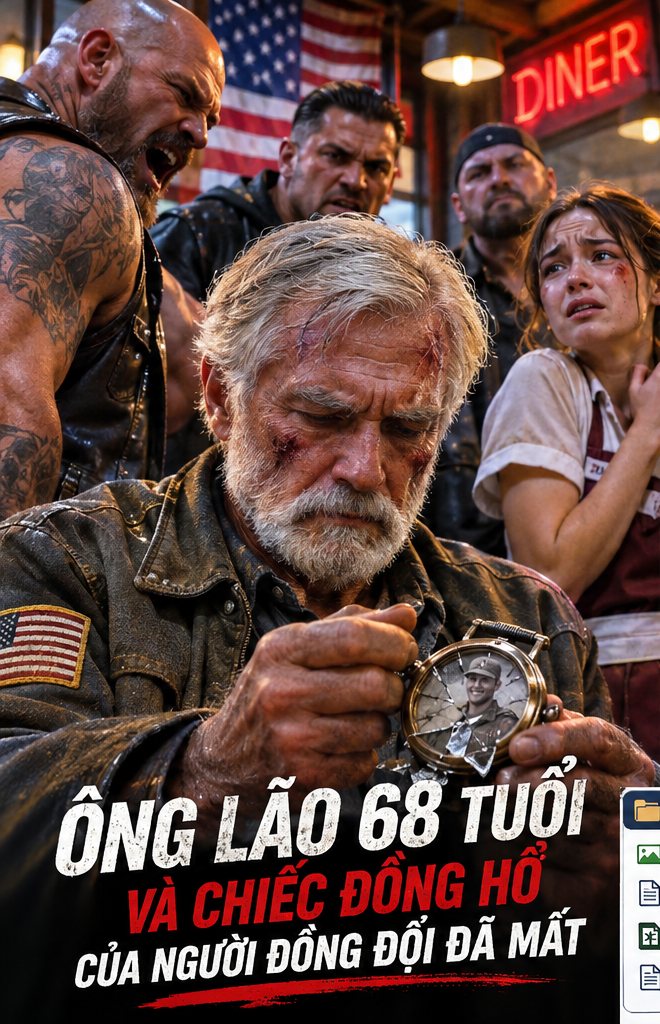
The missing girl’s name was Samira Rahman. She had been nine years old when the extraction failed. Her father, Farid, had worked as an interpreter and documented shipments of stolen medical supplies through a contractor network. Vance did not want an extraction; he wanted Farid’s records destroyed. Thomas Ward had discovered that difference too late.
Robert sat with Daniel in a quiet motel room while Lily searched public records on a borrowed laptop. Emily spread Thomas’s old letters across the bed. They contained ordinary things: jokes about terrible coffee, instructions for fixing a bicycle, promises to watch a baseball game when he came home. In one letter, a strange sentence recurred. A clock is honest only when someone checks its hands.
Emily read the letters aloud because she had heard too little of her father’s voice. The repeated clock sentence had seemed like a strange family joke. Now the deliberate wording made her realize Thomas had been preparing several ways for someone to recover what he knew.
The surroundings seemed to acquire a different weight once the possibility of danger was spoken aloud. Ordinary objects became reminders of vulnerability or small means of protection. A door was a way out; a window could expose someone; a scrap of paper could preserve something a powerful person wanted destroyed. It was not the knowledge of a secret that made somebody courageous. It was the decision to handle that knowledge without treating other lives as pieces in a game. The people sharing the room came from different generations, with different expectations of authority and safety. They did not agree on every method. What held them together was the simpler understanding that none of them should be asked to pay for another person’s dishonesty alone.
Lily noticed the phrase in three letters written months apart. She suspected a code and compared the words surrounding it. The initial letters formed a name: MARA. Daniel whispered that Mara was an emergency contact used by a humanitarian resettlement worker in Texas. If Samira had survived, Mara might have helped her disappear into a safer life.
Mara wore gardening gloves with dirt caught in the seams. She looked at Emily’s eyes and then at the photograph, recognizing an expression that had survived a generation. She did not unlock her security chain until Robert named the mission that the government said had never involved children.
The silence afterward was not empty. It contained everything nobody was ready to say and every question that could not yet be answered. Some questions belonged to the past: who had known, who had lied, and when the first chance to stop it had been lost. Others concerned the next hour and were more urgent. Was anyone being watched? Could a witness leave safely? Would a frightened friend answer a phone call? In that uncertain space, the difference between a useful plan and an angry impulse became clear. Action had to follow facts rather than replace them. That rule felt painfully slow, especially to people who had already waited too many years, but it was the only way their hard-won evidence could outlast the next confrontation.
They found Mara Ellis living in a retirement community outside Austin. She answered her door holding a gardening trowel and immediately tried to close it when Robert introduced himself. Emily held up the photograph of Thomas. Mara’s face changed. She let them inside.
Samira had survived, Mara said. Thomas had carried her out through an irrigation tunnel shortly before he was separated from Robert’s group. Another soldier took her to a safe house. Farid did not survive the night, and Samira had spent years moving between families under altered documents. She was an adult now, working as a nurse. Mara would not share her location without consent.
Mara explained that Samira once stopped attending school because a new substitute teacher asked too many questions about her birthplace. Each move kept her alive but took away friends, languages, and a simple answer to who she was.
Every person present carried a private version of the same question: what would happen if they refused to cooperate with the fear around them? Not everyone could risk the same thing. Age, family, money, health, and history changed the price of speaking. Recognizing those differences did not mean accepting injustice. It meant helping one another shoulder the danger with as much care as possible. The conversation moved through small practical matters as well as larger moral ones, and that was appropriate. Somebody needed to remember a telephone number, another person needed to keep the door clear, and someone had to think ahead to what investigators might need. Courage became a series of ordinary tasks performed when turning away would have been easier.
“Then ask her,” Emily said. “Tell her Thomas Ward’s daughter wants to meet her.”
Emily did not know how to speak to a woman her father had saved. She avoided calling the act noble or heroic. Instead she asked what Samira remembered about him as a person. Samira said he carried a photograph of a little girl with a gap-toothed smile.
What stayed with them was not merely the discovery but the way it changed familiar faces. A person who had seemed helpless could become decisive; someone thought to be certain could suddenly hesitate. Trust was not a single declaration made once and honored forever. It had to be tested against actions, especially when the truth was inconvenient. That knowledge made the hours feel longer, but it also gave structure to their choices. They could examine claims, protect the vulnerable, and refuse to let intimidation determine the order in which facts were considered. In the years to come they would remember this stretch of time as an exhausting chain of decisions, each imperfect, each made with the hope that the next person would have a fairer chance.
Mara dialed a number from a notebook. She spoke softly, then passed the phone to Emily. A woman answered, guarded and tired. Emily told her about the watch and the engraving. Silence followed. Then Samira said, “He told me to keep breathing until the sun came up. I have been trying to deserve that sunrise my whole life.”
Robert remembered leaving the valley while Thomas stayed behind, a decision made under command and in seconds. He had replayed it in dreams until every possible alternative ended with more people dead. Knowing the facts had never made surviving feel easy.
The people involved were learning to distinguish between revenge and accountability. Revenge would have promised a brief moment of satisfaction and left the underlying danger intact. Accountability required names, evidence, witnesses, and people willing to endure the slow scrutiny of institutions that might fail them. The distinction was especially hard for those who had seen a loved one harmed. Every new fact seemed to invite an immediate response. Yet the moment also showed why restraint could be an active, demanding choice rather than a sign of weakness. Holding to the truth was not a way of avoiding a confrontation. It was the decision to make the eventual confrontation about what really happened instead of what anger wished had happened.
Samira agreed to meet them the following evening at a public library, but she insisted they arrive separately. Until then, she would send only one thing: an audio recording of Farid describing the shipments before the mission. It proved the corruption network existed, but not that Vance ordered the ambush. The final thirty seconds were missing.
Farid’s voice trembled on the recording, but his arithmetic was precise. He gave dates, invoice numbers, and the quantities of medical supplies that had gone missing. Robert could hear how a man who feared for his daughter nevertheless believed facts might protect her.
There were details in that moment that nobody would ever put into an official report: the uneven light, the scrape of fabric, the slight delay before anyone decided what to say. Those were the things memory preserved after the sharpest words had faded. It was tempting to pretend that dramatic decisions happened in isolation, with a clean distinction between the brave person and the frightened person. In reality, every choice followed dozens of smaller ones, including the decision to look carefully rather than turn away. By the time anyone recognized that the situation had changed, they were already part of it. The consequences would spread farther than the people present could imagine, and some would never know which quiet second had redirected the rest of their lives.
That night Robert found a photograph slipped beneath his motel door. It showed June’s diner through a rifle scope, taken after dark. Across the bottom were the words: THE GIRL FOR THE WATCH. The girl could mean Lily, Samira, or Emily. The uncertainty was the point. The threat was designed to make Robert choose which life to protect.
Robert called June, who said two cars had been idling across the road for an hour. He told her to shut the lights and leave through the kitchen with Noah. She answered that they were already in Lily’s aunt’s basement. Then her voice dropped. “Robert, Deputy Pike came by asking for the watch. He said if I handed it over, Lily would be safe.”
June packed the diner’s petty cash and Lily’s school certificates before abandoning the building. Lily wanted to return for a framed family photograph. June promised they could replace the frame, but not the people in it.
Nothing about the surrounding world had paused to respect the danger. A light continued to burn; a vehicle passed outside; somebody somewhere was preparing dinner without knowing what was happening here. That ordinary continuity made the fear feel strangely private. The people who lived through it would later disagree about the order of small events, but not about the feeling of having to act before they possessed enough information. Waiting for certainty was attractive because it sounded responsible. Yet there were moments when uncertainty was the only condition available, and a person still had to decide whom to protect. What mattered was not a perfect instinct. It was a willingness to reconsider the first impulse and choose the action that caused the least harm.
“Don’t believe him.”
The line THE GIRL FOR THE WATCH left Robert thinking of three different women and one frightened boy. He understood that his enemies were testing how much uncertainty they could make him bear. His reply was to call every person he cared for, not to choose one and abandon the rest.
A person looking in from a distance might have mistaken this exchange for a minor incident, quickly forgotten once everyone went home. To those inside it, the smallest gesture carried a meaning that did not fit into a headline. There was a difference between being silent because one had surrendered and being silent because one was listening. There was a difference between a warning delivered for show and a warning that cost someone courage to give. Later, as the evidence accumulated and the names became familiar, it would be easy to explain the scene as inevitable. It had not been inevitable. It depended on somebody noticing one detail and refusing to treat the person beside them as expendable.
They had not agreed on everything. There were still gaps in the evidence and uncomfortable questions about decisions made years ago. What had changed was their willingness to say those uncertainties aloud. It was an unexpectedly practical kind of trust. Nobody had to pretend to be fearless. Nobody had to prove loyalty by accepting a dangerous plan without question. They could disagree, verify a detail, and still decide to protect one another. Whatever came next, that habit would matter as much as any discovery. Their adversaries had counted on isolation and suspicion. Every honest conversation made those tactics a little less effective.
“I didn’t,” June said. “But I heard someone talking through his radio. They called you Captain Hale.”
Robert had not used that rank publicly in eighteen years. His phone buzzed with another message. A live image of the library meeting room appeared on the screen. Under it: YOU CAN SAVE ONE WITNESS. CHOOSE.