Chapter 10 – The Promise Still Ticking
The signature belonged to General Nathaniel Cross, once celebrated for leading humanitarian operations and now chair of a powerful veterans charity network. Robert had met Cross twice and believed he was an honorable man. The discovery felt less like a new enemy than a crack opening through the foundation of everything Robert had trusted.
The federal investigators did not rush to announce it. They photographed and sealed Ibrahim’s records, obtained statements from the nursing-home staff, and placed the accountant under witness protection. Vance, Vince Rourke, Graham Sloane, and several Blackwing associates faced charges tied to intimidation, obstruction, and a corruption investigation. The court would decide guilt, but the evidence was no longer buried in a private filing cabinet.
June had replaced the cracked window with plain glass rather than decorative lettering. She wanted to see clearly who entered from the street. A community fundraiser had paid part of the bill, and a student had left a thank-you note under the register.
There were details in that moment that nobody would ever put into an official report: the uneven light, the scrape of fabric, the slight delay before anyone decided what to say. Those were the things memory preserved after the sharpest words had faded. It was tempting to pretend that dramatic decisions happened in isolation, with a clean distinction between the brave person and the frightened person. In reality, every choice followed dozens of smaller ones, including the decision to look carefully rather than turn away. By the time anyone recognized that the situation had changed, they were already part of it. The consequences would spread farther than the people present could imagine, and some would never know which quiet second had redirected the rest of their lives.
At Mercy Diner, June finally reopened for breakfast. Fresh glass filled the front window. The broken camera had been replaced, and Lily put a small brass bell beside the register. Robert sat in booth seven because it was where he always sat, not because he wanted anyone to remember what happened there.
Noah drew the old watch as a circle with very large hands and a tiny red heart in the middle. He handed the drawing to Robert and said that broken things could still tell time if somebody helped. Robert folded the page carefully inside his wallet.
Nothing about the surrounding world had paused to respect the danger. A light continued to burn; a vehicle passed outside; somebody somewhere was preparing dinner without knowing what was happening here. That ordinary continuity made the fear feel strangely private. The people who lived through it would later disagree about the order of small events, but not about the feeling of having to act before they possessed enough information. Waiting for certainty was attractive because it sounded responsible. Yet there were moments when uncertainty was the only condition available, and a person still had to decide whom to protect. What mattered was not a perfect instinct. It was a willingness to reconsider the first impulse and choose the action that caused the least harm.
Emily arrived with Noah and a shoebox. Inside were letters Thomas had written but never mailed. One described his hope of teaching Emily to wind a watch. Another mentioned a little girl he had promised to carry to safety. Emily had read the letters as a teenager, but the words meant something new now. She no longer knew only that her father had died. She knew what he had chosen to do while he was alive.
Emily read the old letters aloud without attempting to make them sound grand. Thomas complained about rain, missed a birthday, and remembered the color of her bicycle. The mundane details gave her father back to her more fully than any formal speech.
A person looking in from a distance might have mistaken this exchange for a minor incident, quickly forgotten once everyone went home. To those inside it, the smallest gesture carried a meaning that did not fit into a headline. There was a difference between being silent because one had surrendered and being silent because one was listening. There was a difference between a warning delivered for show and a warning that cost someone courage to give. Later, as the evidence accumulated and the names became familiar, it would be easy to explain the scene as inevitable. It had not been inevitable. It depended on somebody noticing one detail and refusing to treat the person beside them as expendable.
Samira came later, wearing scrubs after a night shift at the hospital. She had requested the scholarship established in Thomas’s name be redirected to families of missing service members and displaced children, with independent oversight. Emily agreed. Robert helped them draft the first letter to the board. It felt better than the speeches delivered at the Hall of Valor.
Samira told Emily she had carried guilt for surviving when Farid and Thomas did not. Emily confessed she had resented the nameless person who came home instead of her father. Neither apologized for feelings they had as children. They simply let the truth become more complicated.
For years the people at the center of this story had tried to make their lives small enough for trouble to pass them by. They learned routines, memorized faces, and made agreements with themselves about what could safely be discussed. Now those habits offered little comfort. The situation demanded something more difficult than a quick show of strength. It demanded patience, accuracy, and an understanding that fear could make otherwise decent people careless. Nobody could undo the past by being reckless in the present. Each step required thinking about the people who would have to live with its aftermath. The most important decisions were often the least cinematic: keeping a record, calling someone trustworthy, checking a door, or refusing to spread an accusation before it could be proved.
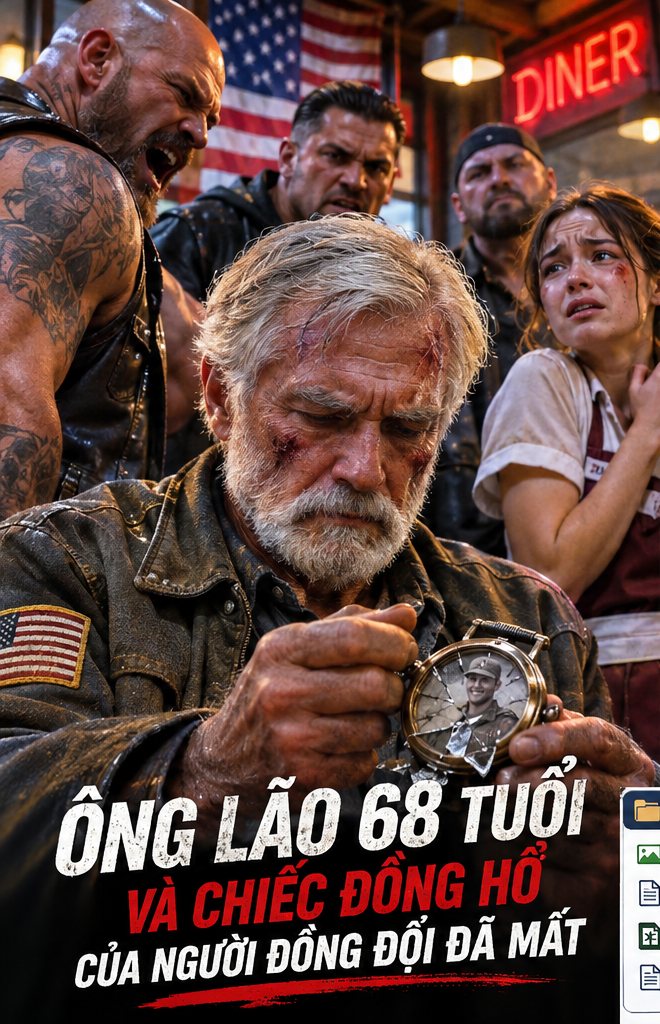
A watchmaker had repaired the old field watch as much as possible. The glass was new, but the scratches in the case remained. The engravings were clearer now: COME HOME FOR BOTH OF US. Robert wound the crown slowly and listened to the mechanism tick across the table. He had spent eighteen years believing he had failed Thomas by surviving. Emily touched his hand. “He gave you the watch because he wanted you to live,” she said. “Not because he wanted you to spend your life apologizing.”
Robert found no immediate answer. Some debts were too complicated for easy words. He bought Noah pancakes, left Lily a generous tip, and stepped outside into the pale morning light. A reporter waited near the curb, asking whether Robert felt like a hero. He shook his head. “Tell the story of the people who refused to abandon someone,” he said. “And tell it accurately.”
The first court hearing made headlines, but Robert chose not to attend. He trusted the legal process more than the spectacle surrounding it. Pike testified to what he had seen, including his own mistakes, and no one promised that justice would be immediate.
There was another layer to the scene, one that would be invisible to anyone reading only the final testimony. Pride had to be swallowed. Old arguments returned without warning. Some memories were more reliable than others, and nobody was immune to the relief of accepting an answer that made life easier. The careful choice was to keep asking what could be demonstrated, what had only been assumed, and what remained unknown. That discipline did not make the emotional pain disappear. If anything, it made the pain sharper because it prevented an easy story from taking its place. But it gave the people involved a way forward that did not require becoming like the men who had threatened them.
He was halfway to his truck when his phone rang. It was Daniel. Investigators had confirmed that Cross’s signature was authentic. Yet another document suggested Cross had himself been following instructions from a private committee, one whose members had changed names and companies across several decades. The new investigation would be long and dangerous.
The two women designed a scholarship with published financial accounts and rotating independent trustees. They wanted an institution that could not hide behind one decorated name. Robert suggested helping children displaced by conflict, which was the mission Thomas had chosen in the end.
The surroundings seemed to acquire a different weight once the possibility of danger was spoken aloud. Ordinary objects became reminders of vulnerability or small means of protection. A door was a way out; a window could expose someone; a scrap of paper could preserve something a powerful person wanted destroyed. It was not the knowledge of a secret that made somebody courageous. It was the decision to handle that knowledge without treating other lives as pieces in a game. The people sharing the room came from different generations, with different expectations of authority and safety. They did not agree on every method. What held them together was the simpler understanding that none of them should be asked to pay for another person’s dishonesty alone.
“Do we have to start again?” Daniel asked.
The watchmaker refused to polish away the old scratches. He said each mark told part of its history, and a perfect surface would make it less truthful. Robert agreed. He wanted the second hand to move again, not to pretend the glass had never broken.
The silence afterward was not empty. It contained everything nobody was ready to say and every question that could not yet be answered. Some questions belonged to the past: who had known, who had lied, and when the first chance to stop it had been lost. Others concerned the next hour and were more urgent. Was anyone being watched? Could a witness leave safely? Would a frightened friend answer a phone call? In that uncertain space, the difference between a useful plan and an angry impulse became clear. Action had to follow facts rather than replace them. That rule felt painfully slow, especially to people who had already waited too many years, but it was the only way their hard-won evidence could outlast the next confrontation.
Robert looked back through the diner window. Noah was laughing over a plate of pancakes. Emily and Samira were talking like old friends. Lily was helping June restock the shelves. For the first time in years, ordinary life seemed worth defending without making it a battlefield.
Daniel’s final call made Robert stare down the road for a long moment. He knew investigations could stretch for years. The difference now was that Thomas’s daughter, Samira, Pike, and the federal team were sharing the work. The burden would no longer rest on one survivor.
Every person present carried a private version of the same question: what would happen if they refused to cooperate with the fear around them? Not everyone could risk the same thing. Age, family, money, health, and history changed the price of speaking. Recognizing those differences did not mean accepting injustice. It meant helping one another shoulder the danger with as much care as possible. The conversation moved through small practical matters as well as larger moral ones, and that was appropriate. Somebody needed to remember a telephone number, another person needed to keep the door clear, and someone had to think ahead to what investigators might need. Courage became a series of ordinary tasks performed when turning away would have been easier.
“No,” Robert said. “We don’t start again. We keep going, and this time we don’t do it alone.”
The watch ticked beneath his sleeve. A car pulled into the far end of the parking lot. The driver remained inside, face hidden behind the morning glare. When Robert reached his truck, he found a sealed envelope beneath the wiper blade. On the front, in unfamiliar handwriting, were four words: WARD WAS NOT FIRST.