Chapter 6 – An Honest Deputy
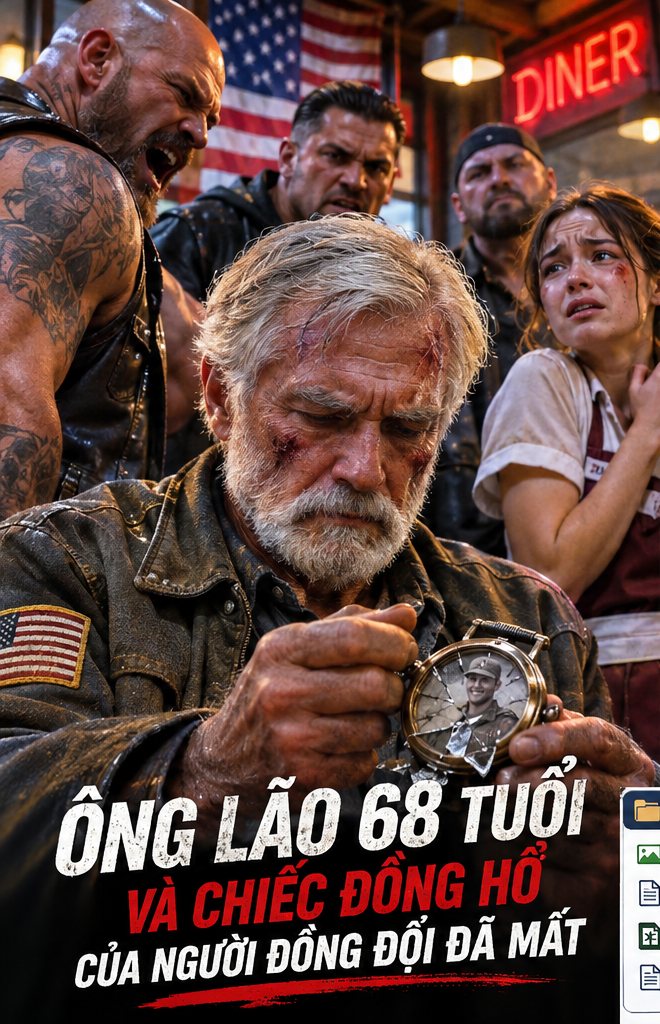
Deputy Aaron Pike had a wife recovering from surgery and a daughter saving money for college. He also had a sealed envelope in the glove compartment of his patrol car with a photograph of his family taken from a distance. That was why he had not written down the gray-coated man’s name at Mercy Diner. The first time Vance’s people threatened him, he believed compliance would end the nightmare. Each small act of obedience made the next demand harder to refuse.
Robert understood that kind of trap. He arranged to meet Pike at a closed gas station on the interstate, with Emily and Daniel watching from a distance. Pike arrived without his uniform. He looked older than forty-three, and the hand holding his car keys would not stop shaking.
The envelope in Pike’s glove compartment contained a photograph of his wife walking slowly from a clinic. Whoever took it had waited until she was alone. Pike had pretended the threat was a prank because acknowledging it would require admitting how deeply he was afraid.
What stayed with them was not merely the discovery but the way it changed familiar faces. A person who had seemed helpless could become decisive; someone thought to be certain could suddenly hesitate. Trust was not a single declaration made once and honored forever. It had to be tested against actions, especially when the truth was inconvenient. That knowledge made the hours feel longer, but it also gave structure to their choices. They could examine claims, protect the vulnerable, and refuse to let intimidation determine the order in which facts were considered. In the years to come they would remember this stretch of time as an exhausting chain of decisions, each imperfect, each made with the hope that the next person would have a fairer chance.
“The threats started when I found the old depot file,” Pike said. “There was a ledger for a shipment that never arrived. Medical equipment, four sealed crates, military escort. The document names Blackwing, Vance, and a bank that used to finance half the county.”
Robert had been angry with Pike since the diner, but he recognized the marks of coercion. He did not excuse the deputy’s silence. He asked him to make one honest decision and follow it with another, because courage could begin after a failure.
The people involved were learning to distinguish between revenge and accountability. Revenge would have promised a brief moment of satisfaction and left the underlying danger intact. Accountability required names, evidence, witnesses, and people willing to endure the slow scrutiny of institutions that might fail them. The distinction was especially hard for those who had seen a loved one harmed. Every new fact seemed to invite an immediate response. Yet the moment also showed why restraint could be an active, demanding choice rather than a sign of weakness. Holding to the truth was not a way of avoiding a confrontation. It was the decision to make the eventual confrontation about what really happened instead of what anger wished had happened.
“Where’s the ledger?”
The shipment ledger had been filed beneath an unrelated traffic prosecution, a trick that made it easy to miss in an ordinary search. Pike found it because the case number was listed twice on a disposal notice. Someone had expected the paperwork to disappear quietly.
There were details in that moment that nobody would ever put into an official report: the uneven light, the scrape of fabric, the slight delay before anyone decided what to say. Those were the things memory preserved after the sharpest words had faded. It was tempting to pretend that dramatic decisions happened in isolation, with a clean distinction between the brave person and the frightened person. In reality, every choice followed dozens of smaller ones, including the decision to look carefully rather than turn away. By the time anyone recognized that the situation had changed, they were already part of it. The consequences would spread farther than the people present could imagine, and some would never know which quiet second had redirected the rest of their lives.
“In the courthouse evidence room. Not for long. They’re moving it tonight.”
Pike described a clerk who kept turning away when he approached the evidence room. The clerk had two children and refused to answer questions near cameras. Robert recognized that the corruption had reached people who were frightened, not necessarily willing.
Nothing about the surrounding world had paused to respect the danger. A light continued to burn; a vehicle passed outside; somebody somewhere was preparing dinner without knowing what was happening here. That ordinary continuity made the fear feel strangely private. The people who lived through it would later disagree about the order of small events, but not about the feeling of having to act before they possessed enough information. Waiting for certainty was attractive because it sounded responsible. Yet there were moments when uncertainty was the only condition available, and a person still had to decide whom to protect. What mattered was not a perfect instinct. It was a willingness to reconsider the first impulse and choose the action that caused the least harm.
Pike explained that he had tried to pass information to a state investigator. That investigator disappeared from work two days later. Pike had no way to know whom to trust. Robert listened, then asked a question Pike did not expect: “Have you told your wife the truth?” Pike stared at the pavement. “No.”
“Then that’s the first thing you do. Keeping a family safe by letting a criminal decide the rules never stays safe.”
Emily wrote down every proposed step and insisted they use an outside attorney, not a friendly local official. She knew that evidence without chain of custody could be challenged. Pike agreed to sign an affidavit in his own name, despite the risk to his career.
A person looking in from a distance might have mistaken this exchange for a minor incident, quickly forgotten once everyone went home. To those inside it, the smallest gesture carried a meaning that did not fit into a headline. There was a difference between being silent because one had surrendered and being silent because one was listening. There was a difference between a warning delivered for show and a warning that cost someone courage to give. Later, as the evidence accumulated and the names became familiar, it would be easy to explain the scene as inevitable. It had not been inevitable. It depended on somebody noticing one detail and refusing to treat the person beside them as expendable.
Together they developed a legal path. Pike could report the intimidation, preserve the ledger through an emergency court order, and place his statement with an independent federal attorney. Daniel had contacts who could verify the military records. Emily insisted on making duplicate copies of every document, even if it meant exposing her father’s name to public scrutiny.
Lily saw the sedan accelerate before anyone else did. Rather than drive at the attackers, she used the horn and headlights to draw attention and blocked the most direct approach without trapping herself. Robert later told her she had made the safest difficult choice available.
For years the people at the center of this story had tried to make their lives small enough for trouble to pass them by. They learned routines, memorized faces, and made agreements with themselves about what could safely be discussed. Now those habits offered little comfort. The situation demanded something more difficult than a quick show of strength. It demanded patience, accuracy, and an understanding that fear could make otherwise decent people careless. Nobody could undo the past by being reckless in the present. Each step required thinking about the people who would have to live with its aftermath. The most important decisions were often the least cinematic: keeping a record, calling someone trustworthy, checking a door, or refusing to spread an accusation before it could be proved.
The plan broke before the first call. A dark sedan swept into the forecourt, and a masked driver tried to grab Pike’s briefcase. Lily, parked by the road, sounded her horn and drove her car between Pike and the sedan. Robert pulled Pike behind a concrete pump island. The sedan struck a trash bin and sped away. No one chased it. The important thing was the envelope of evidence still in Pike’s shaking hand.
Thomas’s recorded objection sounded weary, not theatrical. Robert recognized the way he clipped the last syllable when he was certain he was right. The voice carried neither a wish for glory nor an expectation of rescue.
There was another layer to the scene, one that would be invisible to anyone reading only the final testimony. Pride had to be swallowed. Old arguments returned without warning. Some memories were more reliable than others, and nobody was immune to the relief of accepting an answer that made life easier. The careful choice was to keep asking what could be demonstrated, what had only been assumed, and what remained unknown. That discipline did not make the emotional pain disappear. If anything, it made the pain sharper because it prevented an easy story from taking its place. But it gave the people involved a way forward that did not require becoming like the men who had threatened them.
Inside was more than a ledger. Pike had discovered a second radio log from Lantern Bridge. At 02:16 the mission commander ordered the evacuation signal suppressed. At 02:17 someone answered from the field: NEGATIVE. CIVILIANS STILL INSIDE. The speaker identification had been erased, but Robert knew the voice in his bones. Thomas Ward had refused a command, knowing it might kill him.
After handing over the ledger, Pike called his wife and explained the threat. She listened without interrupting, then asked him to come home alive and tell investigators everything. Pike wept in the closed car, more frightened by her forgiveness than by the anonymous caller.
The surroundings seemed to acquire a different weight once the possibility of danger was spoken aloud. Ordinary objects became reminders of vulnerability or small means of protection. A door was a way out; a window could expose someone; a scrap of paper could preserve something a powerful person wanted destroyed. It was not the knowledge of a secret that made somebody courageous. It was the decision to handle that knowledge without treating other lives as pieces in a game. The people sharing the room came from different generations, with different expectations of authority and safety. They did not agree on every method. What held them together was the simpler understanding that none of them should be asked to pay for another person’s dishonesty alone.
They had not agreed on everything. There were still gaps in the evidence and uncomfortable questions about decisions made years ago. What had changed was their willingness to say those uncertainties aloud. It was an unexpectedly practical kind of trust. Nobody had to pretend to be fearless. Nobody had to prove loyalty by accepting a dangerous plan without question. They could disagree, verify a detail, and still decide to protect one another. Whatever came next, that habit would matter as much as any discovery. Their adversaries had counted on isolation and suspicion. Every honest conversation made those tactics a little less effective.
Pike put his badge on the hood. “I thought this was about money,” he said. “It’s about a murdered soldier.” Robert corrected him gently. “It’s about the people who were kept alive because that soldier refused to obey.”
The federal attorney agreed to meet at dawn. Until then, they moved into separate rooms at a roadside motel. As Robert turned off his light, he received a call from Samira. She had not gone to the library. A stranger was sitting in her apartment. She whispered, “He says his name is Michael Trent, and he says he was there when Thomas died.”