Chapter 7 – The Mother Who Kept the Secret
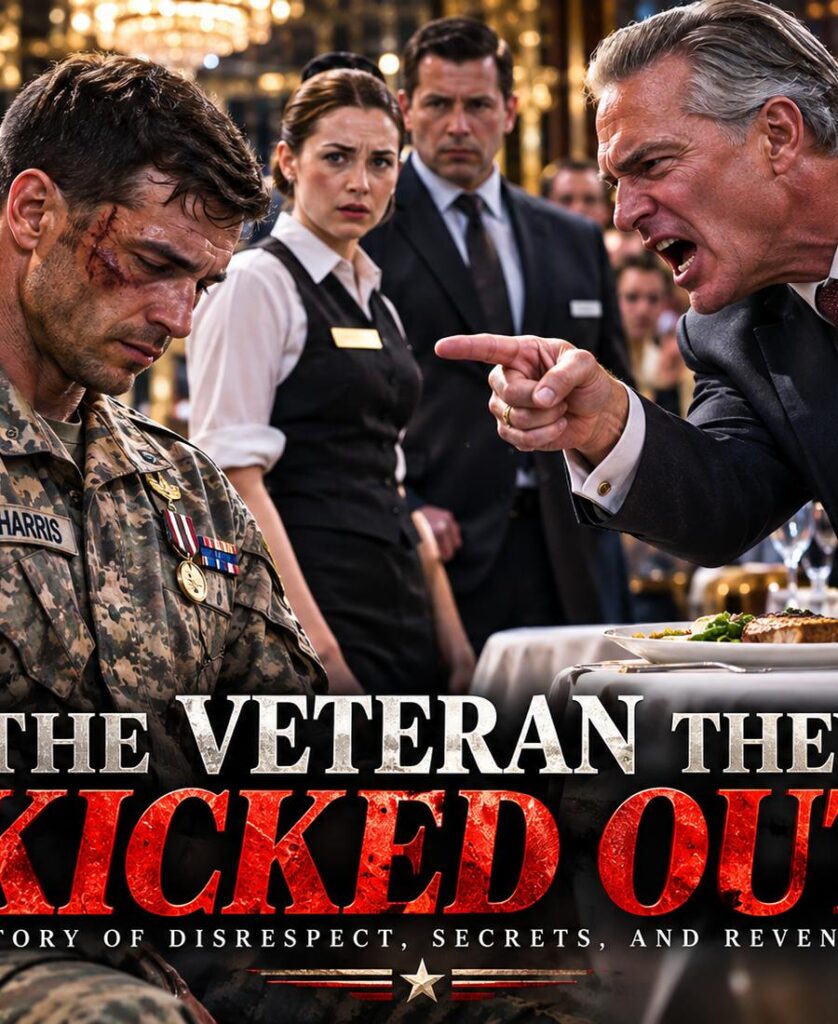
General Arthur Bell entered the armory without waiting for an invitation. Rain beaded on the shoulders of his dark overcoat, and two private security men followed several steps behind him. He had retired with honors six years earlier, but he still moved as if the rooms he entered were under his command. Nathan had once admired that certainty. During his first deployment Bell had visited remote units in person, learned soldiers’ names, and written letters to their families. When the helicopter crashed, Bell had been the senior officer who stood before the cameras and spoke of mechanical failure, duty, and loss. Nathan had accepted the condolences even while doubting the report. Now the general’s first glance went not to Rachel or Nathan but to the open steel case. His concern was plainly for the papers.
“I gave you a career,” Bell said, removing his gloves. “I made sure you received medical care when others wanted the inquiry closed.” Nathan stood between the general and the workbench. “I received care because I was wounded in service. That isn’t a debt you own.” Bell’s eyes narrowed. It was the first time Nathan had challenged him without the protections of official procedure. “You don’t understand the scale of what you’re touching,” the general said. “People made difficult decisions in a difficult war.” Rachel stepped forward. “My husband made a difficult decision too. He refused to sign a false cargo receipt. Why did he die for it?” Bell looked at her as though her presence were an administrative inconvenience. “Mrs. Vale, you’ve suffered. I sympathize.” “Don’t use my suffering to avoid the question,” she answered.
For several seconds nobody spoke. Bell took a slow breath and changed his approach. He said the cargo was part of a classified operation and that disclosing its details could endanger people still serving overseas. Nathan had heard variations of this claim for fourteen years. He did not dismiss the possibility that some information genuinely required protection. He asked instead why a classified shipment needed a falsified medical manifest, why a civilian donor was described as a sole survivor, and why witnesses had been threatened. Bell answered none of those questions. “You know how national security works,” he insisted. “Everything cannot be debated in a dining room.” Nathan held up the copied manifest. “Then it can be examined by investigators with authority to see it. You don’t get to call something secret to protect your own reputation.”
Bell’s security men moved apart, positioning themselves near the two exits. Rachel noticed and quietly stepped closer to Nathan. The general gestured toward the case. “Close it. We can discuss the matter somewhere private.” Nathan did not move. “You chose a deserted armory at night. That’s private enough for you. I chose to notify a federal investigator.” Bell’s composure cracked for an instant. “You did what?” Nathan watched the security men exchange a glance. Their certainty had depended on the building being isolated. “Agent Brooks knows where we are,” he said. “She has the threats, the restaurant video, and the ledger photographs. If you have a legitimate explanation, you can give it to her.” Bell turned toward the door, then stopped as if making a calculation. “That woman has no idea what she’s dealing with.” Nathan answered, “Then you can help her understand.”
Rachel moved to the workbench and placed a hand on Thomas’s notebook. The small object made her feel unexpectedly steady. She remembered her husband teaching Mia to tie fishing knots and explaining that a knot was only strong when each loop had been made carefully. Thomas had never pretended to be a perfect man. He worried, lost patience, and sometimes apologized badly. But he did not casually lie about matters that put other people in danger. The idea that his last days had been reduced to a file classification sickened her. “Arthur,” she said, using the general’s first name deliberately, “Thomas came home three days before that flight. He told me the cargo wasn’t right. He was frightened for the crew, not for his career. Did you know that?” Bell looked away. His silence felt more revealing than any polished speech.
Nathan remembered the hospital visit in fragments. Bell standing beside his bed. A bouquet of flowers he could not smell because his nose was packed with bandages. A nurse asking the general to keep the meeting short. Bell telling him that the country needed a clear account and that speculation would only hurt the families. Nathan had been drugged for pain and terrified that his memory of the crash was unreliable. Bell had suggested that he trust the official investigators rather than the flashes of sound and smoke in his head. Nathan had nodded. For years he thought that nod might be the moment he betrayed Thomas. Now he understood how vulnerable he had been and how expertly Bell had used the language of care to demand agreement. The realization did not erase his guilt, but it gave the guilt a more honest shape.
Bell said quietly, “You were never meant to find the alternate manifest.” The admission hung in the cold air. Nathan did not interrupt. “The shipment was approved through a channel you were not cleared to know,” Bell continued. “There were political considerations. Contractor obligations. Allies who expected delivery.” Rachel stared at him. “So you allowed families to believe a machine failed?” Bell’s expression hardened. “The aircraft did experience mechanical problems.” Nathan knew that could be true without explaining why the flight had occurred or why the load had changed. A crash could have multiple causes. Concealing the cargo might not be the same as causing the crash, but it prevented anyone from examining whether the additional weight, altered route, or maintenance shortcuts had contributed. He forced Bell to distinguish those questions. The general refused.
A security man approached the workbench. Nathan asked him to stop. “I don’t want a fight,” he said. “Neither do we,” the man replied, though he continued moving. Rachel stepped aside, taking her phone from her pocket. Bell ordered her to put it away. She hesitated, then began recording openly. The man at the workbench stopped and looked to Bell for direction. Nobody wanted to become the person filmed seizing documents from a grieving widow. Nathan understood that the phone would not make them safe by itself. It did, however, change the meaning of every movement. The men were being watched, even if only by a small camera held in a trembling hand.
Bell attempted another appeal. “Nathan, do you remember the men in that aircraft? Do you remember what they would want?” Nathan felt anger rise, clear and fierce. “Don’t tell me what dead men would want in order to silence the living.” He thought of Daniel Whitcomb and the message about the engines, of Samuel Price’s unexplained identification, of Thomas calling his daughter Little Comet. “They would want us to be accurate,” he said. “They would want their families to know why they were sent. They would want us to stop inventing a hero who wasn’t there.” Bell looked toward the cargo photograph. The Cross Defense logo gleamed beneath the work lamp. “Cross made mistakes,” he said. Nathan waited. The general did not say whether the mistakes were financial, operational, or moral. “He also helped fund the mission.”
The word fund caught Rachel’s attention. “A private company funded a military transport?” Bell rubbed his forehead. “There were emergency procurement arrangements.” Nathan had heard enough about irregular contracting to know that the existence of a contractor was not inherently suspicious. What mattered was authorization, the true contents of the shipment, and whether the crew had been given accurate information. He asked Bell where the original procurement orders were stored. Bell replied that all relevant documents had been reviewed. “By whom?” Nathan asked. “By authorized personnel.” “Names?” Bell did not answer. For the first time Nathan saw not a powerful officer guarding secrets but an elderly man whose habits of command no longer produced the obedience he expected.
From outside came the sound of tires on wet gravel. Bell’s security men turned toward the windows. Red and blue light flashed across the ceiling. Agent Brooks entered with several federal investigators, her coat damp and her badge plainly visible. She did not shout. She identified herself, explained that the property was being secured as part of an active investigation, and directed everyone to keep their hands visible. A technician began photographing the workbench and the open case. Rachel lowered her phone slowly. Nathan felt relief, but not triumph. The presence of a competent investigator meant the evidence would be handled properly; it did not guarantee that every question would receive an answer. Bell seemed to understand the distinction. He immediately requested counsel and refused to continue speaking without it.
Brooks was in her forties, with a practical manner and a habit of writing down exact language rather than summarizing it into convenient phrases. She took separate accounts from Nathan and Rachel. Then she asked Bell whether he would consent to the examination of the documents in his possession. He declined. Brooks indicated that an authorized search was already underway under a warrant. The general’s face went rigid. One of the security men produced identification showing he worked for a private contractor rather than any government agency. Brooks recorded the employer’s name. The contractor’s address matched a subsidiary of Cross Defense Holdings. Nathan watched the connections accumulate. There was satisfaction in seeing them recorded, but he knew that apparent connections required verification. He had been harmed too many times by premature certainty to indulge in it now.
Bell tried to fold a paper from his inside pocket into his hand. A member of Brooks’s team noticed the movement and stopped him before he could destroy it. The document was an unsigned order authorizing a flight-path diversion. Its language resembled the operational instructions Nathan remembered receiving, but it carried no final approval signature. Bell insisted it was only a draft. Brooks made no accusation on the spot. She had the document secured and photographed. Nathan was grateful for her restraint. A case built on exaggeration would eventually collapse under scrutiny. Thomas deserved better than a public performance in which guilt was announced before evidence had been tested. The contrast with Cross’s memorial dinner struck Nathan painfully: the genuine process looked quieter, slower, and less impressive than the lies.
The evidence team examined the steel case. In addition to the alternate manifest and cargo photograph, it contained copies of radio logs and a newer page attached with a different kind of paper clip. The page listed several shipments using the same company code and referenced a final distribution location in Maryland. Brooks compared the dates. Most were fourteen years old. One was less than a month old. Nathan frowned. He had assumed the manifest would reveal only what happened before the crash. A new entry suggested that the accounting trail had been touched recently. Brooks asked who had opened the case during the previous month. Rachel said nobody, at least not in her presence. The implication was unsettling: someone had continued to use the old documents long after the official operation ended.
Rachel took the opportunity to call Mia. She kept the conversation brief, confirming that she was safe and with a federal investigator. Mia burst into tears at the sound of her mother’s voice and demanded to know where she had been. Rachel promised a full explanation, one that would include all the mistakes she had made through fear. “No more secrets,” Mia said. Rachel stared at the gray workbench and answered, “No more secrets that belong to you.” It was an imperfect promise, and they both knew it. Some information belonged to investigators or other families. But Rachel could at least tell her daughter the truth about the years they had lived together. Nathan turned away to give them privacy and found himself looking at Bell, whose expression had become distant. The general was staring at Thomas’s handwriting as if a ghost had entered the room.
Brooks held up the newer page. “Captain Harris, can you tell me whether this handwriting is familiar?” Nathan read the signature beneath the final entry. His breath caught. He had seen that backward-leaning T and the long final stroke on countless supply slips. It was the signature of Thomas Vale. Yet the page was dated three weeks earlier. Rachel approached, studied it, and went pale. “That can’t be right,” she whispered. Bell looked suddenly exhausted. Nathan remembered the scratched message beneath the restaurant photograph: THEY COUNTED SIX. THERE WERE SEVEN. What if the count had been wrong in a way none of them understood? What if someone whose death had shaped their lives had been alive long enough to sign a new document? Brooks refused to speculate. She ordered the page preserved for forensic analysis. Nathan could only stare at it, aware that the truth they sought might be even more painful than the lie they had spent fourteen years fighting.