Chapter 5 – The Officer in the Ledger
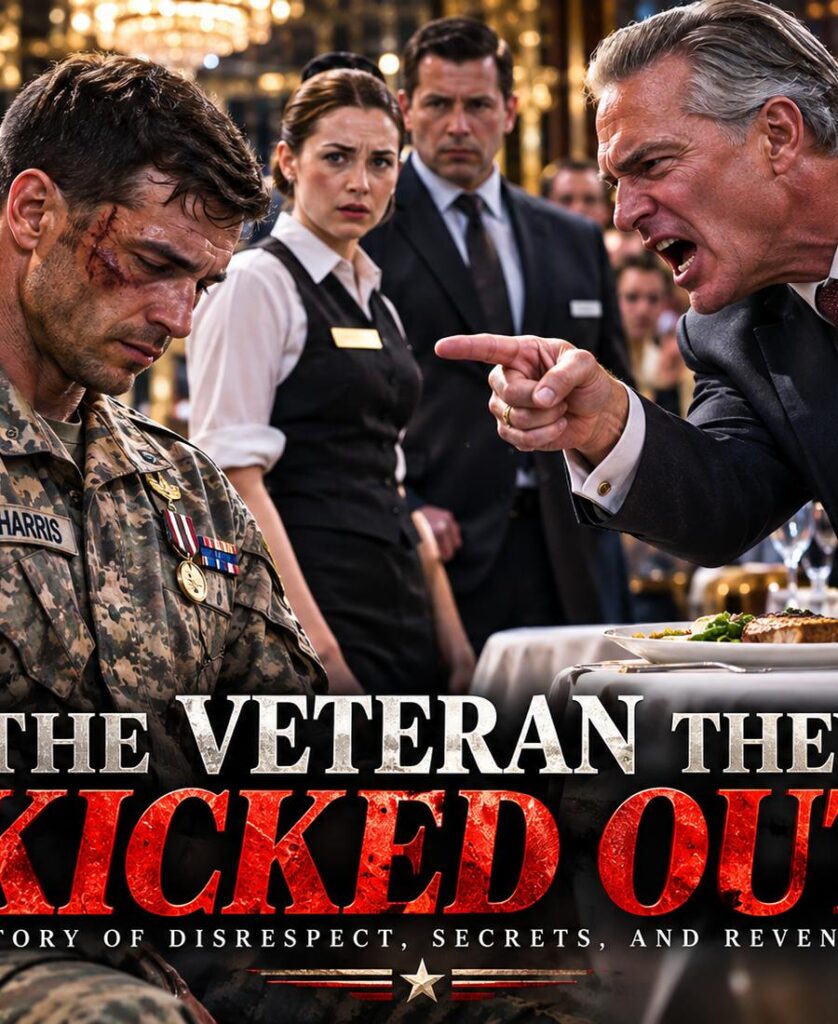
Thomas Vale’s recorded voice sounded smaller than Mia remembered. There was static behind it, and the occasional click of a radio in the distance, but the shape of each word was unmistakable. Her father had always pronounced Nathan’s name as if he were speaking to a younger brother rather than a commanding officer. Hearing him say “Captain Harris” in that formal tone brought back the day a military chaplain had knocked on their door. The chaplain had asked Rachel to sit down. Nine-year-old Mia had remained standing, because children sometimes believe that if they refuse to sit, bad news cannot become permanent. Fourteen years later she was standing again, surrounded by people who wanted to control what she heard. She moved closer to the flip phone, and nobody asked her to step back.
“This is Sergeant Thomas Vale, recording at zero two seventeen,” the voice repeated after a short burst of interference. “We were ordered to carry medical supplies. The sealed crates are not medical supplies. Their labels have been changed. Cross knows what we carried.” Nathan felt the words strike through a decade of unanswered questions. He remembered Thomas arguing with a civilian contractor beside the helicopter before sunrise. He remembered the contractor insisting that the crates were high-priority humanitarian supplies. The soldiers had not been allowed to open them, but the shipment’s weight had exceeded the standard manifest by several hundred pounds. Nathan had reported the discrepancy. The order to fly had come from above his usual chain of command. Those facts had been erased from the public crash report. The recording restored them one sentence at a time.
Mercer declared that the recording could be fabricated. Cross seized on the claim immediately, calling it an obvious computer-generated voice created to extort a philanthropist. Nathan did not argue about its authenticity on the spot. He asked Carter to preserve the original device and document who had handled it. The younger officer positioned the phone so the body camera could capture its physical condition and the time. He made a note of the scratched cover, the missing corner of a keypad button, and the silver tape around the battery. The details mattered to Mia. Her father had repaired his phones instead of replacing them, even when Rachel complained that a new one would be cheaper than the hours he spent tinkering. A fabricated voice could be examined by experts; a familiar repaired object could give investigators another line of evidence. Neither had to settle the whole question in a hallway.
The recording continued. Thomas said that he had copied an alternate cargo manifest and hidden it separately from the official paperwork. He named a route through a desert valley that the final flight plan did not include. Nathan remembered that route because he had questioned it while reviewing weather reports. The valley was narrow, lined with ridges that could interrupt communications and leave a helicopter with few emergency landing options. Nathan had wanted to delay departure. General Arthur Bell’s office had sent an instruction stamped urgent. The flight proceeded. Thomas’s voice paused, and the faint sound of movement came through the speaker. Then he said, “Nathan, if you’re hearing this, don’t trust the man who says he rescued us. He was never on the helicopter.” Cross turned toward the service door, as though the words had physically pushed him.
Mia looked at Nathan. “Why didn’t anyone tell us?” It was not a question Nathan could answer with a single villain’s name. He had attended the first inquiry while still taking medication for his injuries. He had told investigators what he remembered and asked to see the loading records. He had been thanked for his cooperation and told the matter was classified. Months later the final report stated that mechanical failure was the likely cause, with no mention of the changed cargo. He had requested a correction. His request had gone unanswered. A lawyer then advised him that continued public allegations could be treated as disclosure of protected operational information. Nathan had lived for years in the space between what he knew and what he could prove. Now the daughter of his closest friend was entitled to ask why that silence had lasted so long.
“I should have pushed harder,” he said. Mia shook her head. “That’s not what I asked.” He met her eyes. “I think people with power wanted the story closed, and too many people believed that closing it was the same as honoring the dead.” The answer did not comfort her, but she could hear that it was not a prepared speech. She was angry with Nathan for not finding her sooner, angry with her mother for keeping things hidden, and angriest with the smiling man who had stood beneath a photograph of her father’s death and claimed to be the hero. She had no way to divide those feelings neatly. A stranger outside the service door was still filming. Mia turned away from the camera so her grief could remain her own for one moment.
Carter’s supervisor arrived with a small group of officers and immediately asked for the sequence of events. Mercer attempted to begin, but the supervisor requested separate accounts from witnesses. Nathan explained the locked doors, the binder, the destruction of the ledger page, and the recording. Mia described the anonymous messages. Luis, having returned from helping firefighters, confirmed that the magnetic locks had engaged during the alarm and that management had been warned about the problem. The supervisor asked where the security footage was stored. Derek claimed he did not have access. He had earlier ordered a technician to disable cameras, a statement now preserved on two videos. Nathan watched the manager’s confidence unravel as different people supplied details he could not reconcile. It was not justice yet. It was the beginning of an evidence trail that might survive a powerful person’s denial.
Cross began offering explanations for the ledger. The payments, he said, were memorial grants, consulting fees, or reimbursements for legal expenses. He waved away the line mentioning the Vale family as an internal accounting category. Mia demanded to know why her mother’s name appeared beside a silence agreement. Cross replied that her mother had received assistance and should be grateful. The phrase should be grateful made Nathan’s hands curl into fists at his sides. He understood what Cross was doing: converting help into leverage and leverage into obedience. The wealthy man had built a public image around giving money to families he could then describe as dependent on his generosity. Mia, however, remembered every month Rachel had struggled to pay rent. She knew the difference between help freely given and a payment designed to purchase a story.
A restaurant employee approached Carter and quietly supplied a copy of a sign-in sheet from that evening’s private donor reception. She was an older woman named Gloria, a banquet coordinator who had worked at the Lafayette Room for sixteen years. She said that Cross’s representatives had brought the helicopter photograph and instructed staff to seat Mrs. Whitcomb out of the main camera angle. She had also noticed that the black binder was not part of the restaurant’s ordinary accounting. “They kept it in a locked case,” she said. “Mr. Sloan told me it contained sensitive donor names. But one page had flight numbers on it.” Carter asked her to write a statement. Gloria hesitated, thinking of her mortgage and the years she had spent at the restaurant. Then she looked at Mia’s face and agreed. Nathan silently thanked her. Courage in a dining room rarely looked like the courage painted on a memorial wall. Sometimes it looked like an employee risking a paycheck to tell the truth.
Thomas’s recorded voice returned to the question of the second manifest. He named a sealed envelope, a duplicate set of maintenance logs, and a date when he had handed one copy to Rachel before departure. Mia closed her eyes. Rachel had kept boxes of papers under her bed, and Mia had repeatedly asked her to throw them away. She remembered a brown envelope with a handwritten date, a narrow metal key taped beneath its flap, and her mother snatching it away when a maintenance worker entered the apartment. Rachel had never explained why it frightened her. The recording suggested that her mother had known the cargo mattered long before the public investigation ended. Mia felt a new dread, different from fear for Rachel’s immediate safety: the fear that the life she remembered had been shaped by secrets she was finally old enough to understand.
The final part of the recording was damaged. A low rushing sound drowned out several phrases. Carter adjusted the volume once but refused to edit the file, explaining that a specialist could later make a working copy. Through the distortion, Thomas said, “If they change the count, look for the engineer.” Nathan leaned forward. The engineer. There had been two names on the original maintenance schedule that disappeared from the final casualty list. One was a civilian contractor assigned to a ground crew, and the other belonged to the helicopter’s flight engineer, Samuel Price. Nathan remembered asking why Price’s body had been identified by dental records alone. The investigator had said the crash left little else. “Look for the engineer,” Nathan repeated softly. Cross’s jaw tightened. He clearly recognized the reference.
The phone emitted a brief tone and went silent. Mia was shaking so badly that Nathan guided her toward a chair beside the service entrance. He did not touch her until she nodded. She sat, holding the old watch in both hands. Nathan remembered Thomas telling stories about Mia’s school plays and the way she insisted on finishing every book, even the ones she disliked. He wondered what Thomas would think of the woman she had become, brave enough to challenge Cross in a room where he owned the lights, the staff, and perhaps the police response. He wished he could tell Mia that her father would be proud without making the statement sound like a reward for suffering. Instead he said, “He spoke of you every day.” She looked up. “Tell me something ordinary about him.” So Nathan told her about Thomas burning pancakes and blaming a defective frying pan for three months.
For the first time that night she laughed through tears. The sound was brief, but it changed the air between them. Nathan told another story, about Thomas confusing a supply order for socks with one for soap and receiving twelve cases of each. Mia recalled the way he used to pretend his coffee was too strong for ordinary people, then add so much sugar that Rachel teased him. The memories did not solve anything, but they reminded them that the dead were people before they were names on official reports. When Mercer approached again with an impatient demand for the watch, Mia stood and said calmly, “This is my father’s personal property. We can photograph it. You are not taking it without a receipt.” Carter’s supervisor agreed. Cross turned away, furious at losing control of an object that had seemed insignificant minutes before.
Carter opened the binder’s final section and found an envelope containing a photograph. It showed Rachel Vale shaking hands with Vincent Cross outside a downtown office building six months earlier. Rachel’s face looked strained, and Cross’s expression suggested the moment had been arranged. Attached was a copy of a signed acknowledgment of funds. Mia stared at the signature. The first letter of her mother’s name was wrong, and the last name leaned in a way Rachel’s handwriting never did. Mia had signed school forms beside her mother often enough to know the difference. She told Carter, who recorded her observation without treating it as proof. A handwriting examiner would be needed. For now the photograph established that the two had met. Mia could not understand why Rachel had never told her.
Nathan received a message from a number he did not recognize. MIA’S MOTHER IS SAFE. COME ALONE TO THE OLD ARMORY IF YOU WANT THE ORIGINAL MANIFEST. The message included a photograph of a rusted metal door and a coordinate near an abandoned military supply building outside the city. Nathan’s first instinct was suspicion. Cross had already used threats against Rachel to control their movements. An isolated meeting could be a trap, and the demand that he come alone made it more dangerous. He photographed the message, forwarded it to an independent federal investigator he had contacted months earlier, and waited for a confirmation that it had been received. Special Agent Elena Brooks had once told him that evidence had to be protected from its own witnesses, especially witnesses who believed they were running out of time.
Mia saw him reading the message and demanded to know what it said. Nathan showed her. She immediately reached for her coat. “I’m coming.” “Not until we know who’s at that building,” Nathan said. She glared at him. “Don’t decide for me because I’m Thomas’s daughter.” Nathan accepted the rebuke. “You’re right. I’m asking you to make the safer choice because the person who sent this message has already threatened your mother. We need someone to remain with the recordings and the ledger. If they make us all disappear from the same place, the evidence can disappear with us.” Mia looked toward Carter and his supervisor. She hated the logic because it was sound. Nathan promised to share his location with Brooks and keep the call open if possible. Then Mia demanded one promise of her own: “Don’t vanish without telling me why.” Nathan hesitated, feeling the weight of fourteen years. “I won’t,” he said.
Cross was being escorted toward the main dining room when he saw Nathan preparing to leave. The businessman smiled with exhausted malice. “You’re finally learning,” he said. “Some doors are closed for a reason.” Nathan looked at the false photograph, still hanging above the empty tables. “Doors can be opened,” he replied. “And people who locked them can be named.” Cross’s expression faltered. Nathan walked past the shattered glass, the discarded invitations, and the candles burning over meals nobody wanted anymore. At the entrance Eleanor Whitcomb caught his sleeve. She pressed a folded paper into his hand. It was a copy of her nephew’s last message, describing an unexpected cargo change. “I tried to give this to the inquiry,” she whispered. “They told me it wasn’t relevant.” Nathan accepted it carefully. Every time another person spoke, the official account grew smaller.
Outside, flashing lights washed the building in red and blue. Mia remained beside Carter, guarding the phone and the ledger. Nathan crossed the street toward his car and opened the message from Brooks. It contained only four words: RECEIVED. DO NOT GO ALONE. Nathan took a breath and answered with the armory location, then called her directly. Far behind him, inside the restaurant, Cross watched through the glass as the soldier drove away. Cross took out his own phone and sent a message to a contact saved without a name. HARRIS IS COMING. The reply arrived before he could put the phone away. GOOD. THE GENERAL WANTS TO SEE HIM.