Chapter 10 – The Table Reserved for Heroes
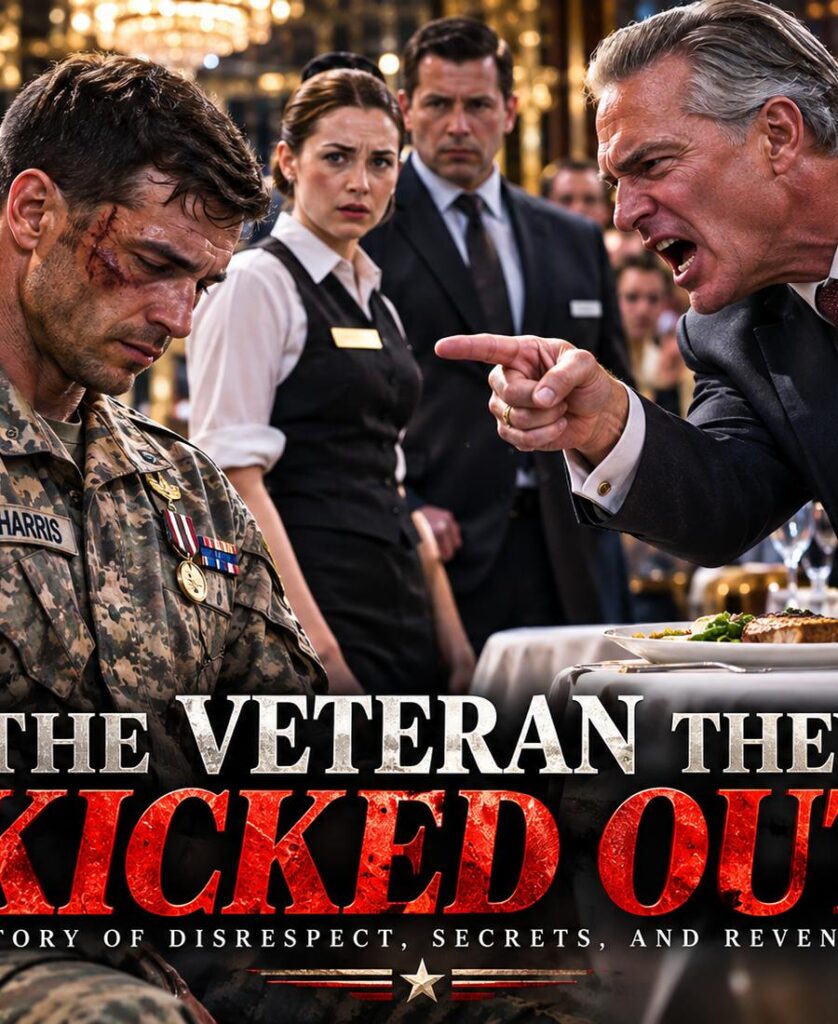
The Lafayette Room looked different in daylight. Without the chandeliers and the guests in evening clothes, the restaurant seemed smaller, almost ordinary. A cleaning crew had removed the broken glass, but the marble floor still bore faint discoloration where Vincent Cross had thrown his wine. Tables stood without flowers. White covers had been placed over the elaborate dining chairs. Outside, journalists waited behind a barrier, hoping for an arrest or a statement dramatic enough to dominate the morning news. Nathan arrived in plain clothes with Mia and Rachel, escorted by an investigator. He had not wanted to return. Yet the restaurant contained the last known trail of the cargo records, and a small part of him needed to stand inside it without Cross commanding him to leave.
Brooks’s team had already secured the basement under appropriate legal authority. A technician carefully documented the refrigerated wine wall, photographing the labels and hinges before opening a narrow service panel concealed behind a display of rare bottles. The panel led to a storage room containing file cabinets, old computer equipment, and a server rack with backup drives. Investigators did not cheer when they found it. They photographed serial numbers, recorded the state of the machines, and followed procedures designed to preserve data without changing it. Nathan watched through an authorized observation area. It was a quiet scene compared with the previous night’s shouting, but the steady work felt more important. Truth did not need a dramatic entrance. It needed records that could be tested and people willing to do the testing.
The initial inventory showed invoices connected to veterans’ memorial events, consulting contracts with former officials, and payments routed through a network of companies associated with Cross Defense Holdings. Some transfers corresponded to dates on the black binder page, including the one bearing Mercer’s name. Others were tied to the procurement arrangement that had placed unauthorized cargo on the helicopter. Investigators would need time to determine whether each payment was lawful, misleading, or criminal. Brooks made that distinction clear whenever Nathan asked questions. He found himself grateful for the caution. Cross had built his reputation by offering one simple story: a brave survivor used his fortune to honor fallen heroes. The truth was more complicated, and Nathan did not want to replace one convenient myth with another.
An archived surveillance clip from the previous evening showed Derek ordering a technician to change the access system to event lockdown mode shortly before the alarm. Another camera captured the worker moving the black binder into a catering cart. A third recorded Cross speaking with Mercer at the loading dock before the detective entered the kitchen corridor. The footage did not capture every word, but it established timing that contradicted their first statements. Brooks arranged for the files to be preserved and independently reviewed. Carter’s body camera provided further support for the sequence, including Mercer tearing the ledger page. Nathan watched only the segment necessary to confirm what had happened. Seeing himself in uniform, surrounded by angry strangers, caused an unexpected surge of shame. He knew he had done nothing dishonorable. Shame often arrived without asking permission from reason.
Mia watched the same scene and felt anger rise anew. She saw Derek pulling her by the arm and Cross shoving the invitation into Nathan’s chest. She saw wealthy guests lowering their eyes or laughing nervously, trying to remain on the powerful man’s good side. But she also saw small acts she had missed in the chaos: Gloria standing close enough to hear the exchange, Luis moving between Nathan and the manager, and Eleanor Whitcomb lifting a hand as though preparing to speak. The video reminded her that the room had never been united against the soldier. Fear had simply been louder than resistance at first. When people finally acted, they did not all act at once. They created a chain of small interruptions that made the public lie harder to sustain.
Derek was brought in for a formal interview and told investigators that he had followed instructions from the event sponsor. He insisted that he had not known the locked doors could endanger guests. Gloria’s statement and the system logs suggested he had been warned. When shown the footage of Mia’s arm being seized, he stared at the screen and asked whether the restaurant could handle the matter internally. Mia declined to discuss it with him. She had learned enough in one night to recognize the difference between accountability and a private apology offered after evidence appeared. Derek might eventually face legal or employment consequences, but those decisions belonged to proper processes. For Mia, the more immediate choice was whether to keep working in a place where her fear had been treated as a nuisance. She had already decided she would not.
Mercer was placed under arrest after investigators developed evidence supporting charges related to interference with the inquiry and the destruction of evidence. Brooks reminded the family that charges were allegations requiring proof in court. Nathan did not need a conviction that morning to know the importance of the recordings. Without Carter’s camera, Mercer’s act of tearing the document might have been described as routine evidence handling. Without Mia’s copy, Cross’s version of events might have become the first and only widely circulated account. Without the guests recording from outside the service door, the confrontation could have remained trapped inside the restaurant’s controlled security system. Each independent perspective mattered. The record was stronger because no single participant owned it.
Cross’s lawyer arrived shortly after noon and made a statement outside the building, denying wrongdoing and accusing unnamed opponents of exploiting a charity event. The statement spread quickly online, accompanied by an old photograph of Cross shaking hands with a general. Nathan saw the headline on a phone and felt tired rather than surprised. A wealthy man could purchase time, advisers, and public messaging. He could not, if the evidence was properly preserved, make a recorded action cease to have occurred. Nathan put the phone away. He did not want his life to become a daily contest over headlines. Thomas had not died so that Nathan could spend the rest of his years arguing with strangers in comment sections. He had died asking people to be counted honestly.
Bell was questioned separately and informed of the expanding investigation into the helicopter’s cargo, flight authorization, and later concealment of records. Investigators examined the relationship among his office, Cross’s companies, and the contractor that recovered Samuel Price after the crash. They also reopened questions about the casualty identification process. Brooks did not promise a particular outcome. A full accounting might take months and encounter legal restrictions. The original accident could involve several causes, including mechanical issues unrelated to the misconduct surrounding the shipment. Nathan accepted those uncertainties. He had not wanted a story in which every doubt vanished and every villain confessed. He wanted a record sturdy enough to survive skepticism, built from documents and testimony rather than outrage alone.
That afternoon Rachel returned home with Mia for the first time since the threats began. Investigators had arranged temporary security measures, and the community center offered her leave while the case developed. The apartment was exactly as they had left it: a dishcloth beside the sink, a stack of mail on the table, and an unfinished grocery list held to the refrigerator by a magnet shaped like a lighthouse. Mia stood in the doorway, overcome by the ordinary sight of their lives. She had spent the night imagining that she might never see this kitchen again. Rachel placed her bag on the chair and said, “There are things I haven’t told you.” Mia looked at the boxes beneath the hallway shelf. “Then we’ll take them out one at a time,” she answered.
They spent the evening sorting Thomas’s letters. Rachel explained how fear had led her to hide the maintenance logs, how Cross had approached her, and why she had finally sent Nathan the invitation. Mia listened without pretending that every decision made sense. She asked sharp questions, and sometimes Rachel admitted she did not know why she had waited so long. Their conversation was painful, but it was not a trial. Rachel had been both frightened and brave, protective and mistaken. Mia loved her enough to allow those truths to coexist. Near midnight they found the paper crowns Thomas had worn at a picnic years earlier. The colored paper had faded, and one corner was crushed. Mia placed it beside the repaired silver watch. She had spent so long collecting proof of his death that she had nearly forgotten how many small proofs of his life remained in the apartment.
Nathan spent the following days speaking with families from the flight. Eleanor Whitcomb brought Daniel’s last message to a formal interview. Another widow produced a copy of a letter mentioning cargo weights. A former technician recalled being instructed to change a maintenance entry after the crash. Not every recollection could be corroborated, and some contradicted one another. Nathan tried to be careful with each person. He did not suggest what they should remember or promise that a particular official would be punished. He explained what investigators had verified and what remained open. Several families were angry that new questions had taken so long to surface. Others were reluctant to revisit a loss they had spent years learning to live with. Nathan respected both reactions. Truth belonged to them, but the decision to participate had to remain their own.
A week after the confrontation, a small memorial gathering was arranged at a community hall rather than at the restaurant. Mia had proposed it because she could not bear another expensive dinner held beneath Cross’s name. The families chose photographs of the dead that showed them laughing, fishing, working, or holding children. Nobody wanted a wall of dramatic wreckage. Gloria volunteered to help organize seating. Luis carried equipment and arranged transportation for elderly guests. Carter attended as a private citizen after completing his shift. Eleanor sat in the front row, the gold rotor pin on her jacket. Nathan arrived in his Army dress uniform, the same one Cross had tried to expel from the Lafayette Room. It was freshly pressed, but the fabric felt different now, less like armor and more like a duty he had finally begun to fulfill.
Mia stood at the microphone and told the gathering that her father had been a man who repaired household objects because he believed useful things deserved a second chance. She described his terrible pancakes, his habit of asking about breakfast from thousands of miles away, and the names he invented for clouds when they watched storms together. Her voice broke once. She waited, took a breath, and continued. She did not thank Cross, the restaurant, or any institution for giving her the truth. She thanked the people who had preserved documents, spoken when threatened, and refused to let an official account silence ordinary questions. When she finished, Rachel embraced her. Nathan looked toward the back of the hall where Samuel Price stood quietly beside an investigator. Mia had invited him to hear the memorial but had not yet decided what place he might have in her life.
Nathan then read the names of the service members who died. He paused after each one, letting the sound remain in the room rather than rushing toward a speech. When he reached Thomas Vale, he looked at Mia and remembered the paper crowns, the laughter, the desert valley, and the hand that had pushed him toward safety. “Sergeant Thomas Vale,” he said, and the room stood. There was no applause. There was only the rustle of chairs and the heavy silence of people giving a name the attention it deserved. Nathan felt tears come and did not hide them. He had once thought leadership required him to remain composed so that others could grieve. Tonight he understood that grief, honestly expressed, was not a failure of command.
After the service Mia found Nathan near a table of photographs. She opened her hand and showed him the silver watch, now repaired by a local watchmaker. The second hand moved in a small steady circle. “I thought you should have it,” she said. Nathan shook his head. “Your father gave it to me because he wanted me to bring it home to you. I was just late.” Mia smiled sadly. “Very late.” She took his hand and closed his fingers around the watch for a moment, then accepted it back. Inside the cover Thomas’s photograph remained faded but intact. The watch was not a magic object or a substitute for a father. It was something he had touched, something time had carried forward. Mia clipped it to a chain she wore beneath her sweater, close to her heart.
Brooks arrived after the guests began leaving. She waited until Nathan had finished speaking with the families before asking for a private moment. She carried a thin envelope recovered from the restaurant’s basement server. The label referred to a series of shipments recorded under a project name that did not appear in the original accident file: OPERATION SECOND FLIGHT — ACTIVE. Nathan felt his stomach tighten. The investigation into Thomas’s death had already exposed forged records, concealed payments, and a living witness listed among the dead. The new label suggested that some part of the logistics network might still be operating. Brooks explained that the phrase alone established very little. The files had to be authenticated, their dates checked, and their operational meaning determined. She did not want Nathan to leap from an old tragedy into another without knowing what he was facing.
Nathan opened the envelope with care. Inside was a printed schedule, a list of company codes, and an image of a cargo container bearing the same Cross Defense mark that appeared on Thomas’s photographs. One entry was dated the following month. Another referred to a remote airstrip in a state Nathan had never visited. At the bottom was a note: VERIFY WITH HARRIS BEFORE RELEASE. Nathan read it twice. He did not know whether the name referred to him, to another person, or to a deliberate attempt to draw him into the next stage of the scheme. Brooks placed the paper back inside the envelope. “This doesn’t mean you’re required to investigate anything yourself,” she told him. “We’ll handle the official work.” Nathan nodded. He had spent too long confusing responsibility with the need to face every danger alone.
He walked back into the hall and found Mia sitting beside the empty chair reserved for Thomas. She was studying the photographs, smiling at one of her father holding a crooked birthday cake. Nathan sat beside her. For several minutes they said nothing. Then Mia asked whether the investigation was over. Nathan considered the question carefully. “The truth about your father is becoming clearer,” he said. “The people who hid it still have questions to answer. And there may be more records to examine.” She nodded. “I don’t need you to promise every answer.” He looked at her. “What do you need?” She closed the watch in her hand. “Promise that when you find something new, you’ll tell me the truth instead of deciding what I can bear.” Nathan met her eyes and agreed.
At the front of the hall, sunlight passed through a high window and fell across the names written on a memorial banner. The words did not change when someone rich entered the room. They did not bend because a manager disliked a uniform. They belonged to the people who had lived, the families who remembered them, and the witnesses finally willing to speak. Nathan thought of the restaurant doors locking behind a frightened crowd and of the ordinary people who had helped open them. A week earlier, he had been told that his uniform was unwelcome at a table reserved for heroes. Now he understood that honor was not something a table owner could grant or take away. It was measured in what people did when another person needed help. Beside him Mia rose to greet a new guest, and Nathan followed her into the light, carrying the certainty that the first truth had finally come home and the next one was waiting to be told.