Chapter 2 – The Name on the Photograph
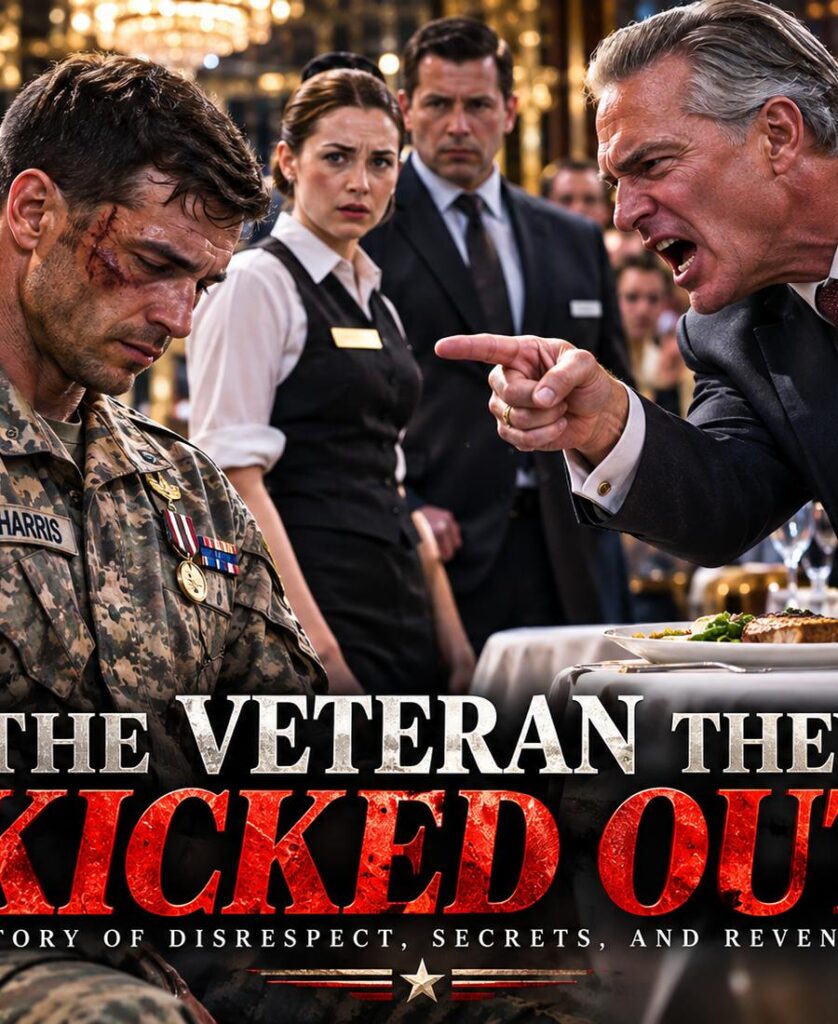
Nathan’s first impulse was to tear the false caption from the wall. Instead he stepped away from it and photographed the picture with his phone, taking care to include the entire frame, its label, and the surrounding dining room. It would be easy for someone to claim that a close-up had been altered. His years of fighting for answers had taught him to preserve context as carefully as evidence. Behind him, Vincent Cross regained his voice and began telling guests that the soldier was mentally unstable. The words seemed rehearsed. Nathan watched Cross speak and recognized the strategy: make the witness look dangerous before anyone bothers to hear what the witness knows. He also noticed that the television crew was quietly leaving through the side door. Somebody had instructed them to stop recording. A guest near the bar, however, continued filming on her phone.
“Where did you get that picture?” Nathan asked. Cross spread his arms as though entertaining an absurd question. “I paid for the exhibition. My foundation has funded memorials across the country.” “That’s not what I asked.” Nathan kept his voice level. “That photograph belonged to a classified investigation. Who gave it to you?” Cross looked toward Derek, and Derek looked toward the service corridor. Mia saw both glances. Nathan saw them too. The answer might be behind the kitchen doors, where the black binder had disappeared, but he could not move freely with the manager and guard blocking him. He tried another route. “If you were the sole survivor, tell us which side of the aircraft caught fire first.” Cross laughed dismissively. “You want to discuss technicalities in front of grieving families?” “No,” Nathan said. “I want you to stop using their grief as a shield.”
The old woman behind the curtain tried to stand. Nathan could see the outline of her hand on the fabric and heard a chair scrape. Derek hurried across the room, murmuring to a waiter to keep her seated. Nathan recognized the woman’s face when the curtain shifted. Eleanor Whitcomb had testified at an early memorial hearing, clutching the photograph of her nephew, Corporal Daniel Whitcomb, and asking why the casualty list had changed after the first briefing. She had never received an answer. Nathan had written to her twice, offering to tell her what he remembered. Both letters had been returned unopened. He had assumed she wanted to avoid the pain. Now he wondered who had intercepted them. Eleanor caught his gaze and touched the rotor pin at her collar, then pointed briefly toward the kitchen before the curtain fell closed again.
Derek took hold of Nathan’s elbow. The guard moved to the opposite side, but instead of grabbing him, he whispered, “My brother was under your command. Joshua Reyes.” Nathan remembered the name at once. Joshua had been a nineteen-year-old communications specialist who kept a photograph of his little sister taped inside his helmet. “Your brother saved two people in that valley,” Nathan whispered. The guard swallowed. “I’m Luis. He said you came back for him when the road was burning.” Derek jerked his chin toward the entrance. “I don’t pay you to have conversations.” Luis obeyed the movement without applying force. His presence between Nathan and the guests gave the appearance of an escort, yet his shoulder shielded Nathan from Derek’s impatient hands. An unexpected ally, Nathan thought, was still an ally who might lose his job for helping.
They reached the marble threshold. Nathan stopped when a thin metallic chain slipped from his jacket pocket and struck the stone. The silver watch at its end skidded in a shallow circle. He had taken it out earlier while examining the invitation and failed to secure the clasp. The cover sprang open. Within it was a tiny faded photograph of Thomas Vale smiling beside a little girl whose hair had been tied with bright red ribbons. Nathan bent immediately, his knee protesting, but Mia was closer. She caught the watch before Derek’s polished shoe could land beside it. “Be careful,” she said, holding it in her palm. Her expression changed as she studied the photograph. “Where did you get this?” Nathan reached toward her and stopped, suddenly aware that she was shaking. “It belonged to Sergeant Vale,” he answered. Mia’s eyes filled. “My father had that same watch.”
Nathan looked at her name tag again, this time seeing the surname he had failed to notice in the confusion. MIA VALE. He had known Thomas’s daughter as a child, a laughing nine-year-old who had once made them both paper crowns during a family picnic. She had changed beyond recognition. The ribbons were gone. Her cheeks were narrower, and her voice carried a cautious adulthood that Thomas would have hated to hear so young. Nathan had imagined finding her someday and telling her about the way her father made ordinary people feel brave. Instead he stood in a luxury restaurant while strangers watched him being expelled. “Mia,” he said softly. “Your father used to call you Little Comet because you ran through every room like you were bringing your own light.” She covered her mouth with her free hand. No stranger could have known that name.
The last time Nathan had seen her, Thomas had been teaching her to ride a bicycle in a parking lot. She had fallen hard on the pavement and announced that she would never try again. Thomas had examined her scraped knee, assured her that she could stop if she wanted, and then told her that he had fallen three times learning the same thing. Mia had climbed back onto the seat only because he told the truth about falling. The memory came to Nathan with such painful clarity that he almost smiled. He had carried that image through rehabilitation, divorce, and years of failed requests for declassification. Thomas had once made him promise not to let the girl remember only a flag and a folded letter. Nathan had failed at that promise every year until this one. Standing before her now, he could not tell whether finding her was grace or another danger.
Cross approached with his smile gone. His eyes fixed on the open watch. “Give that to me,” he said. Mia pulled her hand back. “It’s personal property.” “It belongs with the exhibition. It was stolen from a collection.” Nathan stared at him. “You recognize it?” Cross did not answer directly. “I recognize the type of fraud this man is running. He turns up at memorial events and claims a connection to dead soldiers.” Mia held the watch against her chest. “My dad’s picture is inside.” Derek extended his hand. “Miss Vale, comply.” “No.” The word surprised her as much as it surprised the manager. She had spent eleven months learning to apologize for things she had not done. Now she stood in front of wealthy strangers and declined a direct order.
Cross moved closer. “You have no idea who you’re dealing with.” Nathan stepped between the man and Mia without raising his arms. “You can call the police,” he said, “but nobody takes that watch.” Cross’s right hand tightened around his phone. The screen lit briefly as he typed. Nathan saw only the final movement of his thumb, but Mia, standing at an angle, glimpsed three words before the screen went dark: THE CAPTAIN IS HERE. Cross slipped the phone away, then spoke more softly. “I’ve worked with your superiors, Harris. I know what happens to men who refuse to accept an official finding.” Nathan’s blood chilled. He had not yet introduced himself to Cross by name. The businessman already knew exactly whom he had invited into the room.
Mia’s own phone vibrated. She expected a message from her mother, Rachel, who usually checked that she reached work safely. Instead a photograph filled the screen: the front door of the apartment they shared in Arlington, captured from across the street only minutes earlier. In the corner stood a black sedan that Mia did not recognize. A second message arrived before she could breathe. TELL THE CAPTAIN TO LEAVE. She looked up at the restaurant windows as if the sender might be watching from outside. Her mother had been planning to leave for an evening shift at a community center. Mia pictured her stepping out with a canvas bag, unaware of the camera. The room around her seemed to tilt. She made the mistake of calling Rachel immediately; the call rang through to voicemail.
Nathan saw the change in her expression and asked what was wrong. Mia showed him the screen. His attention sharpened into the controlled stillness that had frightened his younger soldiers when danger appeared. He asked her not to delete anything. He asked whether the photograph showed their current home and whether the sedan belonged to someone she knew. Then he had her forward the messages to a trusted email account and save the sender information. He was careful not to promise that the threat was empty. He had learned that reassurances made without evidence could be another form of abandonment. “We will contact emergency dispatch,” he said. “And you’ll tell them exactly what you received.” Mia nodded with an effort. Her fingers struggled against the phone’s glass.
Derek called the photograph a publicity stunt. “Perhaps your friend wants attention,” he said. “People invent all sorts of stories for sympathy.” Mia felt something hard settle inside her. She had worked double shifts to keep Rachel from falling behind on rent after the community center cut her hours. She had endured patrons snapping their fingers at her, joking about her accent when she was nervous, and asking whether the uniform of a waitress was the best she could hope for. But nobody had threatened her mother before. Nobody had ever put her father’s photograph in the hands of the man being humiliated at the entrance. Derek’s casual dismissal made the danger feel more real, not less. People who were merely confused asked questions. He was determined to stop questions being asked.
Luis moved to the door and used his own phone to contact a supervisor outside the restaurant, explaining that a guest had reported a possible threat to a family member. He kept his words factual, avoiding Cross’s name until he was asked for it. Nathan watched him and remembered Joshua again, the younger brother racing across an open road to help a stranger. The resemblance was not physical; it was in the refusal to pretend danger did not exist because acknowledging it was inconvenient. Luis returned with a pale face. “A police unit can be sent,” he said. “But somebody called first and claimed there was an unstable veteran making threats here.” Derek glanced toward Cross. Nathan recognized the trap: whoever controlled the first account could shape every response that followed. That did not make the account true, but it could make truth slower to reach the people who needed it.
Nathan asked Mia to read the invitation’s reverse side while he held it. Her eyes traced the familiar handwriting, and she made a small sound of recognition. “Dad wrote his R like that,” she whispered. “He used to say his handwriting was too ugly for love letters.” Nathan nodded. Thomas had been teased for his notes, which looked as though they had been written in a moving vehicle. “When did you last see a note in his hand?” Nathan asked. “Before the funeral.” Mia’s gaze shifted toward the hall. “My mother kept a box. She said some things should wait until I was older.” Nathan understood the impulse. Families preserved painful objects as if a later version of themselves might finally know how to hold them. Yet the note in his hand had appeared fourteen years after Thomas’s death. Somebody had kept a piece of the past alive, and somebody was using it now.
Cross resumed speaking to his table with exaggerated confidence, telling a story about the courage required to build his company after a “terrible battlefield experience.” Guests tried to laugh in the right places. Nathan heard a mention of an aircraft’s final moments and could no longer bear the performance. He crossed to the photograph, taking care to move where cameras could see him. Cross followed, hissing, “You will regret this.” Nathan turned. “Then answer one question in front of your guests. What happened to the medical supplies listed on the first manifest?” Cross’s face changed. For a moment the businessman looked less like a powerful patron and more like a man cornered by an old mistake. “You don’t know what you’re talking about,” he whispered. “I know the shipment was changed,” Nathan answered. “And I know someone signed off on the change.”
Mia was standing near enough to hear. She remembered Rachel waking at night and checking the front-door lock, even years after the military funeral. Rachel had kept the television off whenever a charity advertisement featured Cross. When Mia once asked why, her mother said that some men turned suffering into a business. Mia had dismissed it as bitterness. Now she saw the room through that sentence. The memorial photographs, the donors, the speeches, the expensive food: all of it seemed arranged to make guests feel good about their generosity without asking what had happened to the people pictured. She looked at Nathan’s wrist, bare where the watch had been, and wondered whether her father had left clues that no one had wanted to read.
Nathan crouched beside the exhibit and examined the underside of the frame. A thin scratch extended from the wooden message he had noticed earlier. It was not random damage. The letters were recent, cut into the varnish after installation. Somebody had wanted him to see them, but not everyone. He photographed them with Mia’s phone as well as his own. Cross shouted for Derek to disconnect the security cameras. That command finally brought several guests to their feet. A lawyer at a nearby table said loudly that no one should alter recordings during an incident. Cross stopped short and looked at her as though seeing an enemy emerge from the linen and silverware. Nathan realized the balance in the room had shifted slightly. The wealthiest man was no longer the only person speaking.
Then Cross’s phone lit up again. This time Nathan saw the entire message reflected in a polished wine bucket: REMOVE THE GIRL. He lifted his eyes to Mia. She had stepped toward the kitchen, following a waiter who was carrying a black binder beneath his jacket. Nathan called her name. The waiter quickened his pace. Derek moved to block Nathan, but Luis shifted into the manager’s path with a tray of empty glasses, creating a clumsy, plausible delay. Mia reached the kitchen door just as the waiter disappeared. From beyond it came the metallic snap of a lock. Somewhere outside, a siren sounded and then fell silent. Nathan stood between Cross and the service corridor, the silver watch now safely in Mia’s pocket. For the first time that night he was afraid not for himself, but for the daughter he had promised to protect.
Cross came close enough to speak without the cameras hearing. “There was one thing your friend never told you about that flight,” he said. “Ask your commanders whose signature is on the report.” Nathan stared into his face. The words were designed to send him backward into a history of betrayal and doubt. He resisted. “The report is false,” he answered. Cross’s expression tightened. The man had expected fear, perhaps anger. He had not expected a statement made with certainty. Nathan reached into his pocket for the note from Thomas. The paper was still warm from his hand. “Someone invited me here because your story is about to end,” he said. Cross stepped away and gave Derek a sharp look. A moment later the fire alarm shrieked. The dining room lights flickered, and the magnetic locks on the exit doors clicked shut.