Chapter 4 – The Locked Dining Room
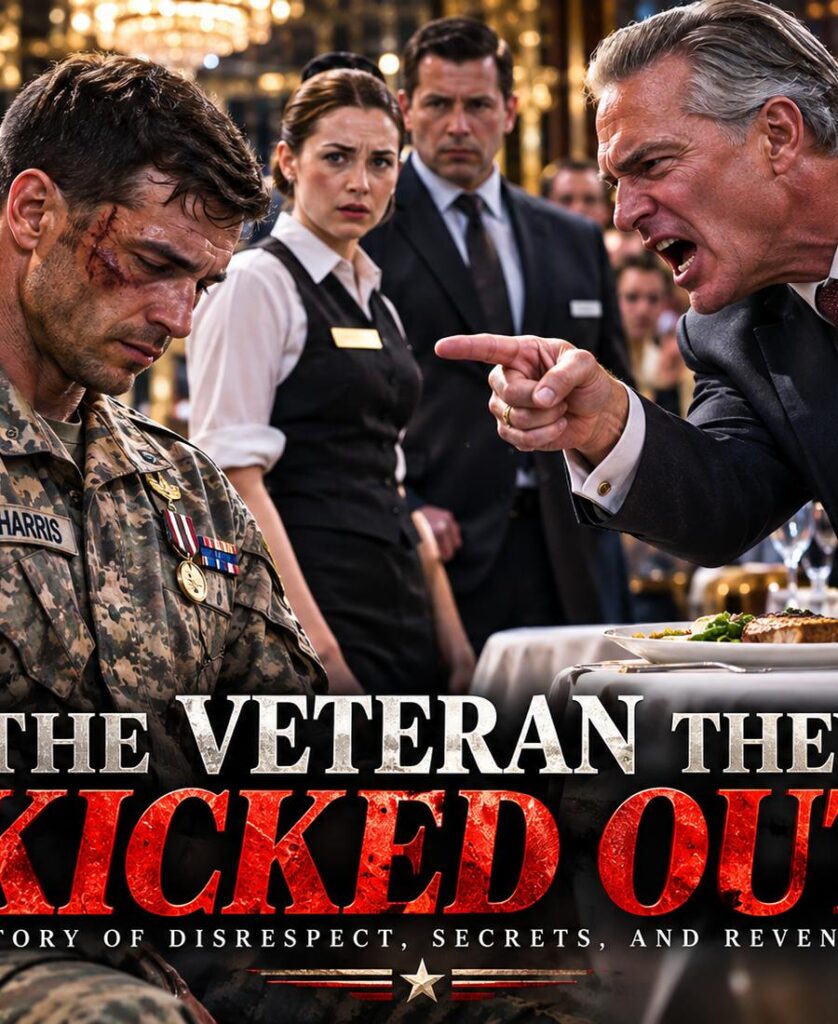
Detective Paul Mercer walked into the service corridor as though every door in the restaurant belonged to him. He wore a dark jacket over an expensive shirt, his badge clipped prominently beside his belt. Two uniformed officers followed. One was young, narrow-faced, and visibly confused by the noise still coming from the dining room. The other had already been speaking into a radio, trying to establish whether firefighters needed access to the locked security doors. Mercer ignored that question. He pointed at Nathan and announced that there had been an assault on restaurant personnel. No employee had yet made a statement. No one had asked Mia whether she had been injured by the rolling catering cart. Cross stood behind Mercer, letting the detective speak for him. It was a familiar display of power: one man manufactured a story, while another arrived with the authority to make it official.
Nathan kept his hands in plain sight. “The guests are outside, and emergency crews are checking the doors,” he said. “This document fell from a cart in the kitchen. I’d like it logged as evidence.” He held up the page in its plastic sleeve. Mercer barely looked at it. “You don’t get to tell me how to do my job.” Nathan accepted the rebuke without argument. His goal was not to win Mercer’s approval. It was to put the page in the view of as many recording devices as possible. The younger officer’s body camera remained on. Mia’s phone was filming discreetly from beside her apron. A camera above the corridor door showed a steady green light. Nathan described the chain of events aloud, including the location where he had recovered the document and the fact that Mia had witnessed it. Mercer glanced at the ceiling camera with sudden irritation.
Mia tried to explain the threat against Rachel. Mercer interrupted before she finished. “Miss, this gentleman has stirred you up. Those pictures can be staged.” “The photographs were sent to my personal number,” Mia replied. “I reported them to emergency dispatch before you arrived.” Mercer’s eyelids narrowed. “Then dispatch will handle it.” The younger officer checked his portable screen, confirmed the incident number, and frowned. A notation indicated that the request for assistance at Rachel’s apartment had been marked resolved without a unit being sent. “Sir,” he said, “there’s no officer assigned to that address.” Mercer answered too quickly. “False alarm.” The younger officer looked at Mia again. She had the bruised shin, the shaking hands, and the record of a call made while a crowd was trapped in a restaurant. None of it resembled a rehearsed performance.
Cross tried to recover control with a different tactic. He invited Mercer into the private dining room and offered to provide complete cooperation through his legal department. The phrase complete cooperation sounded generous, but Cross immediately added that certain video files would be confidential because federal donors had attended the dinner. Nathan pointed out that neither private donations nor the presence of wealthy guests erased public-safety records. Cross’s smile thinned. “An officer in uniform should understand discretion,” he said. Nathan replied, “Discretion isn’t the same as destruction.” The younger officer’s gaze flicked between the two men. Mercer instructed him to stop recording because the conversation might include protected business information. The officer responded that his department’s policy required recording during active enforcement contact. It was the first open resistance Mercer had encountered that night.
Mia watched the detective as she might watch a lock she was trying to understand. He had come through the loading dock, not the street. He knew Cross’s name but had not asked for hers. His polished shoes were clean despite the spilled wine and broken glass in the dining room. Most important, he did not seem surprised to see the ledger. Nathan had been right about the way first stories became official stories. She remembered the police officer who had visited Rachel years earlier, telling her mother that continued requests for accident records might lead to trouble. Mia had been a teenager listening from her bedroom, afraid to step into the hallway. The man had been in civilian clothes. She had never seen his face. But the voice that had said, “You’re making this harder for your daughter,” had the same measured impatience she now heard in Mercer.
Nathan placed the page against a clean metal countertop so the younger officer could see the names. He read the transfer amount and the associated date. Mercer stepped forward, seized the page, and tore it across the center. The sound was surprisingly loud. Mia gasped. The younger officer raised his head. Outside the service door, guests who had remained to see what happened lifted their phones. Mercer seemed to notice the witnesses only after the paper was already in two pieces. “It was contaminated,” he said. “Improperly handled.” Nathan did not react physically. He had already photographed the full page. “Please keep both halves,” he said. “The body camera recorded you tearing it.” Mercer’s hand tightened around the fragments. “Evidence can disappear,” he murmured close to Nathan’s ear, “and so can witnesses.”
Nathan felt the old urge to answer a threat with a threat. He remembered what that impulse had cost other men in the desert, where a rash gesture could become an excuse for somebody else to use overwhelming force. He focused instead on the practical steps. Mia had a recording. The young officer had a recording. The ripped fragments could still be preserved. The rest of the binder remained on the cart. He turned his eyes toward it. Mercer followed his gaze and motioned for a uniformed colleague to take it. The younger officer moved first. “I’ll secure the item, sir,” he said. He picked up the binder by its edges, photographed it, and announced the time. Mercer stared at him. “Officer Carter, step back.” “Yes, sir,” Carter said, but he kept the binder in his custody. “I’ll need an evidence receipt.”
The name Carter lodged in Nathan’s memory. He had seen young men like this officer before: new enough to believe written rules existed for a reason, experienced enough to know that powerful people sometimes wanted rules applied selectively. Carter’s career could suffer for refusing a senior detective’s command. Nathan did not want to turn him into a symbol of bravery at the price of his future. So he addressed Mercer rather than Carter. “There are independent copies of the ledger page. My phone has one. Mia’s has another. Dispatch has the threat report.” Cross’s expression sharpened. His gaze moved toward Nathan’s jacket pocket, then Mia’s apron. The calculation was visible. There were now too many things to seize without witnesses noticing.
Derek entered the corridor and announced that the building’s alarm had been a malfunction. He blamed Nathan for breaking the release-panel glass and claimed that the guests had never been in danger. Carter asked whether the doors could be opened from the inside without electricity. Derek began explaining the expense of the locking system. Carter asked the question again. No one answered. From the kitchen, a cook called out that staff had been told to remain inside until the event concluded, despite the alarm. A second cook confirmed that a manager had instructed them not to use the loading dock because cameras were being checked. Nathan could see Carter’s confidence grow as other witnesses gave concrete observations. Cross tried to silence them by threatening to call the restaurant’s owner, but the words no longer had the authority they possessed ten minutes earlier.
At the edge of the kitchen, Mia noticed a small object taped beneath the binder’s back cover. It was a battered flip phone with a scratched screen, the kind her father had used before smart devices became ordinary. Its battery cover had been repaired with silver tape. She remembered sitting beside Thomas at a kitchen table while he explained how to replace a battery without losing the little photographs stored on the phone. She was unsure whether this was the same device, but the tape made her heart lurch. She pointed it out to Carter. He photographed it where it lay and eased the phone from its fastening with gloved hands borrowed from an evidence kit. The screen lit when he opened it. A scheduled alarm filled the display: 11:59 P.M. — PLAY THOMAS’S LAST RECORDING.
Cross lurched toward them. “Don’t touch that. It’s company property.” Carter stepped between him and the binder. “Sir, please remain behind the line.” There was no physical line, but the meaning was clear. Cross seemed unused to hearing a refusal from anyone below his social position. “Do you know who funds your department’s community program?” he demanded. Carter looked briefly at Mercer, as if expecting support. Mercer said nothing. Nathan watched the detective weigh the risks of pushing further while cameras recorded. Every passing second made the position more precarious for the man who had torn the evidence. Outside, reporters had begun arriving after videos of the dining-room confrontation spread through local social networks. The doors were no longer the boundaries of Cross’s influence.
Mia stared at the flip phone until the numbers blurred. Thomas had called her before most deployments. He had always asked what she had eaten for breakfast, even when the time difference meant he was speaking in the middle of the night. He used to say that hearing ordinary details reminded him what he was protecting. At nine she had thought the questions silly. As an adult she would have given anything to hear him ask again. Now a damaged object in a police officer’s hand promised a voice from the past. She was afraid it would be a fake, afraid it would be real, and afraid she would break down before she could help protect the evidence. Nathan noticed her expression and stood near enough that she could reach his sleeve without feeling watched.
Mercer suddenly ordered everyone to leave the corridor. “Potentially hazardous device,” he declared. Carter checked the phone’s exterior. It contained no visible modification beyond the taped battery cover. He agreed that an unknown device should be treated carefully but questioned whether it needed to be removed from the premises by Mercer personally. The detective’s voice rose. “I’m the senior officer here.” Nathan stayed silent. This was no longer a conflict between a wealthy donor and an isolated veteran. It was a disagreement inside the response itself, being documented in real time. Carter requested a supervisor through dispatch. Mercer attempted to take his radio. Carter stepped back. Their colleagues watched, uncertain whom to follow. Nathan felt a fragile opening appear in the wall of authority Cross had built around himself.
A call came through on Carter’s earpiece. The dispatcher confirmed that a unit had finally reached Rachel’s apartment building. The officers found no sign of forced entry, but neighbors reported a dark sedan leaving shortly after Rachel went outside. A witness had recorded part of the license plate. Mia pressed her fingertips against her lips. The update did not say her mother was safe. It did prove that the photograph was connected to a real vehicle seen by other people. Mercer muttered that coincidences happened. Carter did not respond. Instead he asked dispatch to preserve the witness account and to locate Rachel as a priority. Mia stared at him with gratitude that made her eyes sting. A stranger had taken her fear seriously when men with greater authority had treated it as an inconvenience.
Nathan’s phone buzzed with a call from an unknown number. He let it ring once, then answered on speaker while Carter watched. A low male voice said, “Captain Harris, you should have stayed away. The dead are easier to honor than the living.” Nathan asked who was speaking. The caller ignored the question. “The watch belongs to Thomas. The girl belongs with her mother. Leave the binder and you’ll get both back.” Mia heard enough to go pale. Nathan answered, “I don’t negotiate with anyone threatening a family.” The caller laughed softly. “You already did once. You signed the first report.” The call ended. Nathan stood motionless, feeling the old accusation strike at the worst point in his memory. He had signed a preliminary medical statement after awakening in the field hospital. That document had later been quoted as confirmation of mechanical failure, though he had never made such a conclusion.
Carter asked whether Nathan wanted the call logged. Nathan said yes. His voice was steady, but Mia saw the tension in his jaw. “What did he mean about the report?” she asked. Nathan did not evade her. “I signed a document saying what I remembered at that moment. I had been badly injured. It listed the people I saw and the symptoms I had. Someone later used my signature beneath conclusions I never agreed to.” He watched her face carefully. The truth was complicated and could sound like an excuse, particularly to a daughter who had lived with an official account of her father’s death. Mia considered the answer. “Then we’ll need the original statement,” she said. Nathan nodded. He had already requested it eleven times.
At 11:58 the flip phone began vibrating in Carter’s hand. The officer set it on a clean tray, keeping the screen visible to the cameras. Every person in the corridor seemed to stop moving. The device displayed a countdown that had apparently been programmed long ago or reset by the person who placed it in the binder. Nathan watched the seconds vanish. Cross backed toward the kitchen door. Mercer reached for the tray, but Carter raised a hand. “Sir, do not disturb the evidence.” A final vibration shuddered through the battered plastic. The screen changed to an audio-player icon, and a faint crackling voice began to speak. Mia knew the voice before she heard the first complete sentence.
“This is Sergeant Thomas Vale,” it said, “recording at zero two seventeen.” The silver watch slipped from Mia’s clenched hand into her apron pocket. For fourteen years she had tried to remember exactly how her father sounded when he was serious. The recording made every faded memory suddenly unbearable. Thomas took a breath, and static scratched the speaker. “The cargo was not medical supplies. Cross knows what we carried.” Nathan closed his eyes for a moment. Mercer moved again, then stopped when Carter turned the phone toward the body camera. The voice continued, breaking through the noise of the distant alarm. “If anything happens to us, ask Captain Harris about the second manifest.”