Chapter 6 – The Voice That Should Not Exist
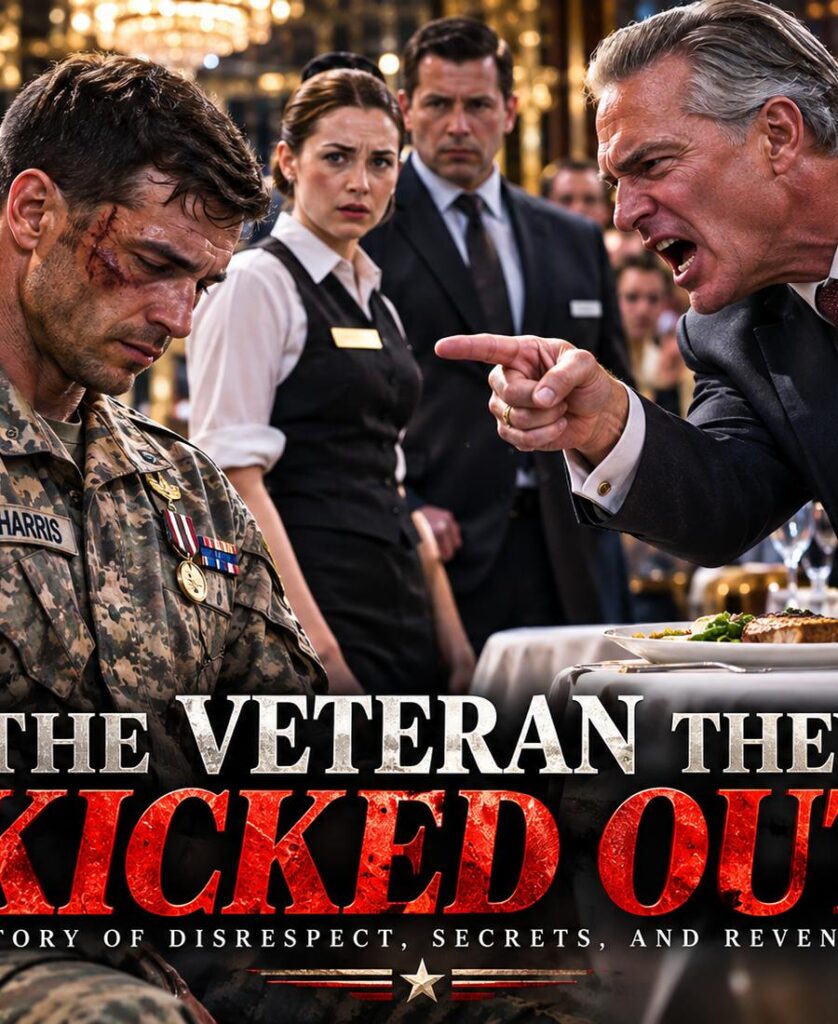
Nathan did not drive directly to the old armory. He stopped at a gas station under bright lights, parked where the security cameras could see his vehicle, and called Special Agent Elena Brooks. They had first met when a routine veterans’ benefits review revealed that sections of his medical file had been amended after he signed them. Brooks was patient and skeptical, qualities Nathan had come to value more than easy sympathy. She had never promised him that the crash investigation would be reopened. She had promised to distinguish what he remembered from what records could establish. Tonight, after a dead man’s voice emerged from a phone inside a restaurant binder, he needed that discipline more than ever. Brooks answered on the second ring. “Tell me where you are,” she said, and he could hear traffic behind her. Nathan gave the intersection and described the message summoning him to the armory.
“Do not enter until I can account for the people inside,” Brooks said. Nathan watched a truck leave the station. “Rachel may be there.” “That makes her a potential victim, not a reason to abandon caution.” Brooks asked for everything he knew about the property: its former purpose, entrances, neighboring buildings, lighting, and available access roads. Nathan had trained at the armory when he was younger. It had been a storage facility for vehicles and maintenance equipment, later transferred to a private contractor before being abandoned. He remembered a long bay, an office wing, and a basement records room. Brooks asked whether Cross Defense Holdings had ever leased the property. Nathan did not know. She promised to check, then told him to keep the call open when he approached. He did not mistake her measured tone for a guarantee of safety. It was a plan built around uncertainty rather than a fantasy of control.
Mia called while he was waiting. She had been given water and a chair at a temporary police command station outside the restaurant. Officer Carter was arranging an evidence transfer under his supervisor’s authority. Mercer had been removed from the immediate investigation pending review of the body-camera recordings, though no arrest had been made. Cross was refusing further questions without a lawyer. “Everyone’s talking about the video,” Mia said. “Someone posted you being pushed, and the comments are awful.” Nathan felt a familiar fatigue. “Don’t read them tonight.” “Some people are calling you a fraud.” “They don’t know me.” “They think they do.” Nathan was silent. Public humiliation had an afterlife that truth rarely received automatically. A clipped video could travel farther than a correction. He asked her to preserve any original recordings from the restaurant and let qualified investigators handle claims about authenticity. Mia took a breath and promised she would.
She had also contacted the community center where Rachel worked. A colleague said Rachel had not arrived for her evening shift. That fact frightened Mia more than the anonymous photographs. Her mother was punctual even when ill, even when the buses ran late, even when she had barely slept. Rachel always called if something prevented her from getting to work. “What if she’s been taken?” Mia asked. Nathan did not say that he believed everything would be fine. “We have an address and a lead,” he answered. “Brooks knows where I am, and people are looking for Rachel. I will call you when I have something verified.” Mia wanted to argue, but she heard the care in the word verified. Her father had taught her that certainty should be earned. She told Nathan to keep his promise, then ended the call before he could hear her cry.
The road toward the armory ran between warehouses and fenced lots. Rain had begun to fall, thin and steady, turning streetlights into blurred circles. Nathan parked across from the old building rather than at its entrance. The armory’s sign had been removed, leaving pale rectangles on the brick where the letters once hung. Several windows were boarded. One side door glowed beneath a single industrial lamp. In the lot stood a dark sedan that resembled the car from Mia’s photograph. Nathan noted part of its license plate and sent the information to Brooks. He was tempted to walk straight to the vehicle and demand answers from whoever sat inside. Instead he waited until Brooks confirmed that agents were approaching from another route. Waiting had always been harder for him than action. Tonight he knew patience could keep Rachel alive.
A figure appeared in the doorway. It was Rachel Vale, wrapped in a gray coat, her hair pulled back with the same blue clip Mia had worn as a child. Nathan felt relief so fierce that it almost hurt. She was standing on her own, unrestrained, and looking toward his car. Yet she did not wave. She scanned the dark road with the expression of a person who expected someone to emerge behind her. Nathan stepped from the vehicle and held up one hand. Rachel crossed the empty parking lot quickly and stopped just outside the pool of light. “Did you bring anyone?” she whispered. “An investigator knows where I am.” Her face tightened. “I told you to come alone.” Nathan studied her. “You didn’t send the message?” Rachel shook her head. “I sent the invitation. Someone else sent that text.”
The distinction changed everything. Rachel took him through the side door into a long storage bay lit by portable work lamps. She explained that she had been approached outside her apartment by a man who said he could help her recover documents Thomas had left behind. He knew details of the original mission that had never been public. She agreed to speak with him in a nearby café, but the meeting changed location twice, and she eventually recognized the trap. She escaped when the man left her alone in the sedan to make a call. The armory, she said, was the location Thomas had mentioned years before in a letter that had remained sealed until recently. She had come here because she believed a case hidden in the old maintenance bay might still be intact. Nathan was angry that she had exposed herself to such danger. Rachel was angry too, but at herself and at the years that had made desperation feel reasonable.
“I didn’t sell Thomas out,” she said before Nathan asked. The words came with practiced force, as though she had rehearsed them through fourteen sleepless years. Nathan showed her the ledger photograph and the forged acknowledgment. Rachel looked at the signature and shook her head. “I met Cross six months ago because he threatened Mia. He said he could make her lose her job, ruin her reputation, and reopen questions about Thomas that would hurt her.” She had agreed to a meeting in the hope of finding out what he wanted. Cross had placed papers before her and offered money in exchange for an agreement never to discuss the helicopter crash. Rachel refused. Later she discovered a copy of the document carrying a version of her signature. She had not known where to report it without alerting the very people she feared.
Nathan remembered their last conversation after the funeral. Rachel had stood at her kitchen sink, washing the same mug repeatedly while he offered to help with paperwork. She had said she needed space. He had interpreted the refusal as a grieving wife’s desire to protect her daughter from military complications. Now he realized she might have been protecting him as well. “Why didn’t you tell me?” he asked. Rachel leaned against a metal cabinet. “Because the first time I tried, a man came to our home and described Mia’s route to school. He told me that if I kept asking questions, somebody might decide Thomas wasn’t a hero after all. I was thirty years old, Nathan. I had a daughter who still slept with the hall light on. I thought silence would keep her safe.” Her voice cracked. “I was wrong about what silence costs.”
They sat on an old workbench while rain tapped the skylight. Rachel explained how Thomas had behaved in the week before his last deployment. He had seemed distracted and checked the locks twice each night. On the morning he left, he handed her an envelope containing maintenance notes and a small key. “If anything happens,” he told her, “don’t let them take this with the rest of my things.” Rachel asked whether he was afraid. Thomas smiled and said he was careful. She had wanted to believe him. The official inquiry later asked for all records related to his assignment. Rachel gave them photocopies of ordinary letters and kept the maintenance logs hidden. For years she could not decide whether preserving them was an act of loyalty or a dangerous refusal to let him rest.
The invitation had been her idea. She had copied the sentence about the ledger from Thomas’s handwritten notes and sent Nathan the card because Cross’s annual memorial dinner was the only public gathering at which the businessman, his associates, and the families would all be present. She had not anticipated that Cross would humiliate Nathan so openly or that someone would threaten Mia. “I thought the crowd would protect you,” Rachel said. Nathan shook his head. “A crowd can be made to believe almost anything when the person with the microphone controls the story.” He paused. “But people in that crowd also recorded what happened. Some of them spoke up. We might finally have witnesses who can’t all be ignored.” Rachel looked down at her hands. “I should have told you I sent it.” “Yes,” he said gently. “You should have.”
She brought out a small steel case from beneath a covered worktable. Its edges were scratched, and a strip of old adhesive had left a dark mark along the lid. A combination lock secured the front. Thomas had told her that the code was the date Nathan saved him from a roadside explosion during their first deployment together. Nathan remembered the moment because it had never felt heroic. He had simply heard a vehicle strike debris and run toward the smoke. Thomas, pinned beneath a broken door, had shouted that there was another passenger. Nathan had freed both men, then learned that the roadside device had been planted to stop a convoy carrying food. He entered the date. The lock released with a soft click that seemed impossibly loud in the empty bay.
Inside lay a folded manifest, a photograph, and a small notebook wrapped in waterproof material. Nathan opened the manifest carefully. It listed the helicopter’s official load of medical supplies, then an amended page adding three sealed crates assigned to a company code he recognized from the procurement inquiry. The cargo weight and destination were different. More disturbing was a signature authorizing the amendment. It belonged to Arthur Bell, the general who later oversaw the inquiry into the crash. Nathan had trusted Bell when he returned wounded from the mission. The general had visited him in the hospital, spoken about sacrifice, and assured him that the military would care for the families. Now Nathan held a document suggesting that the same man had helped order the shipment that made the flight dangerous.
Rachel lifted the photograph from the case. It showed a cargo crate with Cross Defense Holdings’ logo beneath a layer of plain shipping tape. Beside it stood Thomas, looking toward the camera with an expression Nathan could not quite read. The image’s background contained part of the maintenance bay where they now stood. Rachel said she had found the photograph tucked inside a birthday book Thomas had bought for Mia. “I thought he took it here,” she whispered. Nathan examined the position of the work lamps and the line of numbered hooks on the wall. They matched. The armory was not merely a place Thomas had once visited. Someone had used it to stage the shipment before the helicopter carried it into the desert. The building might hold more than one hidden case.
Brooks called. Her team had identified the sedan and was approaching the property. She instructed Nathan and Rachel to remain where they were and avoid opening any more containers until evidence technicians arrived. Nathan agreed, though the notebook on the workbench seemed to call to him. He could see numbers through the waterproof wrapping. Before he could ask Rachel about them, headlights swept across the boarded windows. A vehicle had entered the lot from the opposite side. Heavy tires crackled over gravel, then stopped. Rachel stiffened. “That’s not the man who brought me here,” she said. Nathan moved away from the workbench and positioned himself where he could see the door without blocking Rachel’s route toward a side exit. He did not draw a weapon. His task was to keep them safe and the evidence intact until help arrived.
A voice sounded through a portable loudspeaker outside. “Captain Nathan Harris, step away from the evidence.” Nathan recognized the speaker before the final word ended. The voice had once given him orders that he obeyed without hesitation. It had appeared in speeches, command briefings, and the official announcement of the crash findings. Retired General Arthur Bell stood somewhere in the rain, and he knew exactly what was inside the steel case. Rachel whispered, “Is that him?” Nathan nodded. His own voice sounded strange when he answered. “Yes. The man who told the families the helicopter failed.” A second command came from outside: “Leave the case on the table and come out alone.” Nathan looked at Rachel, the manifest, and the old photograph. The truth had finally acquired a face.