Chapter 8 – The Memorial They Tried To Burn
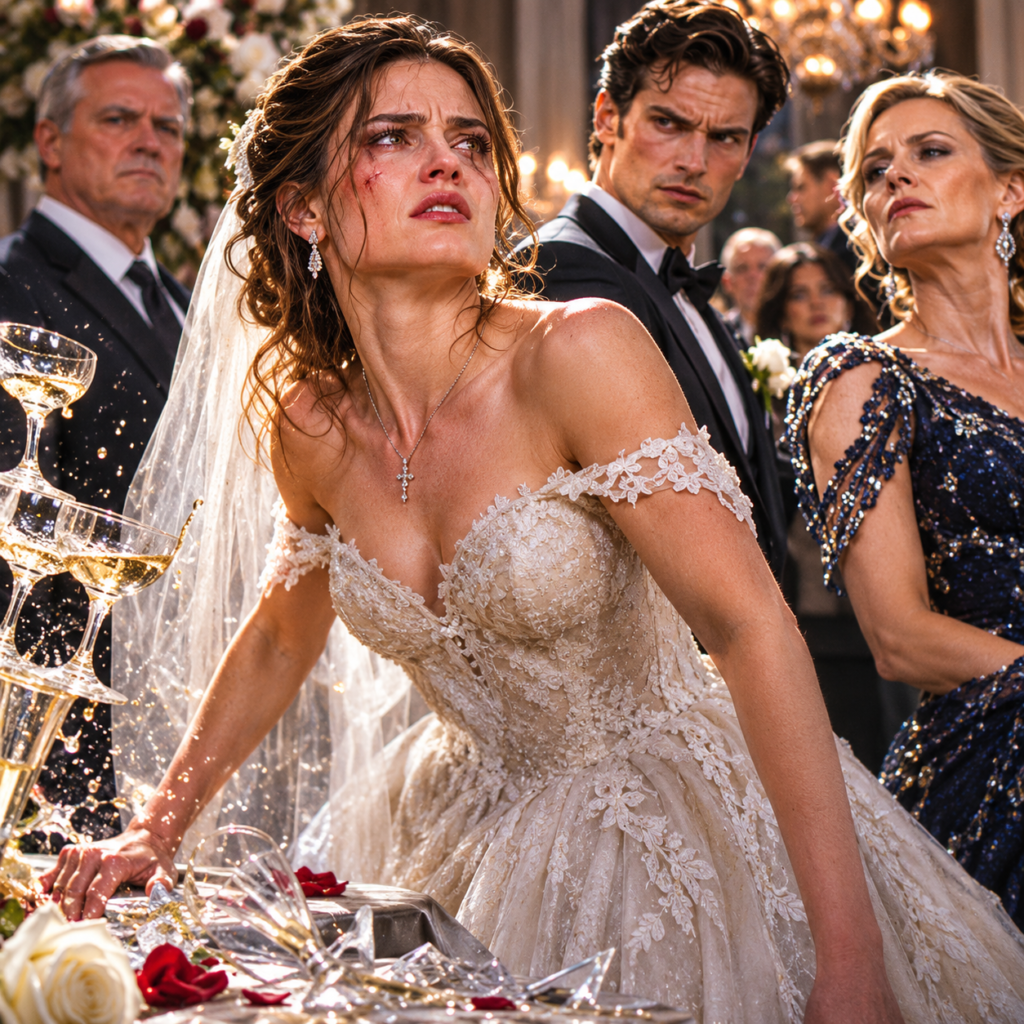
The Whitmore estate had always looked to Nora like a place designed to convince visitors that nothing bad could happen inside.
The house stood above manicured lawns, its pale stone façade reflecting the afternoon sun.
Behind the entrance hall hung portraits of men who had acquired land, built companies, and learned to call inheritance achievement.
Nora had visited the estate dozens of times as Grant’s fiancée.
Now she approached with Elena and two investigators who were there to secure evidence, not admire the paintings.
Grant had provided access to his grandfather’s study after the investigators obtained the necessary authorization.
He met them at the door, wearing the same gray sweater Nora remembered from quiet Sunday mornings.
Seeing him dressed so ordinarily made her angrier than the expensive tuxedo had.
It reminded her how much harm could be done by a person who looked like home.
“My mother isn’t here,” he said.
“Where is she?” Elena asked.
“Preparing for the memorial dedication.”
Nora thought of the advertisement with her father’s photograph beneath a slogan about safety.
The ceremony was scheduled for that evening at the new public harbor walkway.
Evelyn would stand before cameras and claim the company had learned from the deaths it had helped conceal.
Grant led the investigators down a carpeted hallway to a panelled room filled with leather books and a brass globe.
Dust lay on the desk, but several drawers were empty.
A thick safe stood behind a framed nautical map.
Grant entered a code and opened it with visibly trembling hands.
Inside was a small metal case.
He lifted it out and handed it to the investigator.
The case contained a magnetic video cassette, handwritten inventory labels, and a sealed envelope addressed to Henry Whitmore.
Its date was November 14, 2006, the morning after the fire.
“Why didn’t you take this to the police?” Nora asked.
Grant looked at the floor. “I was seventeen. My mother said it showed family business that could be misunderstood. Then I went away to college and tried not to think about it.”
“For twenty years?”
He said nothing.
Nora understood that silence was an answer, even when it did not sound like one.
The cassette went to a forensic lab.
Elena was not permitted to play it in the study, and Nora did not ask.
She had become patient with rules that protected evidence rather than wealth.
The sealed letter was documented separately.
A preliminary examination showed handwriting consistent with Henry Whitmore’s, but nobody claimed its contents proved anything until they could be authenticated.
That evening, despite Elena’s objections, Nora decided to attend the public memorial dedication.
She would not confront Evelyn.
She would stand among the families of the dead, the people whose grief had been used as decoration in Whitmore’s fundraising materials.
She wanted to see them, and she wanted them to see that Thomas Vale’s daughter had not accepted the story told about him.
The ceremony took place along a newly built promenade above the old harbor.
Rows of white folding chairs faced a tall bronze plaque.
Floodlights illuminated a temporary stage, and decorative lanterns hung from cables along the railing.
Behind the site rose an unfinished pedestrian bridge intended to connect the waterfront to the city’s historic district.
Farther down the quay, cranes stood motionless against the darkening sky.
Mara accompanied Nora with a camera.
Elena stood near the press area.
Adrian and Ruth took seats with the other families, their faces marked by years that no speech could return.
Nora recognized a woman who had lost her husband in the fire.
She had seen her on television as a teenager, standing outside a courtroom with two little children.
The children were adults now.
The woman still looked as though she was waiting for somebody to admit the truth.
Evelyn walked onto the stage to warm applause.
She wore dark green and held no notes.
Her voice carried the confident sorrow of someone who had delivered the same speech many times.
“Twenty years ago,” she began, “our community suffered a tragedy that forever changed the way we think about responsibility.”
Nora saw Adrian’s hands close into fists.
She kept her own palms flat on her knees.
Evelyn described resilience, investment, and the promise of a renewed harbor.
She thanked local officials and the Whitmore family for preserving the victims’ memory.
She did not mention the locked east exit, the disputed trust papers, or the people who had tried to keep those facts alive.
Then the bronze plaque was uncovered.
Thomas Vale’s name appeared in the second column, beneath a line crediting Whitmore Harbor Development for its generosity.
Nora had expected to feel fury.
Instead she felt a terrible distance between a person’s life and the neat letters that remained after powerful people had finished editing it.
Evelyn invited Grant to speak.
He stepped forward slowly.
Nora watched him from the back row.
For a moment he looked as though he might read the prepared card in his hand.
Then he folded it.
“My family has asked this city to trust us,” he said. “There are serious questions about whether we’ve earned that trust.”
A murmur moved through the audience.
Evelyn’s smile vanished.
“I signed a financial transfer that was later falsely presented as evidence against Nora Vale. I did not steal the footage used in that accusation, but I knew it was wrong to let people believe she was responsible.”
Nora felt Mara’s camera settle into a steady position.
Grant’s confession was imperfect, self-protective, and painfully late.
But it was public.
Evelyn rose from her chair.
A member of staff reached for the microphone.
Grant continued before she could stop him.
“I have given investigators the records in my possession. I will answer for what I did.”
Evelyn signaled to the stage crew.
The sound system abruptly cut out.
An orchestra recording swelled from the speakers, absurdly triumphant.
Grant stood behind a dead microphone while the audience exchanged confused looks.
Evelyn stepped onto the platform beside him and reached for his arm.
He pulled away.
At that moment, a sharp crack rang above the left side of the stage.
One of the metal supports holding the decorative lighting canopy shifted.
A row of lanterns swung toward the first row of chairs.
People screamed and began to stand.
Nora saw the support cable sag and recognized the pattern from construction inspections: a load moving where no one expected it.
It was not proof of deliberate interference, but it was enough to demand immediate action.
“Move back from the railing!” she shouted.
A stagehand grabbed a nearby speaker stand to use as a barrier.
Another worker began directing guests toward the main walkway.
The hanging canopy dropped another foot.
A large fixture crashed onto the empty edge of the platform, throwing sparks.
The sound was enough to send the remaining guests rushing for the exits.
Nora ran toward the elderly woman she had recognized earlier.
The woman had fallen beside a folding chair and struggled to rise.
Nora and Mara lifted her beneath the arms and guided her away from the stage.
A lantern struck the railing behind them with a burst of glass.
For one awful second Nora was thirteen again, hearing metal strike metal while people tried to escape through a space that narrowed around them.
She fought the memory and kept moving.
Adrian helped Ruth toward the main gate.
Elena coordinated with event staff and emergency responders, who had been stationed nearby for the large gathering.
Their instructions were simple and effective: clear the stage area, keep the crowd from pressing against the waterfront barrier, and leave the damaged structure untouched for investigators.
Grant climbed down from the platform and joined the evacuation.
Evelyn remained near the stage stairs, shouting at a technician that the system must be repaired before the press left.
Her insistence was so grotesquely out of place that several people turned to stare.
“It’s over,” Grant told her.
She struck him across the face with the back of her hand.
The slap cracked through the last notes of the recorded music.
For once, a camera caught the whole sequence without a carefully selected beginning.
“You don’t destroy a family because you feel guilty,” Evelyn hissed.
Grant touched his cheek. “You taught me how.”
Nora heard the exchange as she escorted the injured woman toward paramedics.
She did not stop to watch the rest.
Grant could finally recognize the damage his family had done without requiring Nora to stand close enough to be hurt again.
Firefighters and structural safety personnel secured the stage.
Two people were treated for minor injuries, and the ceremony ended early.
The damaged canopy was retained for examination.
Nora gave a witness statement describing what she had seen but refused to guess whether the failure was sabotage.
She had spent twenty years watching the Whitmores turn uncertainty into a useful lie.
She would not copy them, even for a cause she believed in.
After midnight, Elena called from her office.
The forensic lab had recovered a viewable recording from Henry Whitmore’s cassette.
It showed the Harbor House east service entrance on the night of the fire.
The image was grainy, but the timestamp, building layout, and sequence of movements appeared consistent with other archival records.
Nora asked if she could watch it.
Elena explained that investigators were preserving the original and had authorized a supervised viewing of a working copy with the families’ representative.
They met in a small conference room while rain began to tap against the windows.
The footage showed two workers pushing a chain through the handles of the east exit.
One consulted a clipboard.
Another left the frame.
Moments later, Thomas Vale arrived, argued with someone off camera, and removed the chain.
He tested the doors and walked away, apparently satisfied.
The recording continued.
An hour later, another pair of workers returned and reattached a chain.
A woman stepped into view.
She wore a dark coat and carried a folder.
Though the picture was poor, her face was recognizable.
Evelyn Whitmore spoke to the workers, pointed at the doors, and then walked toward the interior stairwell.
Nora gripped the edge of her chair.
It was a record of the exact decision her father had tried to reverse.
But the video did not end there.
Smoke began to drift past the camera.
A figure—Thomas—ran toward the chained door, tugged it, and forced the workers’ tool from its fastening.
The chain fell to the ground.
People surged through the opening.
He guided them outward, one after another.
Then he disappeared back inside as the smoke thickened.
Nora pressed both hands over her mouth.
There he was, alive for seconds on a screen, doing what he had told her a good engineer should do: making sure the door opened.
Elena paused the recording when a second man appeared.
Michael Sloane, unmistakable despite the grainy picture, stepped out from a service corridor and looked toward the camera.
He was not wearing firefighting gear.
He did not move to assist the crowd.
Instead he reached toward the wall-mounted recording cabinet just beyond the edge of the frame.
The image cut to black.
“He knew the recording existed,” Mara whispered.
“And the family kept a copy anyway,” Elena said. “Now we have to establish exactly who made it and who controlled it.”
Nora stared at the blank screen.
Evelyn had been present when the chains went back on.
Sloane had appeared after the fire started.
Grant had hidden the recording for years.
The truth was larger and uglier than a single villain, but it was finally visible.
Then Mara’s phone rang.
A producer at the local station had called about the memorial footage.
Grant’s confession was spreading, the stage failure was under investigation, and Evelyn had not answered requests for comment.
The producer wanted to know whether Nora would appear on camera to accuse the Whitmores of murder.
Nora declined.
She would tell the truth, but she would not turn her father’s final minutes into a slogan for the evening news.
As they prepared to leave, a state investigator contacted Elena.
Search teams had gone to Evelyn’s estate to request documents, but she was gone.
Her driver reported that she had left in a dark SUV with Philip Voss shortly after the dedication.
The vehicle was last seen heading toward the unfinished harbor bridge.
The next message came from Serena, now cooperating with investigators from a protected location.
She had received an old scheduled email from Voss’s account.
It contained a meeting instruction: IF THE ORIGINAL FILM SURFACES, DESTROY THE EAST-BRIDGE CONTRACT BOX BEFORE DAWN.
Nora looked out the window toward the black harbor.
The unfinished bridge in the message stood above the last remaining piece of Thomas’s original work.
Somewhere in its construction records might lie the evidence tying the old fire to the current redevelopment.
Elena reached for her coat. “We’re giving that to the investigators. No heroics.”
Nora nodded.
This time she meant it.
The truth had survived twenty years of silence.
She would not risk destroying it by running alone into another locked exit.