Chapter 7 – The Night The Cameras Went Dark
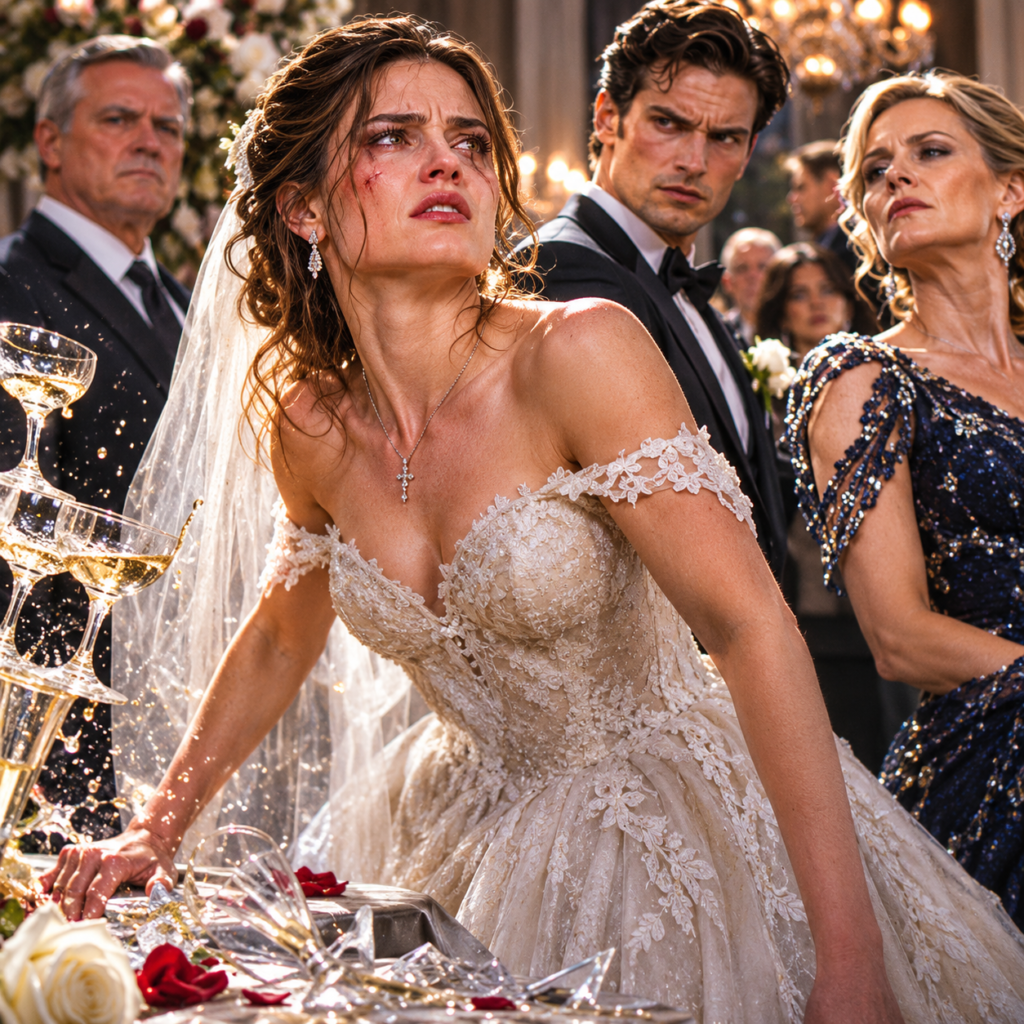
Rebecca Shaw refused to send her only remaining copy of the partnership agreement through the mail.
She had spent decades watching documents change hands and vanish, and she understood better than most people that fear often made criminals careless.
Instead she met Elena in a public records office with a notary and two witnesses.
Nora waited outside, resisting the urge to stand over every signature as though attention alone could keep the paper safe.
Rebecca was a small woman with silver hair and an unexpectedly firm handshake.
She looked at Nora for a long moment before speaking.
“You have his eyes,” she said.
Nora had heard that about Thomas all her life.
From Rebecca it felt less like a compliment than a piece of testimony.
“You knew him?”
“I argued with him often. He was annoying in the particular way of people who insist that a simple sentence must mean what it says. He saved several people a lot of trouble by being that annoying.”
Rebecca had represented Thomas during the original partnership negotiations.
Years later, after the fire, a Whitmore attorney asked her to confirm that Thomas had surrendered his ownership interest.
She refused because she had never seen a valid release.
The attorney threatened disciplinary complaints.
Rebecca sent a letter to the bar association documenting the contact, then kept a copy in her private archive.
“Did you tell my mother?” Nora asked.
“I wrote to her. The letter came back unopened. Later I learned she was ill and that your aunt was handling everything. I thought the courts would protect the trust. I was wrong to assume it.”
Nora was learning that the family tragedy had survived not through one spectacular act of evil but through many smaller failures.
People had been frightened, exhausted, misled, or willing to trust the next office in line.
Evelyn had needed only to exploit the spaces between their responsibilities.
Rebecca confirmed that Grant had visited her the day before.
He had asked whether she possessed an original agreement and offered to pay for the right to inspect her records privately.
She declined.
Grant did not threaten her, but he warned that Nora was unstable and might use old documents to damage innocent people.
“Did he seem to believe it?” Nora asked.
Rebecca considered. “He seemed to want me to believe it. That’s not the same thing.”
While Elena prepared the property-preservation motion, Mara followed the tiny production watermark in the wedding’s forged office video.
It led to a small video studio whose owner, Luis Ferrer, had worked on legitimate campaigns for Whitmore Harbor Development.
He agreed to a recorded interview after an attorney explained what Nora was alleging.
Luis was not eager to antagonize a valuable client, but he was more frightened of being blamed for a crime he had not committed.
They met at his studio during business hours.
Luis showed them the public booking calendar and invoices he was authorized to disclose.
A ‘corporate reenactment’ had been scheduled in the week before the wedding under a subcontract from the Whitmore public-relations team.
Luis said the client had provided a woman with dark hair, an outfit resembling Nora’s clothes, and a script that called for her to walk through a hallway and glance toward a camera.
“I thought it was an internal security training video,” he said. “The footage was supposed to have a label on it saying reenactment. The client took the raw files and removed the label.”
“Do you still have the originals?” Mara asked.
“Our server has backups, but the client asked me to delete the working copy. I refused after seeing the wedding clip. I’ve been waiting for a lawyer to call.”
Nora felt the first real opening in the wall of lies.
A video could convince strangers because images looked like proof.
Here was a person who had filmed the image and could explain exactly how it had been made.
Elena arranged immediate preservation of the originals with the owner’s consent.
The studio’s technician began copying the files while Luis prepared a sworn statement.
Nora waited in the reception area, tracing the seam of her borrowed jacket with one finger.
She remembered the moment her own face appeared on the wedding screen and the way her stomach had dropped even though she knew she wasn’t guilty.
It was one of the most frightening things she had ever felt: seeing an impossible version of herself that other people trusted more than her words.
At eight fifteen, the studio’s lights went out.
A generator clicked in a rear room, then failed to start.
The main hallway filled with emergency lighting.
Luis checked the wall panel and cursed under his breath.
He had never experienced a full camera and power outage during a scheduled transfer.
Mara looked down at her phone.
A text from the studio technician appeared: SOMEONE DISCONNECTED THE BACKUP ARRAY.
CHECK SECURITY DOOR.
The message arrived just as the building’s interior alarm stopped sounding.
The sudden silence was worse than the noise.
Elena called emergency services and told everyone to remain together near the front exit.
Nora tried the door.
It was held shut by a metal security shutter that had lowered during the outage.
The manager said it should have remained raised while the building was occupied.
Nora had heard enough variations of that sentence to feel sick.
From the back office came the crash of a cabinet falling.
Luis shouted for his technician.
No answer.
Then a man appeared at the end of the hall carrying a plastic server case.
He wore dark clothes and the same black cap Nora had seen on the pier.
His face was visible beneath the emergency light.
Nora recognized the jagged scar along his chin from the photograph Mara had taken of the fleeing truck driver.
The man stopped when he saw them.
He turned toward the rear staircase.
“Don’t chase him,” Elena said sharply.
Nora did not.
She stepped back to let him go.
But he saw the phone in Mara’s hand and changed direction, charging toward her.
Mara ducked behind the reception counter.
The man reached over it and tried to seize her phone.
She drove the rolling office chair into his legs, causing him to stagger, and retreated toward the hallway.
Nora grabbed a freestanding sign from beside the counter and raised it between them.
Its aluminum frame bent when the man struck it.
She pushed back, forcing him away from Mara, while Luis used the lobby intercom to call out that police had been summoned.
The attacker kicked over a display rack and sprinted down the rear hall.
An overhead lighting stand loosened in the commotion and swung toward Mara.
Nora saw it moving and shoved her friend aside.
The stand struck the counter with a crack, scattering brochures and broken plastic.
Mara landed hard against a padded bench, unharmed except for a bruised shoulder.
“Get to the side exit,” Nora shouted.
The studio had a second door leading into an open courtyard for film equipment deliveries.
It was protected by an ordinary push-bar release.
Luis led the group there.
The attacker reached it first and slammed a heavy equipment crate against the threshold, blocking the opening.
Nora and Mara pushed together while Elena called for assistance from the approaching officers.
The crate rolled a few inches, enough for Luis to wedge a doorstop beneath it.
They shoved again and forced the door open into cool night air.
Outside, they remained in the courtyard until police secured the building.
Nora’s hands shook from adrenaline, but she had resisted the urge to follow the man into unknown rooms.
She had chosen an exit over a confrontation.
It was a different kind of courage from the one she had admired in action films.
The technician was found in a locked editing room.
He had been shoved into a chair and left there while the attacker took a server drive.
He had no serious injuries.
More importantly, the technician had already copied the footage to an external storage device and disconnected it before the outage.
He had hidden it in a lockable case beneath the console, following the studio’s preservation plan.
Luis turned it over to the investigators.
The original file showed a hired performer dressed to resemble Nora walking through a fabricated corporate hallway.
A separate behind-the-scenes clip showed a director instructing her to turn her face toward a marked camera.
The frame had later been altered to overlay Nora’s likeness.
The edited result was the false image shown at the wedding.
“So we can prove it,” Mara said.
“We can prove this clip was staged,” Elena answered. “We still need to establish who ordered it to be shown as genuine evidence.”
The invoices offered a trail.
The studio billed the subcontract to a firm called Meridian Public Affairs.
Meridian had received payment from a Whitmore-controlled promotional budget.
Serena’s department had authorized the purchase order.
There were messages asking for ‘maximum facial match’ and a ‘convincing archival look.’ The messages were damning, but whether Grant had known about the alteration remained unclear.
Nora remembered him looking at the screen while the forged footage played.
He had not appeared shocked by her face.
He had looked relieved that the video was working.
That night, the clip from the studio spread through news outlets with a different headline: WEDDING THEFT VIDEO ALLEGEDLY STAGED.
The story was still developing, but for the first time Nora saw strangers question the official version.
Some apologized for laughing at her.
Others insisted that the fight at the wedding must have been real even if the accusation was false.
Scandal had a strange afterlife; it did not disappear when its foundation cracked.
Elena warned Nora not to mistake a public reversal for legal safety.
The forged bank transfer still needed to be investigated, and the property dispute would likely take months.
But the studio evidence damaged the family’s credibility at exactly the moment they were seeking public support for the harbor redevelopment.
Grant arrived at Elena’s office the next morning without an appointment.
He looked older than he had at the wedding, his tie crooked and eyes shadowed.
Elena allowed him into a conference room only after making it clear that Nora could end the conversation at any time.
Mara sat beside Nora.
A recording device rested on the table with everyone’s consent.
“I didn’t know the video was altered,” Grant said.
Nora studied him. “But you knew your mother would accuse me.”
“I knew she had documents. She said we needed a clean break before the property transfer.”
“Clean for whom?”
“For the company.”
He looked at the floor.
He explained that Evelyn had told him the Vale trust contained a dormant claim that could disrupt financing.
She had asked him to persuade Nora to sign a release after the wedding.
When Nora refused earlier drafts, Evelyn insisted on a more public confrontation.
Grant had agreed to the plan because he believed Nora would settle quietly and avoid further embarrassment.
“You agreed to destroy my reputation so I would surrender something I didn’t know I owned,” Nora said.
“I didn’t think anyone would hurt you.”
“They already did. You were standing there.”
He flinched.
For a moment Nora wanted him to deny it, to reach for one last convincing lie.
Instead he reached into his jacket and placed a folded photocopy on the table.
It was an internal transfer authorization bearing a bank reference number and the date of the alleged theft.
“The four-point-two million didn’t go to you,” Grant said. “It went to a company called Seagate Environmental Response. My mother said it was for remediation.”
Elena examined the document without touching the original. “Who controls that company?”
“I don’t know.”
“Do you know who approved the transfer?”
Grant hesitated. “My signature appears on the file.”
“Did you sign it?”
He looked at Nora.
The answer was clear before he spoke.
“Yes.”
Nora felt the room go still.
He had knowingly approved the movement of money and watched a fake slide accuse her of taking it.
Whatever he had not known, he had known enough.
“Why are you giving me this?” she asked.
Grant stared at the folded paper as though it contained the person he could never again pretend to be.
“Because I saw the men who followed you. I know one of them. He used to work for my mother. And I think she is trying to frame me now.”
Elena asked for his attorney’s contact.
Grant said he had one waiting downstairs.
Nora stood to leave, unwilling to become his refuge simply because the machinery he had helped build had turned toward him.
At the door, Grant called her name.
“There’s one more thing about the night of the fire.”
She stopped but did not turn.
“My grandfather kept a private recording from the Harbor House service entrance. My mother told everyone the system failed. It didn’t. Someone took the tape.”
Nora turned slowly.
“Who?”
Grant swallowed. “I did. When I was seventeen. My mother told me to hide it.”
In Nora’s mind, twenty years of darkness rearranged themselves around a boy carrying a recording he had been taught not to question.
“Where is it now?” she asked.
Grant looked toward the window, where pedestrians crossed the street beneath a pale morning sky.
“If it’s still where I left it,” he said, “it’s inside my grandfather’s locked study. And my mother is having that room cleared tonight.”