Chapter 3 – The House Of Forged Names
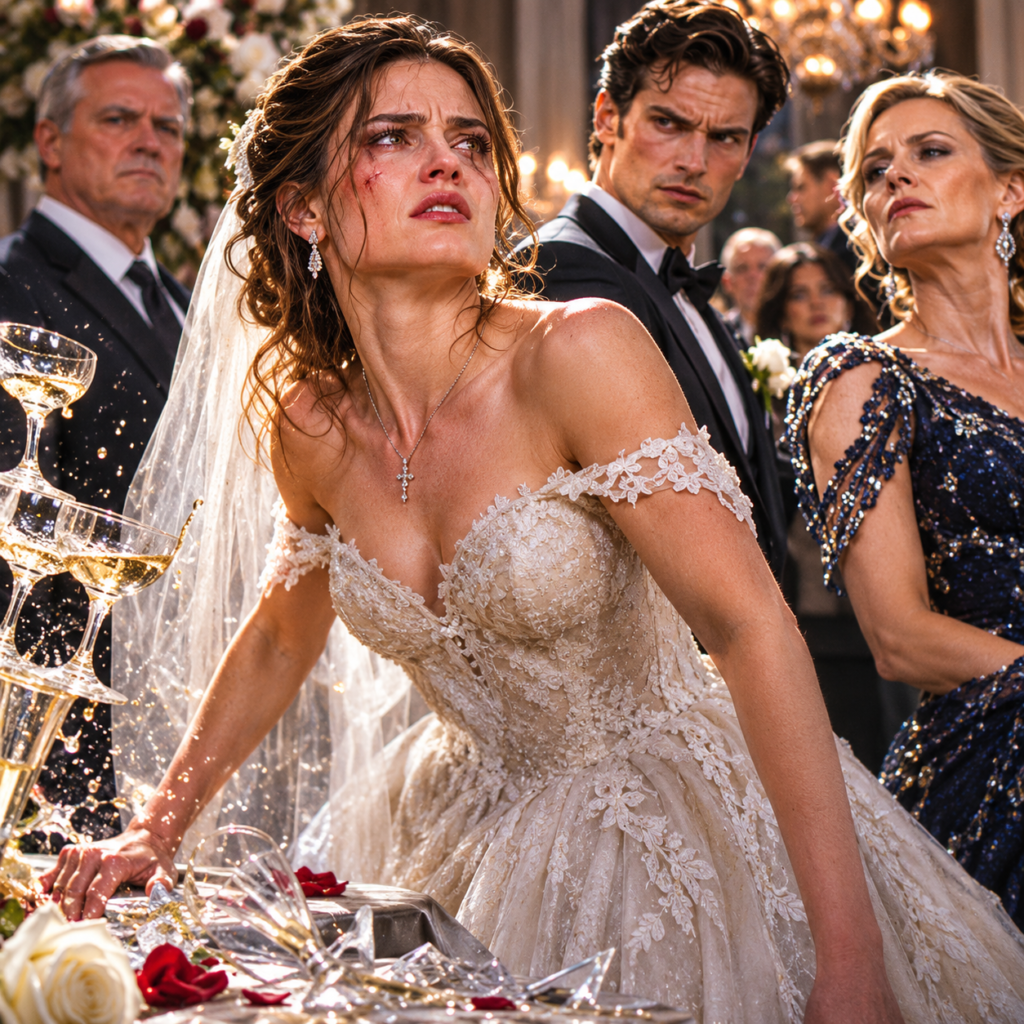
The lock clicked once, then stopped.
Mara pressed two fingers against the office light switch and held them there, afraid even the soft plastic tap would betray their location.
On the other side of the door, a man muttered about the wrong tool.
Another voice answered, impatient and low.
Nora could not see either man, but she knew they had tracked her phone into the building.
“There should be a service opening behind the dryers,” Mara whispered.
Her cousin had renovated the laundromat two years earlier.
During the repairs he had shown her a little hatch used to reach the commercial vent system.
It wasn’t a secret tunnel.
It was a narrow, ugly maintenance space that opened into the loading alley.
With three adults, an old man, and a large scanner, it was hardly an ideal escape.
Nora had learned that ideal solutions disappeared quickly when panic took over.
Adrian took the original plan and slid it into a plastic sleeve.
Mara copied the files onto two small drives and slipped one beneath her watchband.
Nora grabbed the other, a flashlight, and a yellow box cutter from the desk.
She didn’t intend to use the cutter against anyone.
She needed something to open the cable ties holding the maintenance hatch shut.
The lock gave another small metallic complaint.
They pushed a trolley into the laundry room.
Behind the largest dryer, Nora found a vent panel with four fasteners.
She opened it, cut the old plastic tie, and looked into a space barely shoulder-width.
The air smelled of dust and warm metal.
A service light glowed at the far end.
“Adrian goes first,” she said.
“Don’t flatter me,” he muttered. “I’m too old to be the scout.”
“You’re the only one who knows where the plan belongs. We need you alive.”
That ended the argument.
He climbed through with more determination than grace.
Mara followed, crouching low.
Nora stayed behind long enough to pull the trolley across the office entrance, then slipped through the hatch.
Seconds later the office door crashed open.
A man shouted that the room was empty.
Nora crawled through the dusty tunnel, scraping a bare elbow.
The service light at the far end flickered.
She had to turn sideways to pass an insulated pipe.
A few feet behind her, someone rattled the hatch panel.
She heard the guards discover the entrance, heard one of them swear about the cramped space, and kept moving.
Adrian had already pushed open the alley door.
Mara reached backward and took Nora’s hand as she emerged.
The three ran between dumpsters toward the street.
A delivery van pulling into the plaza blocked the men’s view for just long enough.
They crossed the road behind it and entered a late-night diner through a side entrance, where a server barely looked up from counting receipts.
For the next hour they sat in a rear booth, drinking coffee none of them wanted.
Nora gave the server a generous tip and asked her not to mention that they had been there.
She had learned enough about Evelyn’s reach to know that a kind stranger could become a witness without meaning to.
By dawn the story had moved beyond Connecticut.
Nora’s face appeared on national entertainment accounts beneath captions calling her a ‘wedding scammer.’ A short video of her shoving the champagne tower had gathered hundreds of thousands of views.
One account played it in slow motion with a cartoon crashing sound.
Another put an exaggerated red circle around her locket and claimed it contained stolen diamonds.
Nora used Mara’s phone to record a response, then deleted it.
“Why?” Mara asked.
“Because I was explaining myself to people who haven’t asked a question. They just want another clip.”
“Then give them a question.”
Nora considered that.
She took a breath, faced the camera, and spoke in an even voice.
“The video from my wedding begins after a security guard grabbed me. The bank document shown to the guests has not been authenticated. I have reported an attempted assault with a vehicle. I am preserving evidence and cooperating with independent counsel.”
Mara watched the recording twice. “Good. No accusations we can’t support yet.”
They posted it through Mara’s account, knowing that the Whitmores would see it quickly.
Nora did not expect the clip to win public opinion.
She wanted the truth to exist somewhere before someone else edited it.
Elena Ruiz’s office occupied the second floor of an ordinary brick building near a courthouse.
She was forty-eight, wore dark trousers and low black shoes, and had the practiced calm of someone who had seen wealthy people panic when documents entered a room.
She examined the site plan with gloves, photographed the envelope, and listened without interrupting as Nora described the ceremony and the attack.
“First,” Elena said, “we preserve everything. Second, we separate what you witnessed from what you suspect. Third, we do not hand original evidence to anyone without a chain of custody.”
“Am I going to be arrested?” Nora asked.
“I can’t promise you won’t be questioned. But a projected bank slide and a public-relations video aren’t proof of theft. If there’s a valid complaint, we’ll respond through proper channels.”
Elena asked whether Nora had signed a prenuptial agreement.
Nora said she had refused the final draft three weeks earlier because it contained a clause transferring ‘all residual economic interests’ related to Harbor House to the Whitmore family trust upon marriage.
“Grant said it was about avoiding old litigation,” Nora added.
Elena’s pen stopped moving.
“Did you keep a copy?”
“I emailed comments to the lawyer.”
“We need that email. And every draft they sent you.”
Elena read the language carefully.
What looked like ordinary financial paperwork might have served as an attempt to obtain claims Nora did not know she held.
It would not magically transfer real estate by itself.
But combined with a separate signature page or power of attorney, it could have created a trail that appeared to give Whitmore control.
“Why would they need my signature?” Nora asked.
Adrian opened his mouth, then looked to Elena, who spoke with deliberate care.
“Because your father may have retained an interest in the Harbor House parcel. If he did, that interest may have passed through his estate. Somebody may have wanted you to release it. That’s a possibility, not a conclusion.”
Nora thought of the childhood house near the harbor where Thomas had kept his drafting equipment in the basement.
Her mother had sold it after the fire, or so she had always been told.
Aunt Ruth had managed the paperwork while Nora was still in school.
They moved into a smaller apartment, and the subject was never discussed again.
“Ruth has the old boxes,” Nora said. “If they still exist.”
Elena arranged for an independent investigator to preserve Nora’s wedding footage and sent a written preservation demand to Whitmore Harbor Development.
She also asked a colleague to research the company that had installed the door hardware.
Before Nora left, Elena made her promise not to confront the family alone.
“You can’t fight a paper war by running toward whoever holds the match,” Elena said.
“And if they’re already burning the papers?”
“Then call me before you chase them into a fire.”
Aunt Ruth lived in a quiet neighborhood where front porches held pumpkins and the lawns were trimmed with cheerful care.
Her home smelled of peppermint and fresh bread.
When she opened the door, she looked at Nora’s borrowed clothes and bruised wrist, then drew her into an embrace so tight that Nora felt twelve years old again.
“I watched them do that to you,” Ruth whispered. “I should have stood up sooner.”
“You stood up.”
“I stood up after they dragged your father through the newspapers twenty years ago, too. I have a bad habit of arriving one minute late.”
Ruth led them to the dining table and brought out a metal storage box.
Inside were death certificates, bank statements, old family photographs, and a packet of yellow legal paper tied with cotton string.
Nora recognized her father’s blocky handwriting on several envelopes.
She ran her fingertip along his name.
A small folder contained the sale of the family house.
According to the top sheet, Ruth had signed as administrator of the estate on January 18, 2007.
She frowned as she read it.
“I was in Vancouver that week,” she said.
“Are you sure?”
“I was staying with my sister after her operation. I didn’t fly home until February.”
The signature looked like hers.
The loop in the R was exact.
Ruth stared at it with growing disgust.
“That’s not my handwriting,” she said. “It’s someone copying it. I put a little slash through the crossbar of my t. Always have.”
Nora pointed to the signature.
The slash was missing.
Elena, on speakerphone, asked Ruth to locate passport records, old travel confirmations, and any correspondence with the estate attorney.
A forged signature on one document could be challenged.
A chain of forged signatures on property transfers could open a much larger investigation.
Nora felt the old helplessness of the wedding fade beneath something steadier: a problem with edges she could measure.
The next envelope was addressed to Nora and marked FOR HER TWENTY-FIRST BIRTHDAY.
Ruth pressed it to her mouth before explaining.
“Your mother wanted you to have this. I thought it was another letter from your father. But after she died, I couldn’t bear to open another box. I put it away.”
Nora had been twenty-one twelve years earlier.
She understood why Ruth had delayed.
She also felt a flash of grief for the decade that might have been different.
She broke the seal.
Inside was a single photograph showing Thomas beside an older man in a hard hat.
Behind them stood the Harbor House east entrance, fully built and unobstructed.
Written on the back were two names and a date: THOMAS VALE.
HENRY WHITMORE.
APRIL 1998.
Henry Whitmore was Grant’s grandfather.
He had died five years before Nora met Grant, remembered in local articles as the visionary who transformed a decaying harbor into luxury property.
In the photograph he held Thomas’s hand in a firm grip.
They looked like partners, not employer and contractor.
A second sheet contained a note in Thomas’s handwriting: IF ANYONE SAYS I GAVE UP OUR SHARE, ASK FOR THE BLUE BOOK.
“What blue book?” Mara asked.
Ruth shook her head. “I don’t know.”
Nora did.
Her father had used a clothbound blue ledger for important project calculations.
He kept it in a drawer beneath his drafting desk.
She remembered because he wouldn’t allow her to use its pages for drawing animals, no matter how many blank sheets it contained.
“The drafting desk was in our old house,” she said.
Ruth’s face tightened. “The house belongs to Whitmore Holdings now. Nobody’s lived there in years.”
“They bought it with a forged signature.”
“Maybe,” Elena replied through the phone. “Don’t trespass. Let me send someone to request records and inspect it legally.”
Nora agreed.
She meant to keep her promise.
Then Mara received a message from a former coworker at the Whitmore planning office: demolition crews were scheduled to clear the old house the following morning.
The message included a permit notice and a photograph of a skip already positioned outside the property.
Elena made several urgent calls.
The permit notice was real, but it did not grant access to the house before the crew arrived.
Elena told them she would seek an emergency order and contact the owner in writing.
Nora listened, watched the afternoon slip away, and wondered whether the blue book was still under a desk that had survived two decades of dust.
At dusk they drove past the house, keeping to a public road.
It stood behind a wire fence on a hill overlooking the harbor, a small weatherboard home dwarfed by new concrete towers.
Yellow demolition notices were taped to the gate.
The front porch sagged on one side.
The windows were covered with plywood except for an attic vent that flashed when passing headlights struck it.
Nora remembered standing in that driveway holding her father’s lunch bag.
She had been furious because he had gone back to work instead of attending her school play.
The next night the fire took him.
The memory had become a stone she carried without admitting its weight.
A truck stopped inside the fence.
Two workers emerged, neither wearing demolition-company uniforms.
One carried a crowbar.
The other held what looked like a narrow metal case.
They were not preparing the property for tomorrow.
They were already searching it.
Nora photographed them through the car window.
Mara sent the images to Elena.
The lawyer instructed them to remain outside and called local police about unauthorized activity at a posted demolition site.
They watched the workers force open the basement entrance.
A flicker of light passed through the boarded kitchen window.
Ten minutes later, one man came out with a cardboard box.
The other dragged a black trash bag that scraped across the porch boards.
A siren sounded in the distance.
Both men froze, then hurried to the truck.
The vehicle backed into a fence post with a violent metallic bang, but the driver kept going.
It accelerated down a side lane and disappeared toward the highway just as a patrol car turned onto the street.
Nora and Mara waited for the officer to check the property.
When he returned, Nora showed him the photographs and explained why the house mattered.
He took their information, but without evidence of immediate danger he could not authorize them to search the building.
Elena arrived twenty minutes later with a representative of the estate’s insurer and a temporary agreement permitting a supervised inspection to document potential loss from the break-in.
Inside, the house smelled of old timber and wet plaster.
The basement drafting room had been stripped.
Cabinets stood open and empty.
The desk was gone.
Nora searched the floor beneath a hanging bulb while the inspector documented damage.
There were fresh boot prints in the dust and pale rectangles on the wall where shelves had hung.
“They got here before us,” Mara whispered.
Nora knelt beside the old fireplace.
Her father had once told her that every important plan needed a fallback.
She remembered the way he tapped a particular brick while teaching her multiplication tables, saying that some things only looked ordinary until you knew where to press.
She pressed the brick now.
It moved inward slightly.
Nora called the inspector over and asked permission before touching it again.
He photographed the area, then used a small pry bar to loosen the mortar.
Behind the brick lay a shallow steel box wrapped in oilcloth.
It was dry despite the damp basement.
Elena watched as the inspector opened the box under the camera’s recording light.
Inside sat a narrow blue notebook, its cloth cover faded but intact.
Nora felt a strange rush of gratitude toward the thirteen-year-old girl who had remembered a father’s meaningless-seeming game.
The first page listed dates, parcels, and percentages.
The last contained an entry written just before the fire: H.W. AGREEMENT ALTERED.
ORIGINAL IN TRUST FILE.
IF I DISAPPEAR, DO NOT SIGN ANY RELEASE.
Underneath was a name Nora had never seen associated with her father: MICHAEL SLOANE.
“Who is that?” Mara asked.
Adrian, who had arrived with Elena, read the name and stepped back as though the letters themselves had struck him.
“The man who chaired the fire investigation,” he answered.
Nora felt the house tilt around her.
A fire investigator’s name inside a builder’s private ledger could be innocent.
The note beside it could not.
At the bottom of the page, Thomas had written one final sentence in capital letters.
IF THE EAST DOOR IS LOCKED AGAIN, IT WILL NOT BE AN ACCIDENT.