Chapter 2 – The Messages Brielle Never Sent
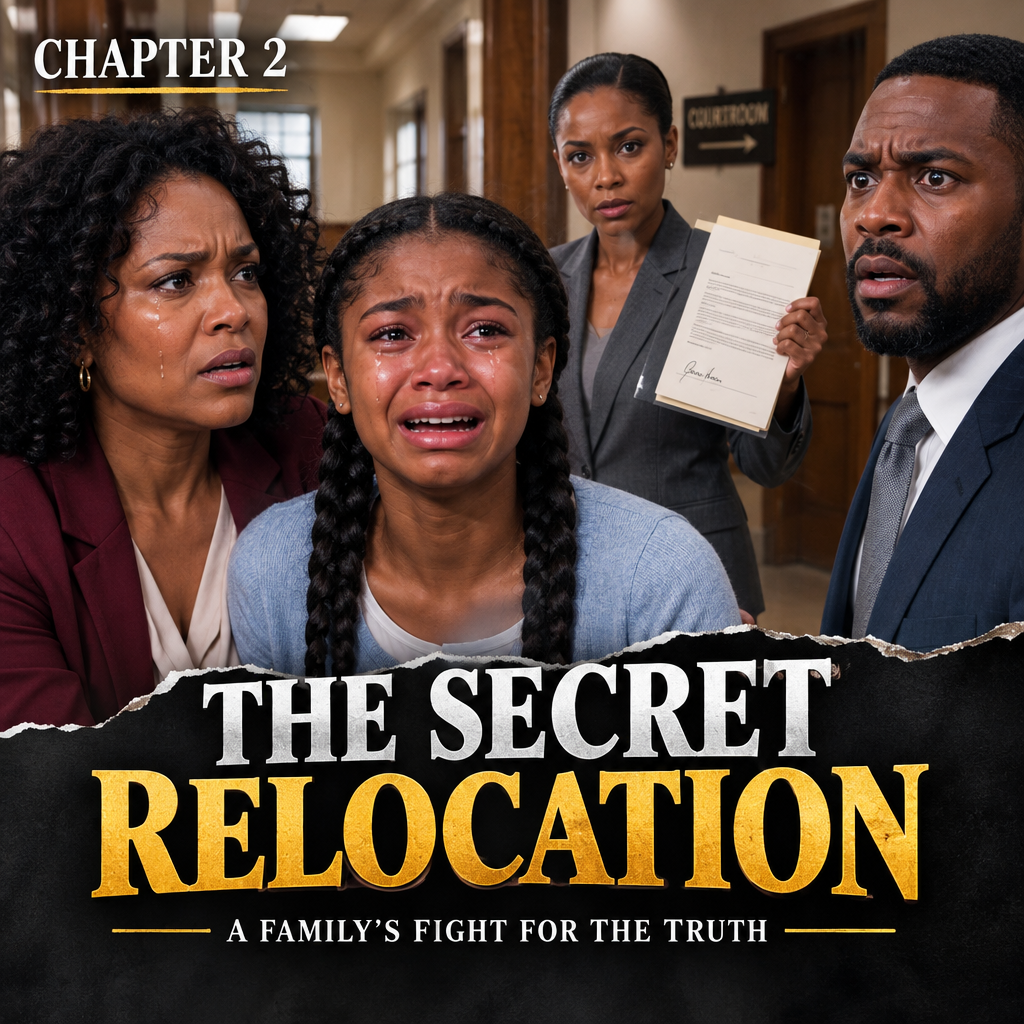
The first message Tasha had saved was dated August 19, at 11:42 p.m. She knew the date because it had been the night before Brielle’s first day of junior year. Tasha had bought a notebook with sunflowers on its cover, the same kind her daughter had carried since fourth grade. She had left it on the porch of Derek’s house with a note: I love you. Call me when you’re ready.
The notebook with the sunflower cover stayed on Tasha’s kitchen table all morning. She had bought it before the school year started, back when she still believed a small gift could bridge the distance growing between her and Brielle. She opened it now and found the first page blank. There was something unbearable about that emptiness. She had spent weeks writing messages into a phone that never answered, while her daughter had been waiting for a call she believed would never come.
Renee arrived with coffee and a yellow legal pad. She set the coffee down untouched. “Before we decide what these messages mean, I need you to tell me what you actually know,” she said. “Not what Derek says. Not what you’re afraid of. What you saw with your own eyes.” Tasha wanted to say that she knew her daughter’s voice. Instead, she admitted she had never heard Brielle say she wanted to stay away. Every rejection had arrived in text. Renee drew three columns on the pad: VERIFIED, REPORTED, UNKNOWN. The last column grew longest.
“That doesn’t mean you were foolish,” Renee said when Tasha looked away. “It means somebody took advantage of a situation where you were already hurting.” Tasha rubbed her eyes. “I should’ve driven over there.” “You tried. Derek threatened to call the police when you came to the house.” “I should’ve stayed on the porch.” “And then what? Let him turn that into another reason to keep you away?” The question was not comforting, but it was fair. Tasha had spent months being told every choice she made was proof that she was unstable. She was beginning to understand how easily fear could be used to control a person without anyone raising a hand.
Across town, Brielle sat with her grandmother, Lorraine, at a small kitchen table covered with newspaper clippings and an unfinished crossword puzzle. Lorraine did not ask her to choose sides. She poured orange juice and waited. Eventually Brielle said, “Dad told me Mom had a new life. He said she was happier without me.” Lorraine set down her pencil. “Did you believe him?” Brielle stared at the glass. “I didn’t want to. But every time I asked to call her, he said she was busy. After a while I stopped asking because I couldn’t stand hearing it again.” Her voice cracked. Lorraine reached across the table, palm open, letting the girl decide whether to take her hand.
“You were never supposed to carry their divorce,” Lorraine said. Brielle squeezed her fingers. “Then why does it feel like every grown-up wants me to explain it?” Lorraine had no quick answer. She remembered Derek as a young man who showed up at family cookouts carrying flowers for Tasha and a folding chair for anyone who needed one. It frightened her that kindness in one season did not guarantee kindness in another. She wanted to hate him for what he had done, but she also knew hatred could become another weight Brielle would have to carry.
That afternoon, Renee asked Brielle to reconstruct the evening of the disputed messages without looking at the phone records. Brielle described homework at the dining-room table, Derek carrying her phone into his office to charge it, the sound of the printer running long after dinner, and a woman speaking behind a closed door. “I couldn’t hear everything,” she said. “She sounded upset. Dad kept saying, ‘I already told you, she’s not going anywhere until the paperwork is done.'” Renee asked whether Brielle was certain about those words. “Not every word,” Brielle admitted. “But I remember ‘paperwork.’ I remember because I thought he meant my school registration.” Renee wrote down the distinction exactly as the girl gave it.
When Tasha and Brielle finally spoke alone, neither knew where to begin. “I thought you didn’t want me,” Brielle whispered. Tasha felt the familiar urge to promise that nothing bad would ever happen again. She resisted it. “I wanted you every day,” she said. “But I also made mistakes. I let other people speak for you, and I should have kept finding ways to listen.” Brielle wiped her face with her sleeve. “Can we start with one thing?” “Anything.” “When I tell you something, can you ask me before you believe somebody else?” Tasha nodded. It sounded simple. After everything that had happened, she knew it would take practice.
At 11:42, Brielle’s phone had answered: Stop leaving things at our house. I don’t want you here.
Now, in Renee Walker’s office, Brielle read the words on her mother’s screen and shook her head. ‘I didn’t send that.’
Tasha watched her daughter carefully. The girl’s voice had gone quiet in the way it always did when she was frightened. ‘Honey, you don’t have to protect anybody.’
‘I’m not protecting him,’ Brielle whispered. ‘I didn’t even know you came over.’
Renee placed three phones on the conference table: Tasha’s, Brielle’s, and a spare device on which she had copied the screenshots. ‘We need to separate what we know from what we suspect. A message appearing to come from Brielle’s number does not prove who typed it. We can ask for records and preserve the devices. We are not going to guess.’
Tasha hated the word guess. She had spent ninety days guessing whether her child was eating breakfast, whether she was sleeping, whether she had decided she no longer loved her mother. She pressed her fingernails into her palms to keep from crying again.
Brielle scrolled to another message. Don’t come to my debate tournament. Dad’s taking me. She stared at it for a long time. ‘That was the tournament where I looked for you in the audience.’
‘I was in the parking lot,’ Tasha said. ‘The security guard told me my name wasn’t on the guest list.’
‘I thought you forgot.’ Brielle’s face crumpled. ‘I waited until they turned off the lights.’
Tasha crossed the room and wrapped her arms around her daughter. ‘I was there, baby. I was there.’
Renee gave them a moment, then asked Brielle to describe her father’s household. Brielle told her about a charging station in Derek’s locked home office, about a rule that phones were surrendered at nine every night, and about the night he had asked her to sign a school transfer packet. She remembered the blue folder and the way Derek had covered the top of each page with his hand. He had said the school district needed signatures before a deadline.
‘Why didn’t you read them?’ Tasha asked before she could stop herself.
Brielle stiffened. ‘Because he was my dad.’
The answer silenced the room.
That afternoon Renee contacted Derek’s attorney, Martin Vale, requesting copies of every document submitted to the family court. Martin replied that all filings had been properly disclosed. He also warned that Tasha’s slap in the hallway would be raised at the next hearing. Renee read the email twice, then closed her laptop.
‘He has every right to bring it up,’ she told Tasha. ‘You cannot give him another incident to use against you.’
‘I know.’ Tasha swallowed. ‘I keep seeing her crying. I keep thinking I did that to her.’
‘You contributed to what happened in the hallway,’ Renee said gently. ‘You can take responsibility for that without accepting Derek’s version of everything else.’
Across town Derek sat at his kitchen island with an untouched glass of water. His attorney had advised him not to call Brielle. He had tried twice anyway and stopped before the calls connected. On the refrigerator hung a picture from the summer before the divorce: Brielle grinning between her parents, each holding one of her hands. Derek turned the photograph face down.
His sister Camille arrived just before dusk. She was a nurse who worked night shifts and had never liked being pulled into her brother’s arguments. ‘What happened at court?’ she asked.
‘Tasha hit me.’
‘And Brielle?’
Derek stared at the glass. ‘She said something about a school form.’
Camille waited. ‘Was it a school form?’
‘It was supposed to make things easier.’
‘For whom?’
Derek stood abruptly. ‘You don’t understand what’s at stake.’
‘Then explain it.’
Instead, he went to his office and opened the bottom drawer. Inside was a second blue folder, one he had not brought to court. On its cover, in block letters, was the name of a relocation agency in North Carolina. A sticky note marked an appointment scheduled for Friday.
Back at Renee’s office, Brielle remembered one last detail. On the night of the first cruel message, her phone had been charging in Derek’s office. She had heard him arguing with someone on speakerphone. The voice was a woman’s, sharp and impatient.
‘What did she say?’ Renee asked.
Brielle squeezed her mother’s hand. ‘She said, “If the mother finds out before Friday, we’re finished.”‘
Renee wrote down the sentence exactly. ‘Did you recognize her voice?’
Brielle looked toward the window. ‘I thought I did. But it doesn’t make sense.’
‘Tell me anyway.’
Brielle’s eyes filled again. ‘It sounded like Aunt Camille.’
Tasha felt the floor tilt beneath her. Camille had been the only person from Derek’s family who still called on Brielle’s birthday. She had brought soup when Tasha was sick. She had sat beside her in the hospital after the birth.
Renee did not write Camille’s name beside the word suspect. She wrote possible voice identification, unconfirmed. But when Tasha looked at her daughter, she knew that a new question had joined the old ones. Someone else had been in that office. Someone Brielle trusted.