Chapter 9 – The Evidence They Couldn’t Erase
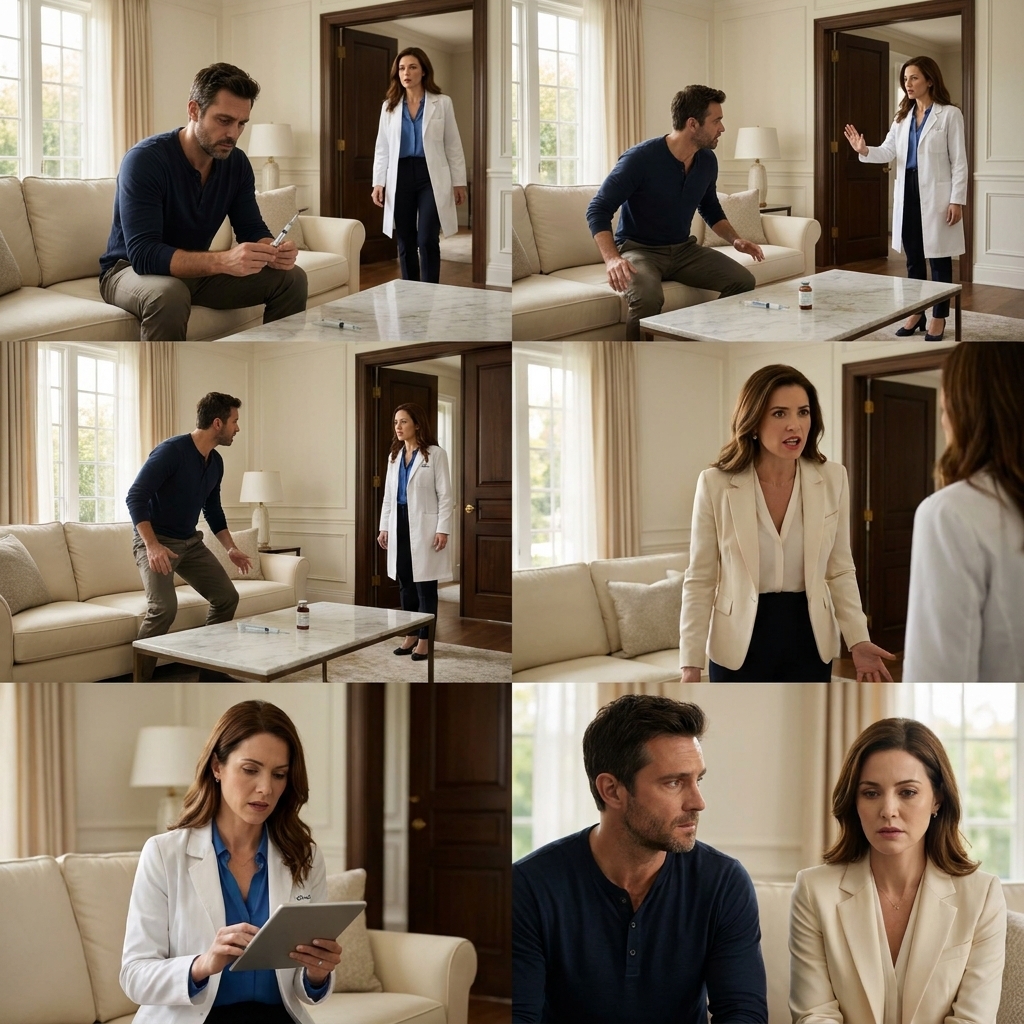
The independent review began with a simple rule: every claim would be tied to a document, a verified sample, or a witness whose account could be tested. Dr. Miriam Cho insisted on the rule because the case had already attracted too many stories. Some staff believed Ethan had relapsed. Others believed the hospital had poisoned him. Neither belief was a finding.
Cho assembled a timeline of the research program, the altered consent form, the Meridian payments, and the medicine vial from the Reed home. The pharmacy team confirmed that the vial’s labeling format resembled old study supplies. Laboratory analysis identified its contents as a prescription pain medication, but not one authorized under Ethan’s current treatment plan. The source of that particular vial remained a separate question.
Olivia read the clinical findings with relief and concern. Sophia had not lied about the general type of medication. She had been wrong to present it as a current, properly prescribed treatment. Ethan had been right that he was in genuine pain. His history of dependence made careful treatment essential, not dismissal inevitable.
When Olivia explained the findings, Ethan listened without interrupting. He sat in the clinic with his hands folded, dark circles still visible beneath his eyes. His independent pain specialist, Dr. Samuel Ortiz, had joined the appointment at Ethan’s request.
“So it was pain medication,” Ethan said.
“Yes,” Olivia replied. “That doesn’t make the supply safe or appropriate. We need to know why it was provided outside your current plan.”
“And it doesn’t prove I used it that afternoon.”
“Correct. You reported that you did not, and the assessment did not establish otherwise.”
Ethan exhaled. He had wanted that distinction made clearly since the moment Olivia entered his living room.
Ortiz discussed a new treatment plan that combined medical evaluation, physical rehabilitation, sleep support, and careful monitoring of any prescribed medicines. He asked Ethan what mattered most to him.
“I want to work again,” Ethan said. “Maybe not full-time at first. I want to drive without being afraid of every intersection. And I want a night where I don’t feel like I’m bargaining with my body.”
Ortiz wrote the goals down. He did not promise a cure. He promised to review progress honestly and adjust the plan with Ethan’s participation.
Meanwhile, the compliance investigators traced the vial’s packaging to a supply distributor used by the old research program. A shipment had been logged as destroyed after the study closed, but the destruction record contained an inconsistency. The person who signed the inventory reconciliation had been working for Meridian at the time.
Mercer interviewed the employee, a former warehouse coordinator named Daniel Frost. Frost admitted he had been asked to move several boxes to a private storage facility. He believed the supplies were being transferred for an authorized audit. He had kept the delivery receipt because the destination seemed unusual.
The receipt identified a storage unit rented by Meridian Patient Support. It also bore an internal approval code associated with Hale’s research office.
Investigators obtained the appropriate authority to examine the records connected to the storage facility. The remaining supplies were secured and documented. Some packaging had been opened. The inventory was incomplete. There was no reason to assume every missing item had reached Ethan, but the records established that materials marked for destruction had not all been handled as reported.
Hale’s lawyer issued a statement denying that Hale had personally directed any improper distribution. Keene’s lawyer said Meridian had relied on the hospital’s instructions. Each man appeared determined to place the decisions just beyond his own reach.
Sophia attended a formal interview with counsel. She brought the original Meridian agreement, bank statements, and every message she had saved. She described the threat involving the clinic recording and acknowledged that she had concealed the arrangement from Ethan.
“Did Mr. Reed authorize you to obtain medication on his behalf?” the investigator asked.
“Not through Meridian,” she said. “I believed I was arranging help, but I did not tell him what I was doing.”
“Did you know the medication was not on his current prescription list?”
“I didn’t check. I should have.”
The admission hurt. She had spent years telling herself she was the responsible one in the marriage, the person who kept appointments and paid bills and remembered every instruction. Now she had to admit that diligence in some areas had become an excuse for avoiding the most important question.
After the interview, she met Ethan in a small park near the hospital. He had brought sandwiches. They ate on a bench overlooking a pond where ducks moved through the reeds.
“How did it go?” he asked.
“I told them everything I remembered. Including what I did wrong.”
“Thank you.”
She looked at him. “That’s all?”
“What else do you want me to say?”
“I don’t know. I thought you’d be furious.”
“I am furious about some of it. But I’m not going to punish you for telling the truth now.”
Sophia watched a duck disappear beneath the water. When it surfaced, sunlight glittered on its back. She thought about how often she had confused keeping a marriage intact with keeping it unexamined.
That evening Olivia learned that the complaint against her had been closed without disciplinary action. The review found that she had acted appropriately in responding to an immediate safety concern and arranging assessment. It also recommended clearer procedures for home visits involving unverified medication.
Olivia called Ethan, not to celebrate, but to ask whether he felt heard during the process.
“More than I did at first,” he said. “You scared me that day.”
“I know. I’m sorry it was frightening.”
“You were scared too. I can see that now.”
“I was worried about you.”
“Next time, ask me what happened before you decide what it means.”
Olivia accepted the criticism. “That’s fair.”
At Westbridge, the board authorized an external investigation of the research program’s recordkeeping and supply controls. The decision did not establish criminal responsibility, but it removed the review from Hale’s direct influence. Grace received confirmation that her report had been preserved and that retaliation concerns would be monitored.
David Sloane told Ethan that the forged consent form and witness interference could lead to separate legal proceedings. He urged patience. The family would need to distinguish what was established from what might later be proven in court.
Ethan returned home and placed the new treatment plan in the drawer where Sophia had once hidden the Meridian agreement. He left the drawer open so she could see it.
“No more secret folders,” he said.
Sophia smiled faintly. “No more secret folders.”
His phone rang before she could close the drawer. It was Owen Bell, the crash witness. Owen said he had remembered something about the man in the black sedan. He had seen him again at the clinic several months after the accident.
“It was Hale,” Owen said. “I’m certain now. He was standing beside Keene.”
Ethan gripped the phone. The connection he had feared was becoming clearer, but he forced himself to ask the question David would have asked.
Ethan agreed to speak with a patient advisory committee at Westbridge. He prepared a short statement about the home visit, the confusion over the medicine, and the importance of asking patients what they had actually done before drawing conclusions. He did not name Hale or Keene. The investigation was ongoing, and he wanted the committee to focus on care rather than scandal.
When he entered the meeting room, he saw a dozen people around a table: nurses, administrators, former patients, and two family caregivers. His hands shook as he unfolded his notes. He thought of the afternoon Olivia had entered his living room and wondered whether he could tell the story without sounding defensive.
“I was in pain,” he began. “I had a medical history that made people worry. Some of that worry was justified. But worry isn’t the same thing as knowing what happened.”
He described how Olivia had insisted on checking the prescription record and how frightened he had felt when she raised her voice. He also described the relief of being evaluated without automatic condemnation.
A former patient asked what he wished the hospital had done differently. Ethan considered the question.
“I wish somebody had explained the records to me while I was still well enough to ask questions,” he said. “I wish the people who handled my information had treated it as mine.”
Afterward a nurse approached him and thanked him for speaking. She said she had recently changed the way she introduced medication questions to patients who seemed ashamed. Ethan left with the strange feeling that a difficult experience could become useful without becoming a blessing in disguise.
He called Sophia from the parking lot. She asked whether he wanted to celebrate. He said yes, but only with takeout food and a quiet evening. She promised to choose the restaurant and let him choose the movie.
“Can you tell the investigators exactly what you saw, and when?”
Owen said he could. Ethan thanked him and ended the call. He did not tell Sophia that the case was solved. He told her they had another witness, another fact to verify, and perhaps another step toward understanding why a man who claimed to heal him had worked so hard to control his story.