Chapter 8 – The Price of Keeping Quiet
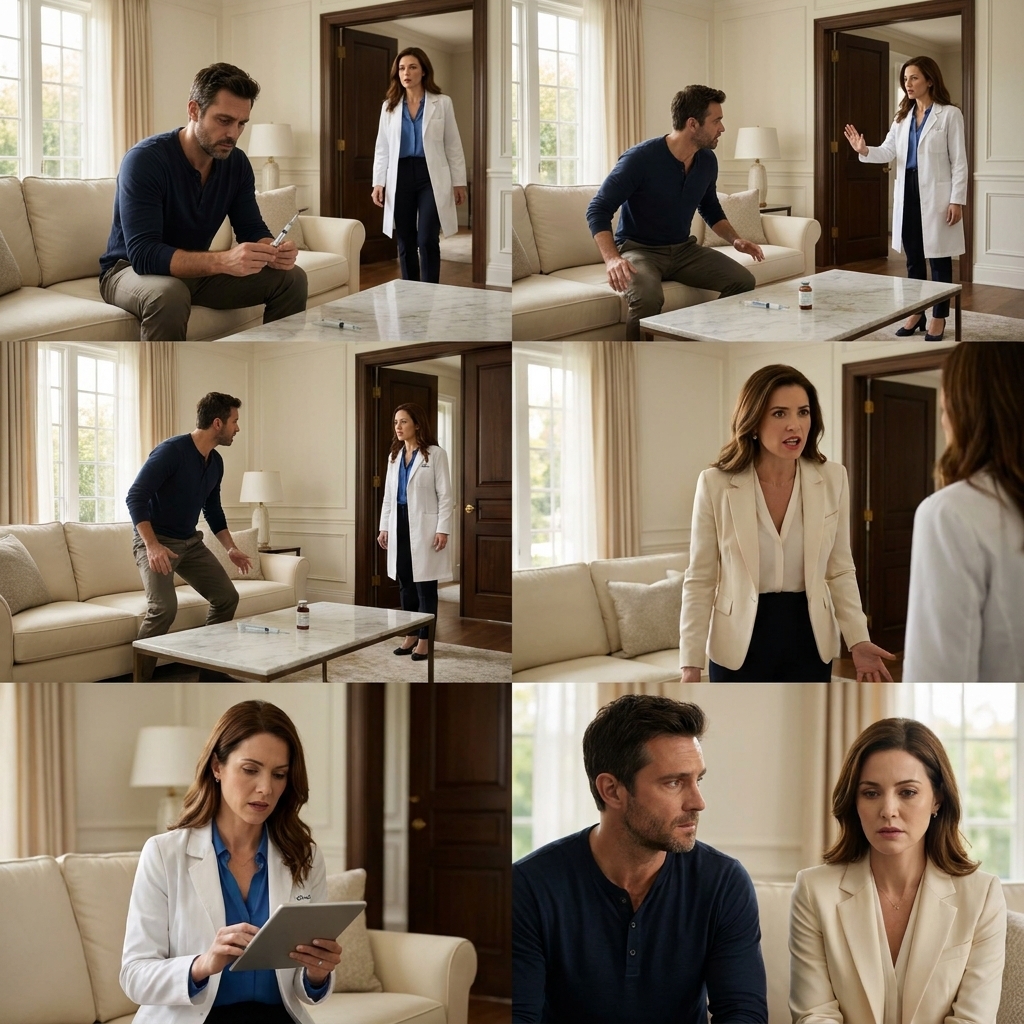
The letter arrived on heavy paper with no return address. Sophia found it beneath the front door as she left for the grocery store. Inside was a copy of the photograph showing Ethan in the clinic chair, along with a warning that his medical history would be shared publicly if the investigation continued.
She stood in the foyer for several minutes, listening to the quiet house. Her first instinct was to hide the letter until she could make it disappear. She recognized the instinct with a painful clarity. It had guided nearly every decision that brought them here.
Instead she carried the letter into the kitchen, where Ethan was making toast.
“Someone left this,” she said.
He read it without sitting down. His expression changed from confusion to anger, then settled into a tired calm.
“We give it to David,” he said.
“I was afraid you’d blame me.”
“I might be angry that you kept things from me. But I’m not angry that you showed me this.”
Sophia began to cry. She had imagined a dramatic moment of absolution, a speech that would erase the last two years. Ethan’s plain distinction between the past and the present was more useful.
David advised them to preserve the letter and the envelope, record when it arrived, and notify the appropriate investigators. He also helped them document the earlier threats from Keene. The couple spent the morning assembling dates, photographs, emails, and bank records into a timeline.
As they worked, Sophia told Ethan the full story of the recording. During his worst period of withdrawal, he had become disoriented at the clinic and begged staff not to send him home. Someone had filmed him. Keene later showed Sophia a short clip and said it could damage Ethan’s reputation if released without context.
“He told me your employer would see it,” she said. “He said your insurance company might call you dishonest. I thought signing the agreement would keep it private.”
Ethan stared at the table. He remembered that day only in flashes: a bright examination lamp, a paper cup of water, the sensation that his skin was too tight. He remembered begging for relief. He did not remember a camera.
“I was sick,” he said. “I didn’t do anything shameful by needing help.”
“I know that now.”
“Did you know it then?”
Sophia took a long breath. “I knew you deserved care. I was afraid other people wouldn’t see it that way.”
Ethan looked at her. “You let their judgment become more important than my choice.”
She nodded. He was right, and there was no clever explanation that would make it otherwise.
They agreed to begin couples counseling, not as a substitute for the investigation but as a place to discuss what secrecy had done to their marriage. Their first appointment was with Dr. Naomi Price, who asked them to describe a moment when they had felt alone.
Ethan spoke about the nights he lay awake listening to Sophia breathe, afraid to wake her for help. Sophia spoke about the afternoons she sat in parking lots after meeting Keene, unable to bring herself to drive home. Naomi listened, then asked what each had needed from the other.
“I needed him to tell me how scared he was,” Sophia said.
“I did,” Ethan replied. “I told you I was scared of the pain. I didn’t know I also needed to be scared of the people treating it.”
Naomi stopped them gently. “You are describing different fears. Neither one cancels the other.”
The session did not end with a hug. Ethan left feeling raw and irritable. Sophia left with a page of notes about boundaries and shared decisions. They drove home in silence, then stopped for lunch because Ethan said he was hungry. It was the first time in weeks he had noticed an appetite.
At Westbridge, Hale’s formal interview lasted three hours. Investigators asked about the altered consent form, the research archive, and the relationship with Meridian. Hale acknowledged that his office had sent records to a third-party coordinator but insisted that authorization had been obtained.
“The signature is disputed,” Mercer said.
“Then the patient should be evaluated for memory impairment,” Hale replied.
Mercer did not respond to the suggestion. He placed the timestamped physical therapy record beside the consent form. “Can you explain how Mr. Reed signed this document in your department while attending therapy elsewhere?”
Hale adjusted his cuff. “I can’t speak to every administrative entry made by staff.”
“The approval bears your credentials.”
“Credentials can be used by others.”
The investigators recorded his answers. They also asked why a safety report had been amended without a documented explanation. Hale claimed he could not recall the specific case.
Grace’s testimony contradicted him. She described bringing the discrepancy to Hale’s attention and being told the matter would be handled internally. She remembered his exact words because she had written them in a notebook that evening: We cannot afford another interruption.
Olivia read none of the confidential interview transcripts. She learned only that the review was progressing and that the restriction on her clinic schedule would be reconsidered. She had never wanted to become the center of the story. She wanted her patient to have care that did not depend on who was willing to speak loudly enough.
On Sunday, Helen came to the mansion with a box of family photographs. Ethan had asked her to bring pictures from the years before the accident. He wanted to remember himself as more than a patient.
They spread the photographs across the living-room rug. There was Ethan at ten, missing a front tooth; Ethan at twenty, standing beside his first car; Ethan and Sophia dancing at their wedding. Helen told stories about scraped knees, school concerts, and the terrible cake Ethan had baked for her birthday.
Sophia laughed for the first time in days. Ethan watched her face soften and remembered why he had fallen in love with her. She had always been able to make a room feel less lonely. He hoped she could learn to do that without hiding what frightened her.
Helen found a photograph from the summer before the crash. Ethan was standing on a hiking trail, sunburned and grinning. He studied it for a long time.
“I don’t know if I’ll ever get back to that,” he said.
“You don’t have to become the man in the photograph,” Helen replied. “You have to decide what kind of life you can build now.”
Later, after Helen left, Ethan placed the photograph beside his medical notebook. He added a new question to the list: What would recovery look like if I stopped measuring it against the person I was before?
Sophia read the question and sat beside him. She did not answer for him. Instead she asked whether he wanted to walk in the garden before the light faded. He did. They moved slowly, pausing when his back hurt, and returned to the house before the cold settled in.
That night David called. The threatening letter had been documented, and investigators were examining its connection to the earlier messages. He warned them that the process could take time. Ethan thanked him and hung up.
Sophia reached for the light switch. “Are you afraid?” she asked.
On the afternoon before their counseling session, Sophia visited the community center where she had once volunteered. She had stopped going after Ethan’s accident, telling herself she was too busy. The director, Mrs. Alvarez, greeted her warmly and asked whether she wanted to help prepare meals for the weekend program.
Sophia hesitated. She felt guilty at the idea of spending time on anything that did not directly help Ethan. Then she remembered Naomi Price asking what remained of her own life outside the role of caregiver.
She spent two hours chopping vegetables beside a retired teacher named Joan. They talked about recipes and the terrible weather. Joan did not ask about the hospital investigation. Sophia was grateful to be seen as someone who could contribute without first explaining a crisis.
When she returned home, Ethan noticed that she looked lighter.
“Good day?” he asked.
“I went back to the community center. I should have told you I was going.”
“You don’t need permission to volunteer.”
“I know. I just want us to know where we are, instead of disappearing from each other’s lives.”
Ethan smiled. “How was it?”
She told him about Joan and the meals. He listened, asking questions that had nothing to do with his treatment. It felt unfamiliar and welcome.
That evening Ethan called a friend from his former hiking group. He admitted he could not manage their old trails but asked whether anyone wanted to meet for coffee. His friend agreed immediately. Ethan had assumed the group had forgotten him. He learned instead that several people had stopped calling because they did not know whether he wanted company.
Both Ethan and Sophia were beginning to rebuild lives that had narrowed around fear. Their marriage mattered, but neither could ask it to contain every source of comfort, purpose, and identity.
“Yes,” Ethan said. “But I don’t want fear making our decisions anymore.”
She left the light on a little longer. They sat together in the quiet, not healed, not certain, but no longer keeping the most dangerous parts of their lives from each other.