Chapter 3 – The Accident They Buried
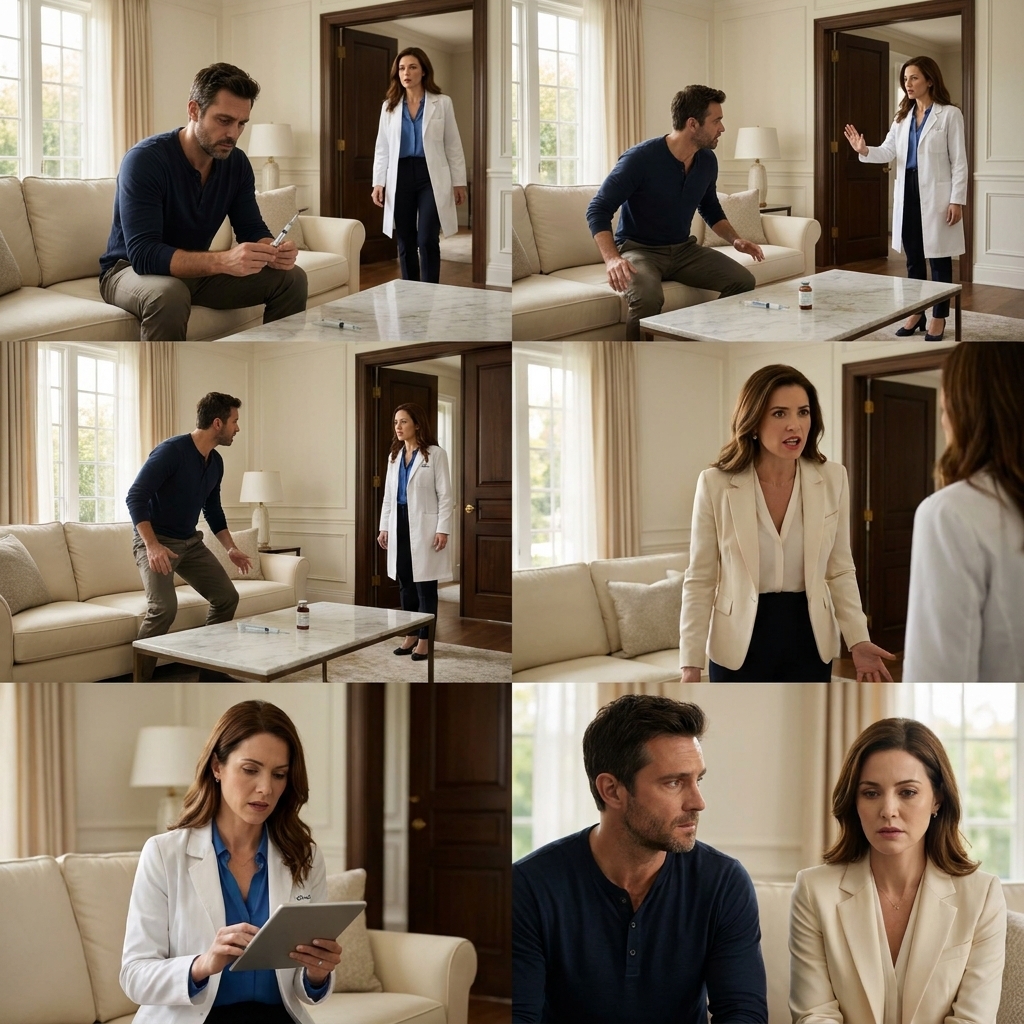
Ethan had spent three years trying not to remember the sound of metal folding around him. Now the crash returned in fragments: rain on the windshield, a green traffic light, a white delivery van crossing his lane, and the violent silence afterward. He had always believed the other driver ran a red light. The insurance report said so. His lawyer had told him the matter was settled.
But the forged initials on the consent form made every settled fact feel temporary.
Olivia arranged a meeting with the hospital’s patient advocate, Lena Morales. Lena explained that Ethan could request an audit of his medical records and that corrections would be documented rather than quietly replacing the originals. She also told him he could have an independent physician review his treatment history.
“I want the original records,” Ethan said. “Not whatever someone decides I should see.”
“That’s a reasonable request,” Lena replied. “We will record it in writing.”
Sophia sat beside him, still wearing yesterday’s cream blazer. She had slept in a chair and looked exhausted. Ethan wanted to reach for her hand, but the memory of the false signature stopped him.
“Why would Keene ask you to sign anything in my name?” he asked.
“He didn’t. He asked me to sign a confidentiality agreement. I didn’t see this page until this morning.”
“Then where did my initials come from?”
“I don’t know.”
He believed she was frightened. He did not yet know whether she was telling the truth.
That afternoon, Ethan called his former lawyer, David Sloane. David had retired to a small office near the lake, where he handled only a few cases a year. He remembered Ethan’s accident immediately.
“The other driver admitted fault,” David said. “There was a witness and a traffic camera. Why are you reopening this?”
“Because a doctor appears to have put my name on something I never signed. I’m wondering what else I accepted without checking.”
David hesitated. “There was one thing. The witness changed his statement before the settlement. It didn’t affect liability, so I didn’t push it.”
“Changed it how?”
“He originally said the van was following a black sedan. Later he said he couldn’t remember a second vehicle.”
Ethan looked through the hospital window at the parking garage across the street. “Can you find him?”
“I’ll try.”
Across town, Sophia drove to a café where she had met Martin Keene twice before. She chose a table near the door and ordered tea she could not drink. Keene arrived twenty minutes late, a narrow man in an expensive coat with a smile that never reached his eyes.
“You said it was a support program,” she began.
“It was.”
“You said Ethan needed the medication because his old prescription had been interrupted.”
“He did need help.”
“You also said you would destroy the recordings if I signed.”
Keene’s smile vanished. “Keep your voice down.”
Sophia leaned forward. “You recorded him during withdrawal. You threatened to send the footage to his employer. I signed because you said it would protect him.”
“You signed because you understood how damaging that footage would be.”
“Was the medicine even prescribed?”
“Ask your husband what he was willing to take when he couldn’t sleep.”
She stood, nearly overturning the chair. “Don’t you dare make this his fault.”
Keene slipped a folded paper across the table. “The records office is about to release material that could ruin him. If you care about Ethan, convince him to stop.”
Sophia refused to touch the paper. Keene left it anyway. After he walked out, she unfolded it. The page contained a photograph of Ethan sitting in a clinic room, eyes half closed, with a date that contradicted the discharge summary in their folder.
She recognized the room. She had been there that day. She had not known anyone was filming.
At the hospital, Olivia met with a pharmacist named Noah Kim, who had worked at Westbridge for twelve years. Noah checked the vial’s batch reference against the facility’s inventory system. The code resembled an internal study identifier, not an ordinary retail prescription label.
“Could it be counterfeit?” Olivia asked.
“Possibly. It could also be old research stock or a mislabeled container. We can’t tell from a photograph. It needs proper verification.”
“And the physician name?”
Noah leaned closer to the screen. “Hale supervised a trial several years ago. But I don’t see this batch in the active database.”
Olivia felt a chill. “Can we preserve the records before anyone changes them?”
“Compliance can. I’ll notify them.”
That evening David called Ethan back. He had located the original witness, a former delivery driver named Owen Bell. Owen agreed to speak only after David promised that his name would not be given to the insurance company without consent.
“He says the black sedan belonged to someone connected to the clinic,” David reported. “He recognized the driver when he saw a photograph later.”
“Who was driving?”
“He wouldn’t say on the phone. He wants to meet.”
Ethan asked Olivia for permission to leave the hospital once his medical evaluation was complete. She reminded him that she was not his jailer. They agreed on follow-up care and a plan for managing his pain without relying on unverified medication. Ethan was relieved, but the freedom felt fragile.
Sophia met him at the entrance. She carried the folded photograph Keene had given her. The air smelled of rain and exhaust, and the sight of the street made Ethan’s back tighten.
“I have to show you something,” she said.
He studied the photograph. He remembered the room, the blue chair, the strange sensation of having been watched. He did not remember anyone taking pictures.
“Where did you get this?”
“From the man who brought the medicine. He said there are recordings.”
“Of what?”
“Of you when you were sick. He threatened to release them.”
Ethan stared at her. “And you didn’t tell me?”
“I thought I could make it go away.”
A car horn sounded nearby. Ethan flinched so hard that Sophia reached for him instinctively. He stepped back, then saw the hurt in her eyes. He had spent months wondering whether his pain was destroying their marriage. Now he wondered whether the marriage had been used to control his treatment.
He took the photograph and folded it carefully. “No more meetings with Keene alone,” he said. “No more signing things for me. If we’re going to find out what happened, we do it in daylight, with records and witnesses.”
Sophia nodded. For the first time since Olivia entered their living room, she did not try to defend herself.
At home, Ethan opened the garage where he kept the twisted license plate from his old car. He had intended to throw it away dozens of times. He held it under the overhead light and remembered the black sedan Owen had described. A shape moved at the edge of his memory: someone standing beside the ambulance, wearing a charcoal coat.
He had always thought it was a paramedic. Now he was not sure.
His phone rang. David’s name appeared on the screen.
The next morning Ethan met Owen Bell at a public library conference room with David present. Owen brought a small notebook stained with grease. He had written down the license plate of the black sedan on the day of the crash, then crossed it out after Keene visited his depot.
“Why keep it?” David asked.
“Because crossing it out didn’t make me forget,” Owen said. “I kept telling myself I was doing what I had to for my daughter. She needed surgery that winter. I was afraid the company would fire me.”
Ethan studied the crossed-out numbers. He felt a sudden urge to demand that Owen explain every minute of the past three years. Instead he asked whether the notebook had remained in Owen’s possession. Owen nodded and described where he had stored it.
David arranged to preserve a copy and record the circumstances. He reminded them that a license plate might identify a vehicle but not the person driving it. Ethan listened, even though he wanted certainty more than anything.
After the meeting, Owen walked with Ethan to the library entrance. “I saw your photograph in the paper after the crash,” he said. “I knew you were hurt. I kept thinking I’d call you.”
“You could have,” Ethan replied.
“I know.”
They stood in an uncomfortable silence. Ethan did not forgive him on the spot. He did thank him for coming now. Owen looked relieved and ashamed at the same time.
On the drive home, Ethan asked David whether witnesses often changed their accounts out of fear. David said they sometimes did, which was why investigators sought independent evidence whenever possible. Ethan looked out at the traffic lights and thought about how many choices in this case had been made by frightened people. The fear explained some decisions. It did not erase their consequences.
“Owen has agreed to meet tomorrow,” David said. “But Ethan, there’s something you should know. The clinic paid him to keep quiet after the crash.”
Ethan looked at the broken plate in his hand. The accident had not ended on the road. Someone had carried it into every room where he had been treated since.