Chapter 7 – The Betrayal Inside the Family
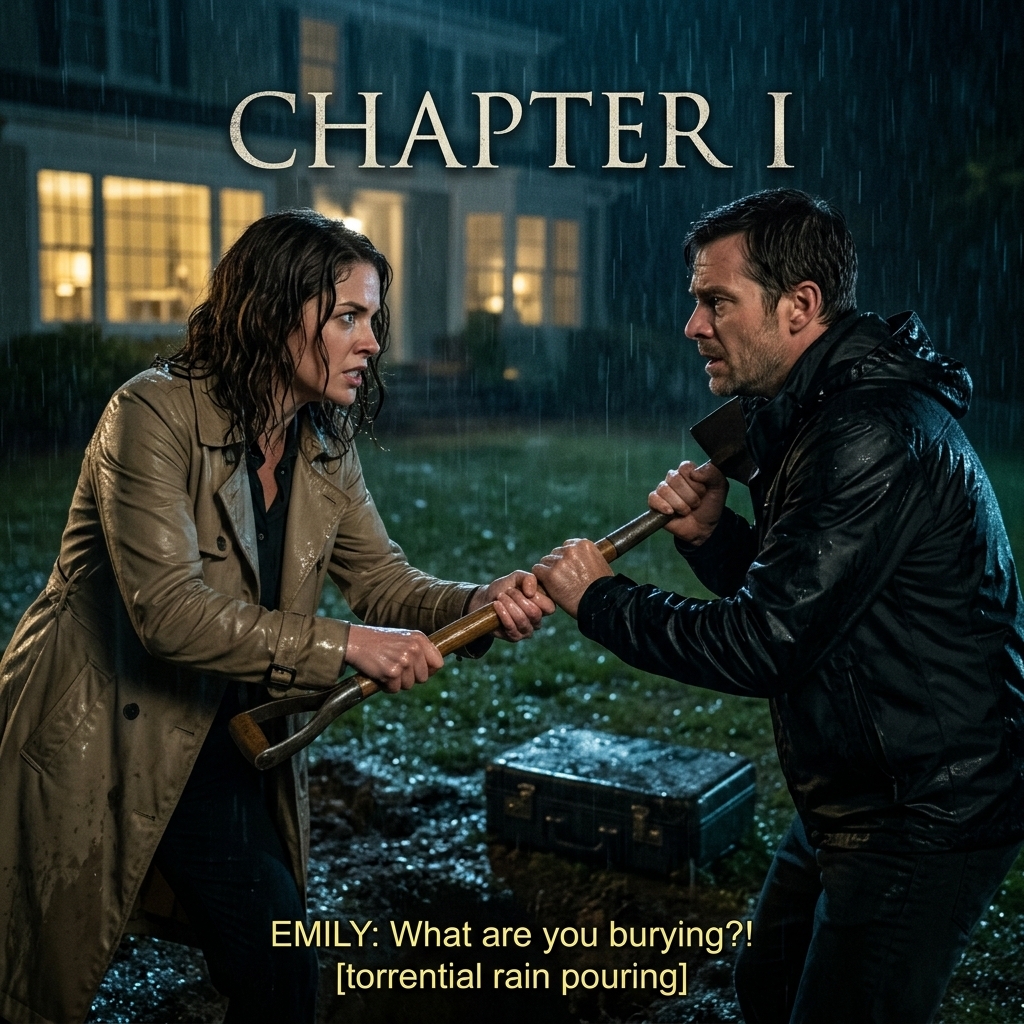
Emily confronted Sarah with Helen’s warning. For the first time since their reunion, Sarah looked genuinely reluctant to answer. She admitted that two years earlier she had agreed to provide Richard with partial access to a set of financial records in exchange for proof that Emily would be left alone.
She had not surrendered the master ledger, but she had revealed the location of one backup archive. That decision allowed Richard to identify Marcus and force him into hiding. Sarah had carried the guilt ever since.
“I thought I could buy time,” she said. Emily heard an echo of Daniel’s explanations and felt anger rise.
“Every one of you thought you could trade someone else’s freedom for a little more time.”
Sarah did not defend herself. She said she had made a terrible choice under pressure and wanted to testify about it. Emily walked out of the room before she said something cruel.
In the hallway Nora waited without questions. Emily told her she needed a place where nobody was protecting her from the truth. Nora led her to an empty office and closed the door.
Emily sat alone for an hour, staring at the rain against the window. She loved Sarah. She might still love Daniel.
She loved her mother despite everything. But love had become a language people used to justify control. She decided that whatever happened next, she would stop accepting secrecy as proof of devotion.
When she returned, she told Nora she wanted to participate openly in the investigation and give a formal statement. “No more private bargains,” she said. Nora nodded.
“That’s a choice we can work with.”
Helen finally agreed to meet Priya in a conference room with counsel present. She arrived in a dark blue coat, carrying a small handbag and looking older than Emily remembered. She did not pretend surprise when Sarah entered.
The sisters watched their mother for a moment, waiting for an embrace that did not come. Helen sat down and asked for water. Under questioning she admitted that the family’s charitable foundation had concealed serious losses after their father’s business failed.
She had authorized transfers she believed would be temporary, intending to repay them. Richard Carter discovered the irregularities and offered to help. Instead he used the accounts to move money for clients who wanted their transactions hidden.
Helen said she had tried to withdraw, but Victor threatened to expose the fraud and implicate her daughters. Sarah asked why she had not told the authorities. Helen answered that she feared losing everything, including the family’s reputation.
“We lost everything anyway,” Emily said. Helen looked at her, eyes wet.
“I know.”
She admitted signing documents that helped establish the false trust in Emily’s name, though she claimed Richard’s staff had forged the actual signature. Priya asked about the fake funeral. Helen closed her eyes.
“Richard told me it was necessary to keep Sarah safe.”
Emily felt a cold familiarity in the answer. Every participant had accepted the same lie because it offered a way to avoid responsibility. Helen insisted she had not known the death certificate was fraudulent until later.
Sarah said the timeline contradicted her. Helen did not argue. She simply looked at the floor.
The investigators used the archive logs to obtain lawful access to additional records. Those records linked Richard to the financial scheme and Victor to surveillance and intimidation. They also revealed that Richard had maintained a private insurance file containing fabricated evidence against Emily.
If the investigation reached him, he intended to release documents portraying her as the architect of the trusts. Priya explained that the falsified records could still cause serious harm even if eventually disproved. Emily might face public accusations, frozen accounts, and months of scrutiny.
The prospect frightened her, but she was no longer willing to let fear determine the truth. Daniel volunteered to provide testimony about Richard’s instructions and the threats he had received. He understood that admitting his role in the false funeral and evidence concealment might expose him to legal consequences.
“You should have done this years ago,” Emily said. “Yes,” he answered. She appreciated the absence of excuses.
Marcus helped authenticate the archive’s technical logs, and Nora prepared a clear chronology of who had accessed each file. Helen agreed to turn over correspondence with Victor, including messages in which he threatened her family. Sarah submitted her recordings and acknowledged the records she had compromised.
The investigation became a collaboration among damaged people who no longer had the luxury of pretending they were innocent. Emily found that honesty did not make them suddenly trustworthy. It simply made their actions visible enough to judge.
Richard called Emily that evening. His voice was warm, almost paternal, the same voice that had toasted her wedding. “I hear the family is having a difficult week,” he said.
Emily kept the line open while investigators recorded the call according to the procedures they had arranged. Richard offered to resolve the trust problem quietly if she persuaded Sarah to stop cooperating. He claimed the records were too complicated for prosecutors to understand and that public accusations would ruin the sisters.
Emily asked why he had allowed a false funeral. Richard sighed. “Your sister needed to disappear. Your husband understood that.”
“Did you?”
Emily asked. He paused.
“I understood what was necessary.”
She remembered the man who had danced with her at the wedding and told her she was finally part of a real family. Now she heard the threat beneath his courtesy. She told him she would not bargain.
His tone changed.
“You think you know who your father was?”
Emily gripped the phone. Richard claimed her father had willingly approved the first transfers and that Helen had only followed his instructions. Emily did not know whether to believe him.
He promised to release a recording that would change her understanding of the family. Then he hung up. Nora reviewed the call and said the threat might be intended to provoke a reaction.
Emily asked whether they could obtain the original recording before Richard distributed an edited version. Nora said they were working on it. Emily looked at Sarah, who had listened from the doorway.
“Whatever Dad did,” Emily said, “we can face it without lying to each other.”
Sarah nodded, but she looked frightened.
That night Richard’s lawyer sent a package to several media outlets. It contained forged trust records, a photograph of Emily entering the Vermont property, and a statement alleging she had helped conceal illegal transfers. A second package arrived at Priya’s office, this one containing an audio recording of Emily’s father discussing financial problems with Helen.
The recording was real, according to preliminary analysis, but it did not establish the criminal conduct Richard claimed. In it, their father sounded ill and confused. He asked Helen to stop using his name on documents and said he wanted the accounts reviewed.
The recording ended before Helen replied. Emily listened with tears in her eyes. It was the first time she had heard his voice since his death.
Richard had expected the sound to destroy her certainty. Instead it confirmed that her father had been worried and wanted scrutiny. Priya cautioned that the recording was only one piece of evidence, but Emily felt something steady return.
Their father’s legacy did not have to be perfect to be worth understanding. She wrote a public statement through counsel denying the allegations and offering to cooperate with lawful inquiries. The investigators moved to secure Richard’s records and interview key witnesses.
Victor disappeared before they could reach him. His car was found abandoned near an industrial marina, the doors unlocked and the keys missing. Nora warned that he might be attempting to flee or lure investigators away.
Emily returned to the protected apartment and found Sarah staring at a message on her phone. It read: COME TO THE OLD PIER OR THE LEDGER GOES INTO THE WATER. Beneath the message was a photograph of Helen standing on the edge of a dock, with Victor beside her.
Emily wanted to go immediately. Nora refused to let the sisters approach a possible hostage situation without a coordinated response. She contacted the appropriate authorities and shared the photograph, the phone number, and the marina location.
Sarah paced, blaming herself for every delay. Emily took her hand. “If we rush in, we give him two more people to threaten,” she said.
The words surprised her. They sounded like the practical caution Sarah had always shown before fear and secrecy twisted it into something else. Officers established a perimeter around the pier while a negotiator attempted contact.
Victor answered once and demanded the original backup drive. Nora informed him that copies had already been preserved and that destroying one device would not erase the evidence. Victor laughed and said Richard had kept a final insurance policy.
He claimed Helen knew where it was. Through a distant camera feed, Emily saw her mother standing beside a storage shed, hands visible, visibly frightened but uninjured. Victor was several yards away.
Helen suddenly turned toward the camera and shouted something the microphone could not capture. Sarah leaned forward. “She’s saying ‘blue box,'” she said.
Emily remembered a blue metal box their father had kept in his study, supposedly filled with tax records. After his death Helen had moved it into storage. Emily called Priya and asked her to locate it.
At the pier Victor began walking toward a waiting boat. The negotiator ordered him to stop. He reached inside his coat, and the camera image jolted as officers moved.
The screen went dark.
Emily heard Sarah whisper, “Mom?”
No one answered for several terrible seconds.