Chapter 5 – The Doctor Who Knew Too Much
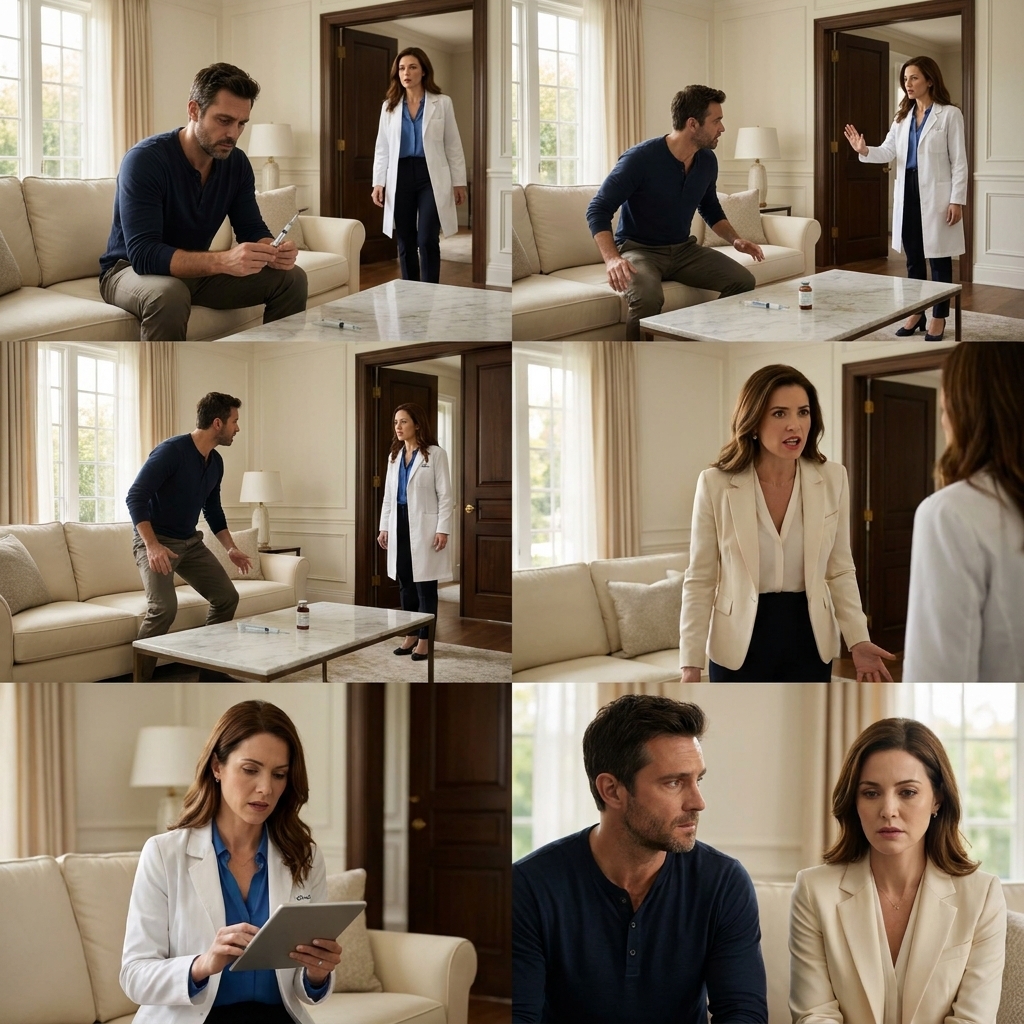
Richard Hale’s office occupied the top floor of Westbridge’s administrative building. Its windows looked over the lake, and the walls displayed awards for clinical innovation. When Olivia entered, Hale was polishing his glasses with a cloth so white it seemed newly unfolded.
“I hear you’ve been asking questions about an old patient,” he said.
“Ethan Reed has authorized a review of his records.”
“Ethan has a complicated history. I would advise caution.”
“Caution is why I’m checking the records rather than making assumptions.”
Hale smiled. “You are young, Olivia. It’s admirable that you care. But some patients interpret boundaries as persecution.”
She placed the audit summary on his desk. “Can you explain why a consent form was entered from your department when Ethan was at physical therapy across town?”
Hale’s smile held, but his fingers stopped moving. “Electronic systems are imperfect.”
“Then the access logs should help us understand the error.”
“That isn’t your responsibility.”
“His current care is. An unexplained medication source affects that care.”
Hale rose and walked to the window. He spoke without turning around. “I would hate for this to become a disciplinary matter. You entered a patient’s home and created a confrontation. A complaint could be difficult for your career.”
Olivia felt the threat beneath the gentle words. She thought of Ethan’s face when he had said he was in pain. “If there’s a complaint, I’ll respond to it. But I won’t abandon a documented concern.”
Hale turned back, his expression cold. “Then you should leave.”
By lunchtime, Olivia received notice that she had been removed from one of her regular clinic sessions pending a review of a complaint. The allegation said she had frightened a vulnerable patient during a home visit. Ethan had filed no such complaint.
She called Lena Morales, who confirmed that the hospital’s compliance office had received the records discrepancy. Lena could not intervene in staffing decisions, but she advised Olivia to preserve every communication and seek appropriate representation.
Olivia sat in the staff lounge with her lunch untouched. A junior nurse named Grace sat across from her. Grace had worked in Hale’s old research unit before transferring to general medicine.
“He does this,” Grace said quietly. “He doesn’t shout. He makes people think their jobs are at risk until they stop asking.”
“Do you know anything about the Reed file?”
Grace glanced toward the door. “I remember an incident report that never appeared in the final study binder. A patient was given medication under the wrong participant number. I don’t know if it was Ethan.”
“Would you tell compliance?”
“If they’ll protect me from retaliation.”
Olivia did not promise protection she could not provide. She gave Grace the official reporting contact and offered to accompany her to a meeting. Grace folded the paper into her pocket.
Meanwhile, Ethan sat in David Sloane’s office across from Owen Bell, the witness to his crash. Owen was a broad-shouldered man with calloused hands and the posture of someone who had spent years behind a steering wheel.
“I didn’t lie about the red light,” Owen began. “The van went through it. But there was another car. A black sedan. It was waiting near the intersection before the van moved.”
“Why did you change your statement?” Ethan asked.
“A man visited my depot. He said the insurance settlement would be delayed if I complicated the report. I had a sick daughter. I needed my job.”
David asked whether Owen had kept anything from that visit. Owen produced a folded business card from his wallet. The card bore the name Meridian Patient Support.
“Was the man Martin Keene?” Ethan asked.
Owen nodded. “I saw his photograph in an article about a medical charity last year. I knew it was him.”
Ethan felt a wave of nausea. The same man who had pressured Sophia had also approached the witness to his accident. That did not prove the crash was planned, but it proved Keene’s involvement began earlier than anyone had admitted.
David photographed the card and asked Owen to give a signed account of the meeting. Owen agreed, provided his daughter was not dragged into a public fight. Ethan promised he would not contact her.
Outside the office, Ethan leaned against the brick wall and tried to steady his breathing. David waited beside him.
“Do you think someone caused the crash?” Ethan asked.
“We don’t have evidence for that,” David replied. “We have evidence someone tried to influence a witness afterward. We follow the facts in order.”
Ethan appreciated the distinction. He was tired of people turning his life into a story before they had checked what happened.
At home, Sophia was sorting old emails into a folder for the investigator. She found a message from Keene dated four months after the crash. It referred to a ‘continuity adjustment’ and attached a payment schedule. She had never noticed the phrase. At the time she had been working double shifts and driving Ethan to rehabilitation appointments before dawn.
She called the bank to request the original payment confirmations. The representative explained that some records would take several days. Sophia wrote down the request number and placed it beside her laptop. She had begun to understand that doing the right thing often involved dull, slow tasks rather than dramatic declarations.
When Ethan returned, she showed him the email. He read it once and then again.
“Continuity adjustment,” he repeated. “They made it sound like a change in appointment time.”
“I thought it was a billing code.”
“Maybe it was. We need to ask.”
The restraint in his voice surprised her. A week earlier, he might have shouted. Now he seemed determined not to give Keene the satisfaction of turning their anger against each other.
That night Olivia received a call from Grace. The nurse had decided to speak to compliance. She also remembered where the missing incident report might be stored: in a sealed research archive that had been moved during a renovation.
“The boxes were labeled by year, not patient,” Grace said. “I saw the movers put them in the basement records room.”
Olivia thanked her and advised her not to enter the archive herself. An authorized records preservation request was already underway. If the report existed, the investigators would need to retrieve it properly.
Before bed, Ethan listened to a voicemail from his mother. She asked whether he was eating, whether the house was too quiet, and whether he and Sophia wanted her to visit. He nearly called her back, then realized he did not know what to say.
He had hidden his pain from her for months because he could not bear the worry in her voice. He had hidden the trouble in his marriage for the same reason. Now he wondered whether protecting people from the truth was a family habit rather than a kindness.
He called her anyway.
“Mom,” he said when she answered, “something is happening, and I don’t understand all of it yet. But I need you to know I’m asking for help.”
Grace spent the weekend preparing for her compliance interview. She spread old calendars across her dining table and called a former colleague, Elena Park, who had worked the same shift during the study. Elena remembered the incident but had been told that it was a documentation problem rather than a patient-safety event.
“Did you see the original report?” Grace asked.
“I saw you carrying it to Hale’s office. Later the shared folder showed a shorter version. I assumed somebody had corrected it.”
“I didn’t correct it.”
Elena was silent. “Are you asking me to speak to investigators?”
“I’m asking you to tell them what you remember, even if it’s different from what I remember.”
They agreed to contact compliance separately. Grace felt nervous afterward. She had spent years building a career in nursing, and she knew that even a justified complaint could make colleagues uncomfortable. Her partner found her sitting at the table long after dinner.
“You can be afraid and still do it,” he said.
“What if I’m wrong?”
“Then an honest investigation should show that. You aren’t being asked to invent certainty.”
Grace closed the calendar and put it in a folder. The next day she brought her notebook, shift roster, and a list of names to the interview. She described the patient-safety concern as clearly as she could, then corrected the investigator when he summarized one detail incorrectly. It mattered to her that the record reflect what she had seen rather than what anyone wanted her to say.
When she left the room, she felt neither triumphant nor safe. She felt relieved that the account no longer lived only in her memory. She bought a sandwich, sat in her car, and called Elena to say she had spoken. Elena answered that her own appointment was scheduled for Tuesday.
There was a long silence. Then she said, “That’s the bravest thing you’ve told me in years.”
After the call, Ethan stood at the living-room window. His reflection still looked tired, but for once he did not look away. The next morning would bring more questions, and perhaps more accusations. He had decided that neither pain nor shame would be allowed to answer them for him.