Chapter 8 – The Sister at the Door
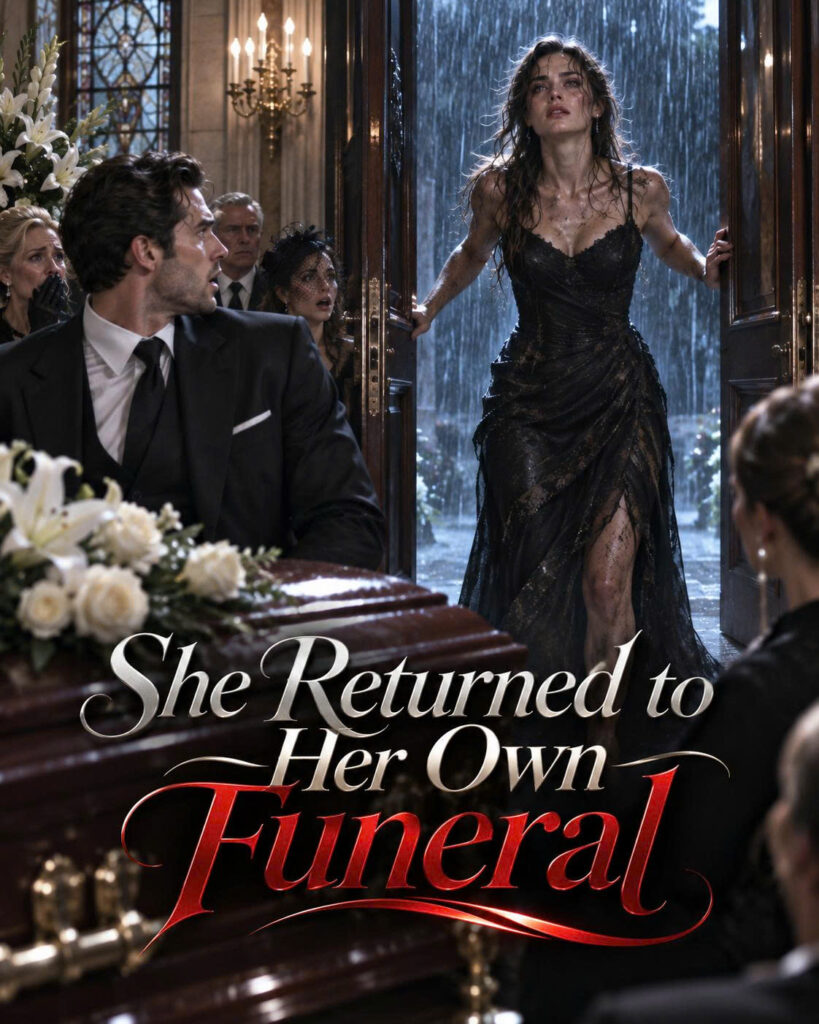
Claire’s voice had become a weapon, and Evelyn did not know which hand was holding it.
She played the recording only once more before sending it to Ortiz with the message’s metadata.
The audio was short enough to fit inside a breath.
Evelyn could hear a door slamming, Claire begging her not to come, and a distant mechanical hum like the one that had vibrated through the basement walls.
The photograph of the stolen film case showed a distinctive orange safety stripe on the concrete floor.
Evelyn knew that stripe.
It marked a loading lane in the cold-storage annex behind Pier Nine.
“He wants you to follow your instincts,” Ortiz said when she arrived at Nora’s home.
“If you go alone, he’ll know you aren’t carrying police.
If you bring us and he sees us, Claire could be in danger.
We’re not giving him either option without checking the site first.”
“What if she’s there?”
“Then the job is to get her out.
Not to prove you can rescue her yourself.”
Evelyn bristled at the instruction, then considered how many times she’d already run toward danger because she couldn’t stand the helplessness of waiting.
She had been trained by the last eight days to measure courage as movement.
Ortiz asked her to measure it differently: by giving professionals enough information to act without endangering the person she loved.
They met with a small police team at a staging area two blocks from the annex.
Samuel Keene provided a facility diagram.
The annex was a refrigerated warehouse built around two large loading rooms and a central control corridor.
Its emergency exit opened onto a narrow dock above the tidal basin.
Security cameras had been installed during Daniel’s modernization project, but one corner of the building remained outside their view.
“That’s where they held me,” Evelyn said, pointing to the shaded space on the drawing.
“Rusk brought supplies through a passage that connected the basement to the loading bay.”
Ortiz nodded.
“We’re going to use two entrances, and we’ll have medical staff nearby.
You’re staying here until I tell you the scene is secure.”
The detective left.
Evelyn paced behind a barricade as rain began to tap against the roof of the staging vehicle.
Nora sat on a folding chair with a thermos of coffee she wasn’t drinking.
She had brought a photograph of the sisters at the boat shop in their teenage years, sunburned and laughing, their father standing behind them with an arm around each.
Evelyn hadn’t seen it in years.
Claire’s smile was open, utterly unguarded.
Evelyn wondered when that girl had first learned to hide what she needed.
“Do you think she meant to betray me?”
Evelyn asked.
Nora studied the photograph.
“I think she wanted to be the good sister, the successful director, the person who never needed rescuing.
Daniel offered her a story where she could be all those things if she did what he asked.”
“That’s not an excuse.”
“No.
It isn’t.
You asked what I think, not what she deserves.”
A radio snapped to life.
Officers had entered the warehouse.
The east loading door was unlocked, which worried Ortiz because it was an invitation rather than a barrier.
On the camera feed, Evelyn could make out rows of stacked insulated boxes and a gray forklift parked beneath fluorescent lights.
Nobody moved.
The officers advanced toward the control corridor, checked the side rooms, and found a portable speaker on a folding chair.
From it came Claire’s recorded plea.
The voice played again and again in a loop.
“It’s a lure,” Ortiz said over the radio.
“No visible hostage.
Clear the building.”
At that moment, the warehouse’s overhead doors began to descend.
A warning horn sounded.
The camera feed shook as an officer ran toward the nearest exit.
Evelyn heard a hard metallic impact, then Ortiz shouting that the hydraulic control system had been triggered remotely.
One door stopped halfway, leaving enough clearance for the team to get out.
Another came all the way down, sealing the control corridor behind them.
Evelyn instinctively moved toward the building.
Nora caught her by the sleeve.
“You have to let them work.”
“Claire isn’t there,” Evelyn whispered.
“He’s making us look in the wrong place.”
The realization came in pieces.
The orange stripe on the floor, the humming machinery, the familiar dock layout: Rusk had used a real photograph of the annex but an old recording of Claire.
Evelyn remembered her sister’s sling, her injured shoulder, and the way she’d hesitated before entering the boardroom.
If Rusk had taken her after the meeting, he would have had to move her in public.
The lure might have been designed not to trap police but to pull them away from another location while Daniel recovered the film.
She called Hannah.
The attorney was reviewing the ledger with a forensic accountant and answered on the first ring.
“Has Claire checked into a hospital?”
Evelyn asked.
“Not that I know.
Why?”
“Find out whether anyone has seen her since she left the board meeting.
Then check the city archive.
Somebody may be trying to reach the copy of Dad’s film while police search the annex.”
Hannah called back seven minutes later.
Claire had been treated at a walk-in clinic and discharged at 8:15 p.m., almost an hour before the threatening message arrived.
Her phone was off.
The city archive, meanwhile, had received an emergency access request signed by Adrian Bell, Daniel’s attorney.
Bell claimed to be collecting historic technical records for litigation.
The archivist had refused the request after hearing about the investigation.
“He knows about the copy,” Evelyn said.
“They’re running out of places to hide the truth.”
Ortiz returned from the annex angry and wet, but satisfied that her officers were unharmed.
The portable speaker was bagged as evidence.
A fingerprint technician found signs it had been placed by someone wearing gloves.
Evelyn showed her the clinic information and the access request.
Ortiz did not hesitate.
She asked detectives to locate Claire and sent a unit to the city archive.
The archivist, a retired teacher named Ruth Caldwell, answered the police call from behind a locked office door.
She said Bell had returned after closing with a man who claimed to be from facilities maintenance.
When she refused to admit them, they attempted to force the hallway door.
She had called security and taken refuge inside the reinforced records room.
The men fled before police arrived.
“He’ll try again,” Evelyn said.
“Then we put people there,” Ortiz replied.
“And we find Claire.”
Claire’s car was discovered near Saint Agnes Chapel at midnight.
Its engine was cold.
A fresh scrape marked the passenger door, and a small paper envelope sat on the driver’s seat.
The envelope contained a handwritten note: I WAS WRONG ABOUT WHAT LOVE REQUIRED.
On the back was the address of the old Mercer family house overlooking the harbor.
Evelyn knew the house had been empty for months.
Daniel had insisted on selling it, but a dispute over zoning had delayed the transfer.
Ortiz assigned officers to check the address.
This time Evelyn did not run ahead.
She sat in the police vehicle as they approached the property, listening to the radio report every cleared room.
The lower windows were dark.
A porch swing moved in the wind.
The house looked unchanged from the day her father died, and that familiarity made the possibility of violence inside it feel unbearable.
A light flashed in the upstairs window.
One of the officers called that he had found a woman on the floor of a locked bedroom, conscious but weak.
The bedroom door had been secured from the outside with a new bolt.
Officers forced it open.
Evelyn waited until Ortiz signaled before entering, then hurried up the familiar staircase, one hand skimming the banister that still bore a childhood nick from Claire’s bicycle handlebars.
Claire lay against the bed, her sling twisted beneath her.
She had a bruise near her temple but was alert.
A glass of water stood untouched on the dresser.
Evelyn knelt beside her and touched her cheek.
The sight of Claire breathing should have brought uncomplicated relief.
Instead it released grief so fierce Evelyn had to close her eyes to keep from shaking.
“I’m sorry,” Claire said.
“You can tell me later.”
“No.
I need to tell you now.
Daniel didn’t just ask me to lend him the tag.
He told me you’d agreed to go away for treatment.
I helped him arrange the vehicle because I believed him.
When I saw the SUV damage afterward, I understood something terrible had happened.
I still kept quiet.”
Evelyn fought the urge to interrupt.
Claire continued, each word painfully deliberate.
“I was there when he forged the proxy.
I didn’t sign your name, but I delivered documents to Adrian Bell and said you’d approved them.
I lied to the board.
I lied to Ortiz.
Then I watched him hold your funeral and still told myself there had to be an explanation.”
“Why did you send the video at the gala?”
“Because I saw you walk into the chapel and realized he was terrified, not happy.
I couldn’t unsee that.
I wanted everyone to see it too.”
“You could have come to me.”
“I was ashamed.”
“I was afraid,” Evelyn said.
“I was afraid every minute I was locked up.
Shame is not the same as danger, Claire.
You had a choice.”
Claire nodded, tears slipping down her face.
“I know.
I’ll testify.
I’ll accept whatever comes from it.
I only need you to know I didn’t want you dead.”
“Wanting isn’t enough,” Evelyn said.
“What you do is what matters.”
The paramedics took Claire downstairs.
Evelyn remained in the bedroom and noticed a familiar shape on the desk: a small wooden sailboat their father had made for the sisters when they were children.
Its paint had faded, and one corner of the base was chipped.
She picked it up.
The base felt heavier than she remembered.
When she turned it, a narrow seam showed beneath the keel.
There was a tiny brass screw, identical to those her father used in the boat shop.
She opened the compartment with a coin.
Inside lay a handwritten index card and a miniature data drive wrapped in waxed paper.
The card was addressed to both sisters.
If anything happens to me, it said, the copy in the archive is for the city.
This one is for you.
Nobody can take back what they do after you know the truth.
Evelyn sat on the floor and stared at it.
Her father had prepared a third copy without telling either daughter.
He hadn’t expected his death to divide them, but he had built a plan that required the surviving sisters to decide what to do together.
She felt the weight of his trust and the grief of knowing they had failed each other so completely.
Back at the station, the forensic analyst verified that the data drive contained unedited footage from a fixed camera overlooking the Gate Six installation.
On the screen, the contractor’s crew removed an approved metal interlock and installed a different bracket.
Daniel stood with Graham Sloane and Adrian Bell beside a work table.
The men examined a sealed sample and appeared to discuss it.
The camera recorded their faces, their movements, and the date.
It did not capture audio clearly enough to establish what they said.
Then the image shifted to a later segment.
Victor Rusk entered the same platform on the night Thomas Reddick died.
He stopped near the rail, looked down at something outside the frame, and removed a small object from his coat.
He moved toward the maintenance stairs.
The footage ended before anyone else appeared.
It did not show Thomas’s fall, but it contradicted Rusk’s claim that he had been off-site that night.
Ortiz leaned back.
“This gives us more than suspicion.
But we’ll need the original device and chain of custody verified, and we’ll need witnesses to explain the work orders.”
Evelyn looked at the date stamp.
The video had been recorded four years ago.
It could not bring back Thomas, or the years Mara spent hiding, or the version of her marriage she once believed in.
It could, however, stop the same people from writing the next false report.
The analyst opened the final file on the drive.
It was an audio recording, named simply EVELYN.
Her father’s voice began without introduction.
“If you’re hearing this, I need you to understand that I made my approval conditional.
Daniel promised he would stop the installation when I withdrew consent.
I believed him because he married my daughter.
That was my mistake.”
The recording crackled.
Then James said something that left Evelyn unable to move.
“I confronted Graham Sloane.
He told me Daniel had already put up the Mercer trust shares as security for financing.
Evelyn never authorized that pledge.
If the project collapses, they’ll try to take the company before she learns what was signed.”
Evelyn stared at Hannah.
“Can he do that?”
“Not lawfully without proper authority,” Hannah answered.
“But the paper may have been used to borrow money anyway.
We need to find the lender and the instrument.”
The audio continued.
“I have tried to save the business without frightening my daughters.
I may have waited too long.
If I disappear, do not let anyone tell you that protecting the family requires silence.”
Evelyn replayed the sentence once, then closed the file.
Her father had been asking the right questions before he died.
Now she understood why Daniel had rushed the sale and why Graham Sloane kept talking about financial exposure.
Someone had pledged assets they could not legally pledge, borrowed against them, and expected Evelyn to be too frightened or absent to object.
At 2:06 a.m., Hannah’s phone rang.
A court clerk was confirming that an emergency request had been filed to enforce a claimed default against Mercer trust shares at nine the next morning.
The applicant was Haven Crest Capital.
The papers were signed by Daniel Voss and witnessed by Adrian Bell.
Evelyn looked at the sleeping city beyond the station window.
Daniel had failed to keep her dead, so now he was trying to make her legally powerless before sunrise.
This time she had the evidence before the trap closed.
Whether that would be enough depended on a judge who had never met her, a sister who had finally chosen the truth, and a father whose recorded voice was four years too late to defend himself.