Chapter 2 – Eight Nights Missing
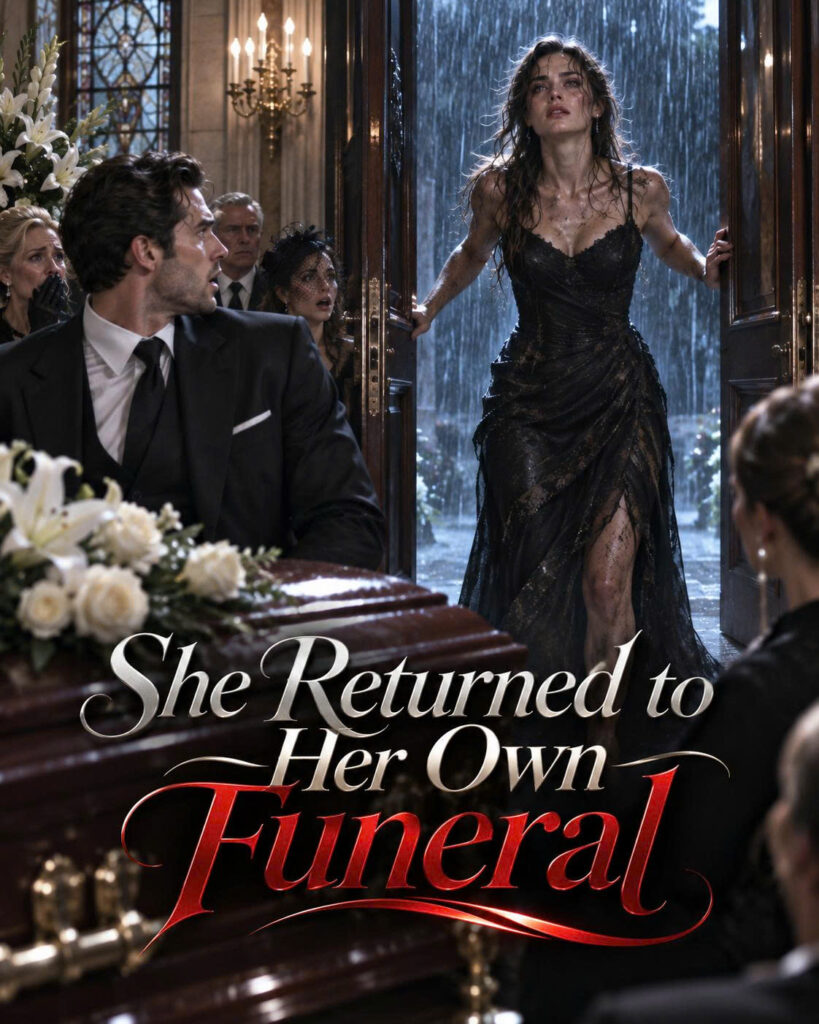
The first thing Evelyn remembered about the crash was the sound of another engine refusing to slow down.
She had left the harbor office at 10:42 p.m., carrying a folder that should not have existed.
Six vendor invoices, three payment approvals, and a handwritten note from her late father were tucked inside a weatherproof bag on the passenger seat.
She’d spent three nights comparing the entries.
The same account had paid for concrete inspections that were never conducted, structural repairs that weren’t completed, and a consulting company whose mailing address belonged to an empty bait shop.
She had called Daniel from the parking garage.
“What is Breakwater Logistics?”
There had been silence, followed by a slow exhalation.
“Put the papers away, Evelyn.
I’ll explain at home.”
“You said that about the pumping contracts.”
“Some doors can’t be opened without flooding the whole house.”
She’d ended the call.
Ten minutes later, a dark SUV joined the road behind her.
At the quarry bend it accelerated, its right headlight broken, and struck her left rear panel.
Her sedan slid toward the guardrail.
In the white flash of the impact she saw an orange permit tag swinging from the other car’s mirror, marked 9-B.
Then metal split, glass exploded, and the road became sky.
The car plunged down a slope rather than directly into deep water, striking two limestone shelves before landing half-submerged in a drainage pool.
The passenger airbag burst and the windshield cracked into a glittering spiderweb.
Evelyn’s wrist was pinned against the steering wheel.
Water entered through a broken side window, cold enough to steal her breath.
She forced her belt free, kicked the door, and discovered that her body still obeyed commands even when her mind couldn’t assemble them.
She crawled through the back window with the fingers of her left hand and surfaced in the weeds at the edge of the pool.
Her right wrist hung wrong.
She was coughing when a flashlight crossed her face.
“Here,” a man said.
“She’s still breathing.”
Relief lasted less than a second.
The man in the gray coat didn’t call an ambulance.
He pressed something against her arm, and the quarry lights stretched into bright, impossible ribbons.
Her last clear thought was that the face above her wore no surprise at all.
When she woke, she was in a room smelling of disinfectant and damp concrete.
No window.
A narrow bed.
A camera above a steel door.
Her wrist was wrapped with a proper splint, which meant somebody had paid enough attention to keep her alive.
An intravenous line entered her left hand.
Her wedding ring was gone.
Over the following days, she learned the building’s sounds.
At six each morning, a generator coughed twice.
At noon, a metal gate rolled along a track.
Once, someone upstairs played a radio station broadcasting Boston sports.
Beneath it all was the low vibration of water pumps.
She was near the harbor, she thought, but not close enough to hear gulls.
The gray-coated man visited twice.
He introduced himself as Victor Rusk and claimed to work for a private security contractor.
He wanted the location of her father’s backup archive, a cache of original maintenance records that had never been digitized.
She insisted it didn’t exist.
He poured her water, adjusted her wrist bandage, and politely explained that people with enough money could make a disappearance last forever.
On the fifth night she heard knocking through the wall.
Three taps.
A pause.
Three more.
The next morning she managed to answer with two.
There was no reply.
She kept wondering whether the person on the other side could hear her breathe.
On the seventh night, the generator failed during a heavy storm.
The camera’s red indicator went dark.
Evelyn had already discovered that a loose steel screw in her bed frame could be removed by twisting it patiently for hours.
She used the screw against the latch plate, not because she knew how locks worked but because she couldn’t bear another minute of waiting to be rescued by men who had invented her funeral.
The latch gave just as the generator restarted.
She slipped into a corridor lined with water pipes and two other locked rooms.
There was a tapping sound behind the far door.
She tried the handle.
It didn’t move.
Footsteps crossed the floor above.
Evelyn promised the unknown prisoner, out loud, that she’d come back.
At the end of the corridor a service stair led to a loading platform.
She stole an employee’s canvas coat from a hook, crawled through an open maintenance hatch, and dropped into a drainage ditch.
A passing delivery driver found her stumbling beside an access road and drove her as far as a twenty-four-hour diner.
Evelyn used the diner’s landline to call the detective whose card she had kept in her wallet since the engineer’s death two years earlier.
Ortiz didn’t answer.
She left a message that contained her name, the words “not dead,” and the location of Saint Agnes Chapel.
She had heard about the funeral on the diner’s television, where Daniel’s photograph accompanied the morning news.
The camera caught him leaving their home with an arm around Claire.
He looked bereaved.
He looked ready for the cameras.
Evelyn bought a black dress from a charity shop that hadn’t opened yet; the woman inside heard her story and let her take it for twelve dollars.
She arrived at Saint Agnes with seventy-three cents remaining and no shoes she trusted on the wet pavement.
Now, hours after the funeral, she lay in a hospital room while the world insisted on finding a category for her.
Doctors examined her broken wrist, the sedation marks on her arm, and bruises across her ribs.
A nurse offered warm soup.
Evelyn tried to hold the bowl and burst into tears when her hand shook.
She wasn’t crying over the wrist.
She was crying because the ordinary kindness of the nurse was almost unbearable after eight days of calculated cruelty.
Ortiz arrived at dusk.
“I checked the place you described,” she said.
“The road beside the old intake station has fresh tire tracks.
The building is privately leased.
It was empty when officers got there.”
“Not empty,” Evelyn said.
“Emptied.”
“Maybe.
I can’t prove what was there.
You gave me a lead, not a secured crime scene.”
“Daniel called someone and told them to count the basement rooms.”
Ortiz stopped writing.
“You heard the exact words?”
“I did.
And there was another prisoner.
They were knocking on the wall.”
“Did you see them?”
“No.
I tried.”
Ortiz considered the answer.
“Then we’ll work with what we have.
Your phone records, the damaged car, your injuries, the notary, the SUV tag.
One fact at a time.”
“By the time you finish collecting facts, he’ll have sold the company.”
“If the documents are fraudulent, I’ll put that in front of a judge.
But Daniel is already claiming that you fled voluntarily after an emotional crisis.
His lawyer says he’s coming here with family records to support it.”
Evelyn looked toward the hospital door.
“Family records?”
“Appointments, prescriptions, a therapist’s letter.
Have you been seeing anyone?”
“I saw a grief counselor for three months after my father died.
Daniel paid the invoices.”
The meaning of that arrangement changed under the sterile ceiling lights.
She had considered Daniel thoughtful for handling the bills when she couldn’t bear the practical parts of mourning.
Now she wondered how much private information he’d gathered and how long he’d intended to use it.
Ortiz placed a photograph on the bed.
It showed a blue delivery truck parked outside the old intake building two weeks earlier.
The logo read HARBOR COLD CHAIN.
Evelyn knew the company.
Mercer Harbor Works leased loading docks to it at the eastern wharf, and the contract had recently been transferred to Breakwater Logistics.
Her alleged captors weren’t hiding in an abandoned corner of the city.
They were moving through her own supply chain.
“Who took this?” she asked.
“A resident reporting trucks running all night.
Why?”
“Because my husband told the board those docks were mothballed.
He said maintenance had become too expensive.”
Ortiz slid the photograph into her folder.
“We’ll request access logs.
Meanwhile, there’s someone who wants to see you.”
A slender woman entered carrying a weather-beaten canvas satchel.
She was in her fifties, with gray hair bound behind her head and a nervous grip on the bag strap.
Evelyn recognized Nora Bellamy, the chief records clerk who had worked for her father longer than anyone.
Nora had left the company abruptly after an argument with Daniel about missing inspection reports.
“I didn’t believe the papers,” Nora said.
“Not the obituary.
Not that you’d driven off the road all by yourself.”
Evelyn reached for her hand.
“You know about Breakwater.”
Nora glanced at Ortiz, who remained in the doorway.
“I know your father didn’t trust the electronic archive.
He kept duplicates of anything involving the north floodgates.
He told me once that the day the city asked him to erase the old records would be the day the records mattered most.”
“Where did he keep them?”
“At the boat shop.
But somebody cleaned it out after his funeral.”
“Daniel had it remodeled,” Evelyn said.
“He said he was making it less painful for me to visit.”
Nora nodded.
“There may be another copy.
I found this in my mailbox today.
No return address.”
She opened the satchel and handed Evelyn a folded paper.
It was an old drawing of the waterfront, marked by her father’s familiar block lettering.
A red circle enclosed Pier Nine.
Beneath it he’d written a phrase Evelyn hadn’t heard since she was little: WHEN THE LIGHT FAILS, FOLLOW THE TIDE.
Her father used to say it when teaching her to steer a small boat after dark.
The phrase hadn’t been advice about the water alone.
It was a password to a compartment in the original boat workshop, behind a brass tide gauge he’d built for Claire’s twelfth birthday.
“Where’s the drawing from?”
Evelyn asked.
Nora shrugged.
“I hoped you could tell me.”
Later, after Ortiz ordered a uniformed officer to remain outside the room, Evelyn asked the nurse for her borrowed dress.
The orange tag from the chapel was missing, but she remembered its numbers.
Pier Nine, Bay B.
The tag could identify a parking spot in the restricted service yard, not an ordinary street permit.
Claire had access because she managed the family’s charitable foundation, which kept a small office there.
The nurse looked disapproving when Evelyn tried to get out of bed.
“You aren’t going anywhere tonight.”
“I’m checking the window,” Evelyn said.
Two floors below, a dark SUV idled near the emergency entrance.
The headlights were off.
Its right headlight housing was visibly broken, leaving a black socket in the front fascia.
A man stepped out and opened the rear door.
For one terrible moment, Evelyn thought he was Rusk.
Then the figure turned into the building’s emergency ramp lighting and she realized it was Daniel’s attorney, Adrian Bell.
Bell carried a leather briefcase and moved briskly, as if accustomed to doors opening in advance.
Evelyn pressed her palm against the glass.
The lawyer couldn’t see her, but someone inside the SUV could.
A tiny red recording light blinked near the windshield.
Her hospital door opened.
Claire came in alone, carrying a bouquet of white lilies.
She looked younger without the veil and older without the confidence that had once been her defining feature.
Evelyn said nothing until Claire set the flowers down.
“Did Daniel send you?”
“No.”
“Did you drive the SUV?”
Claire flinched.
“I couldn’t hurt you.”
“You didn’t answer.”
“I lent him access to Pier Nine.
He said the company needed a vehicle there.
I thought it was an audit.”
“And the nine-B tag?”
Claire’s hands trembled.
“I never saw the crash, Evelyn.
I swear that.”
A scream sounded from the corridor.
Both sisters turned.
The officer outside the room was grappling with a man in hospital scrubs who held a syringe in his gloved hand.
The tray beside them flipped over, scattering instruments.
Evelyn pulled Claire behind the bed as the attacker drove his shoulder into the officer.
A security alarm sounded.
The man broke free, glanced into the room, and ran toward the fire stairs.
The officer chased him.
Claire stood frozen.
Evelyn couldn’t stop staring at the syringe lying beneath the overturned tray.
Its label carried the initials HCC, the same letters as the cold-chain company on the truck outside the intake station.
“This doesn’t end with Daniel,” Evelyn said.
Claire whispered, “You don’t know how right you are.”
Then she turned the bouquet upside down.
Taped beneath the wrapping was a small brass key.
“Dad gave me this before he died.
Daniel said it opened a junk drawer.
It opens the tide gauge at the old boat shop.”
Evelyn took the key.
“Why give it to me now?”
“Because Daniel called me this afternoon,” Claire said, wiping her face.
“He said if you kept talking to the detective, he’d make sure you disappeared for good.”
“And you believed him?”
“I heard what happened the first time.”
Claire fled before Evelyn could ask the question that mattered most: heard it from whom?
The brass key was cold in Evelyn’s palm.
Beneath the hospital window, the dark SUV pulled away.
A single thought cut through her exhaustion.
Her father had hidden the truth, and somebody was willing to commit murder to stop her finding it.