Chapter 3 – The Daughter He Never Knew
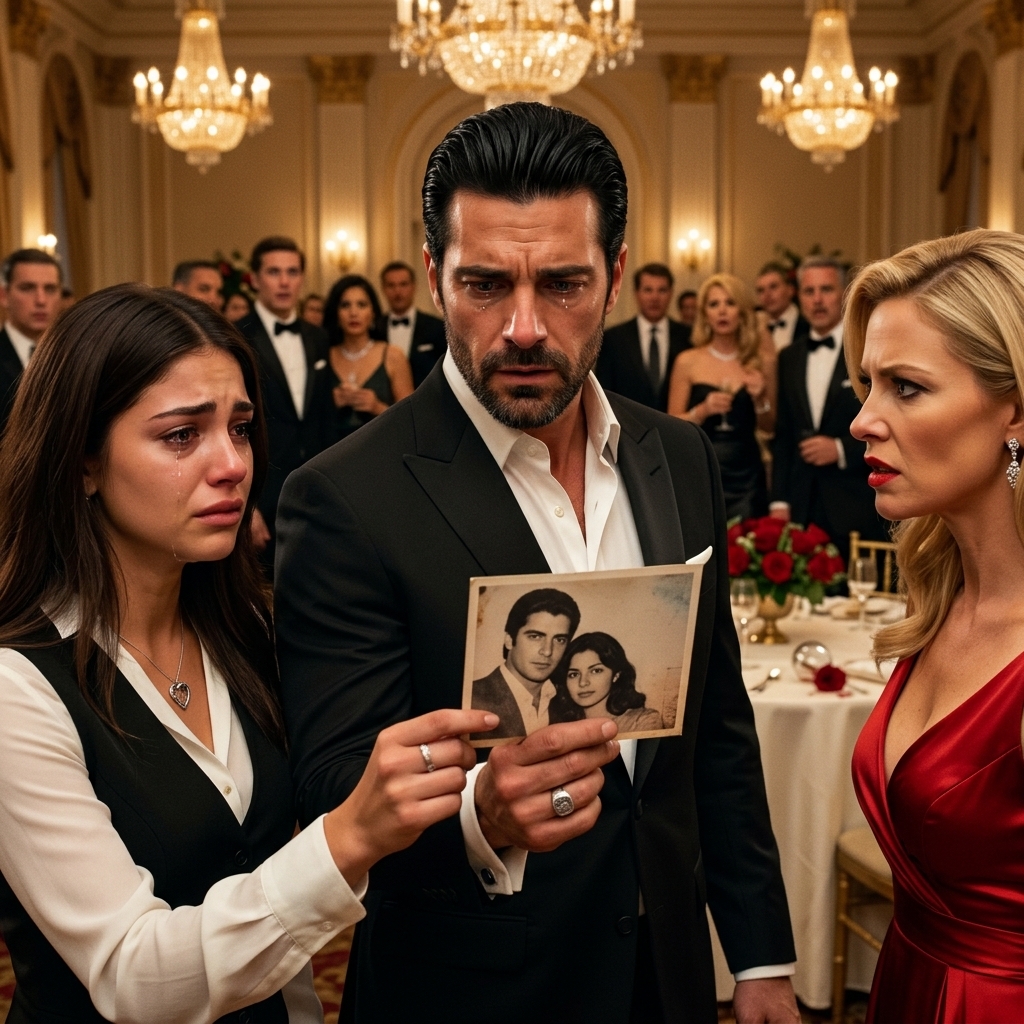
The laboratory occupied the fourth floor of a medical building with no sign of the Moretti name. Sofia chose it after checking its accreditation, ownership, and procedures.
Alex arrived without bodyguards inside the building. He had learned that every display of power made Sofia retreat a little, and he was beginning to understand that trust could not be bought with security arrangements.
A technician checked their identification and explained the chain of custody. Each sample would be sealed in their presence.
Neither Alex nor Sofia could alter the results, and both would receive the report directly. Sofia signed first.
Her hand was steady until she wrote Rivera beside her name. Alex signed afterward, his silver ring scraping lightly against the counter.
They waited in a room decorated with generic photographs of mountains. Alex asked about Sofia’s studies.
She had completed two years of college before Elena’s disappearance forced her to work full-time.
She wanted to become a public-interest attorney, partly because she had watched frightened people accept bad answers from institutions that were supposed to help them. Alex offered to pay her tuition.
Sofia asked him not to make offers until they knew the truth. He apologized and asked about her classes instead.
She described a professor who taught evidence by making students defend conclusions they disliked. Alex smiled faintly.
He said Elena would have loved that. Sofia said Elena probably would have argued with the professor until the entire class ran late.
They both laughed, surprised by the sound. For a moment the twenty-two missing years seemed less like a wall and more like a corridor they might walk through together.
Across town, Victoria met Marco Bellini in a private dining room. He had ordered coffee and left it untouched.
Victoria accused him of promising the girl would never reach Alex. Marco said Sofia had been more resourceful than anticipated.
Victoria demanded to know whether the DNA test could be stopped. Marco answered that interfering with a certified laboratory would attract the kind of attention they could no longer afford.
Victoria reminded him she had never agreed to harm anyone. Marco leaned forward.
He said she had agreed to keep the girl away from the family and had accepted documents that should have raised questions. He spoke as though those choices were identical to his own crimes.
Victoria felt the trap tightening. She had wanted to protect her marriage.
She had not asked what happened to Elena six months earlier because she had been afraid of the answer.
Sofia returned to Elena’s apartment after the test and found an unfamiliar envelope beneath her door. Inside was a copy of her childhood school photograph with a black line drawn across her face.
No message accompanied it. She photographed the envelope without touching the paper further and called Denise.
Denise arrived with an attorney from a victim-support organization, not with Moretti security. Sofia was grateful for the distinction.
The attorney, Ruth Park, asked whether Sofia wanted to report the threat. Sofia said yes.
She was tired of being told that caution meant silence. Ruth helped her document the envelope, preserve the building’s hallway footage, and record the time of delivery.
A man in a gray cap appeared on the recording. He had entered through a service door that tenants normally kept locked.
Alex learned about the threat that evening. His first impulse was to send guards to every entrance.
Sofia stopped him. She needed protection, she said, but not a private army that made her neighbors afraid.
Alex listened and agreed to a security plan developed with Ruth and the building manager. He was beginning to recognize that his habits of command could become another form of control.
Three days later the results arrived. Sofia opened her copy at Denise’s kitchen table.
Denise had made toast no one was eating. The report described a probability of paternity exceeding 99.99 percent.
Sofia read the sentence aloud once, then set the paper down. She had imagined relief, triumph, perhaps a desire to call everyone who had doubted her.
Instead she felt an immense and unfamiliar grief for the girl who had watched other fathers wait outside school gates.
Alex received the same result in his office. He read it alone.
Then he drove to Denise’s apartment, leaving his driver downstairs. Sofia opened the door and saw that his eyes were red.
He did not ask her to hug him. He simply said he believed the result, that he was her father, and that he was sorry he had not been there.
Sofia answered that being sorry was a beginning, not a solution. Alex said he understood.
They sat together for hours. Sofia told him about her tenth birthday, when Elena worked a double shift but left ten handwritten clues around the apartment leading to a homemade cake.
She described a winter when they heated the kitchen with the oven because the landlord delayed repairs.
She told him about her first debate competition and the empty chair she had kept looking at, even though she knew no father would arrive.
Alex listened to each memory. He resisted explaining that he had been deceived.
He could not repair a missed birthday by describing his own pain.
When Sofia asked what he had been doing on the day she was born, he said he had been in Chicago negotiating a business deal, convinced Elena had left him for another man. He remembered drinking alone afterward.
The memory made him ashamed, not because he could have known the truth then, but because he had never questioned the story he was given.
Later Alex called Marco into his office. He placed a copy of an old transfer authorization on the desk.
It bore Elena’s supposed signature and a payment amount large enough to support a family for years. Alex had found it in the archive of his first company.
Marco had presented the document as proof Elena had accepted a settlement. Now Alex asked for the original banking records and the identity of the witness.
Marco said the records were twenty-two years old and might have been destroyed. Alex replied that regulated financial institutions did not simply forget large transfers.
He asked Marco to name the account holder. Marco gave a company name, then corrected himself.
Alex noticed the hesitation. He had known Marco since his twenties, yet he could not remember the last time the man had stumbled over a basic question.
Sofia spent the next day reviewing Elena’s notebooks with Ruth. In a folder labeled Insurance she found a list of unfamiliar corporate names and dates.
Several matched entities mentioned in the old settlement paperwork. One entry was circled twice: Bellini Strategic Holdings.
Beneath it Elena had written, Never paid me. Paid themselves.
Ruth advised against confronting Marco. They photographed every page, preserved the originals, and began tracing the companies through public records.
Sofia disliked the slow pace. Elena had been missing for half a year.
But Ruth explained that evidence gathered carelessly could vanish inside a courtroom, while evidence gathered properly could force powerful people to answer questions under oath.
Alex visited Sofia again on Sunday. He brought no expensive gifts.
Instead he carried a grocery bag containing peaches, basil seedlings, and a cheap disposable camera. He admitted the camera was an awkward idea.
Sofia laughed and said it was the first thing he had offered that did not feel like an apology made of money.
They planted basil on the fire escape together. Alex was terrible at loosening the roots, and Sofia had to show him how to support the stems.
A neighbor leaned out of a window to ask whether he was the man from the news. Alex answered that he was helping his daughter with her plants.
Sofia looked away so he would not see the tears in her eyes.
That night a courier delivered an archival file to Alex’s office. The cover bore Marco’s initials.
Inside was a memo dated shortly before Elena disappeared twenty-two years earlier, authorizing surveillance of her apartment. A second page listed a witness named Vincent Salerno and an address in New Jersey.
Alex read the memo in the same chair where he had learned he was a father. The handwriting was familiar.
The authorization signature at the bottom was his own, but he had never signed it. Someone had forged his name to begin watching the woman he loved.
After the DNA result, Sofia spent an evening sorting old school projects into piles on the living-room floor.
There were spelling tests marked with bright stickers, a paper crown from a classroom play, and a photograph of Elena applauding at a science fair. She had never thought of the objects as evidence of absence.
Now she saw how many moments Alex had missed, and the realization made her angry all over again.
Alex asked whether he could look. Sofia handed him a drawing of a house with two figures in the doorway.
She had written Mom and Me beneath them in crooked letters. He traced the paper’s edge without touching the pencil marks.
He said he wished he had been there. Sofia told him wishing was not the same as listening to what she needed now.
She asked him to attend a meeting with Ruth about Elena’s case rather than plan another elaborate gesture. Alex agreed immediately.
The next morning he arrived with a notebook, sat quietly, and took down the names of witnesses. When Sofia corrected a date, he changed it without argument.
It was the first time she had seen him behave like a partner rather than a man trying to fix everything by issuing orders.
He called Sofia and told her he had found a witness. She asked whether they could trust him.
Alex stared at the forged signature and answered with a truth he had avoided all his adult life: he no longer knew whom he could trust, but he was going to find out.