Chapter 2 – The Dance That Never Happened
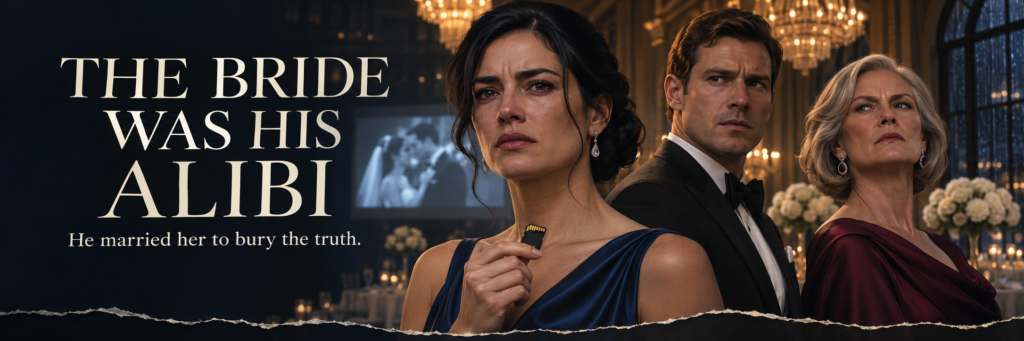
I went home with Avery instead of my husband.
Julian met us at the service elevator. In one hand he held my coat. In the other, a glass of water I had not asked for. It was a small, practiced arrangement: the worried husband, the shaken wife, the exit he had chosen.
“The driver is downstairs,” he said.
“I’m going with your sister.”
“Mara, please. We can talk at home.”
I looked at the water. A thin slice of lemon floated against the rim. He knew I hated lemon in water. I wondered how many times I had called something thoughtful because it looked thoughtful from a distance.
“Did I witness my mother signing a release on our wedding day?”
He did not ask what release.
It was only a second. His face closed and reopened. But I worked with damaged paper for a living. I knew how much could happen in a small break.
“Who has been sending you documents?”
“Answer me.”
“There was routine administrative paperwork. Dad’s estate. Your mother had unresolved issues. We were trying to help.”
“I asked whether I witnessed her signature.”
The elevator arrived. Avery held the door.
“Not here,” Julian said.
I stepped inside. “That’s becoming your answer to everything.”
Avery lived above a bakery in a neighborhood Celeste described as transitional, although the only thing it seemed to be transitioning toward was higher rent. There were contact sheets on the walls, two mismatched chairs, and a long worktable under an excellent lamp.
She offered me tea. I asked for the video.
We called June Park first. It was nearly eleven, but she answered on the fourth ring. Avery explained who was with her. June asked whether I was safe, whether Julian knew where I was, and whether I wanted him contacted through her office for the moment.
“I want to know what I signed.”
“Then we’ll begin there,” she said. “I represent the trustee, not you personally. I’ll explain what I can tonight, and I can help you find independent counsel tomorrow. Please don’t confront anyone alone while you’re upset. More important, don’t change, delete, or send the original files around. We need to preserve where they came from.”
She spoke without promising a miracle. It made me trust her more.
Avery had received the wedding media from the videographer on two drives: finished films on one, camera originals on the other. As a second photographer, she had also copied her own cards. The files had sat on a shelf while she moved apartments and changed jobs. She had assumed the matter involving Grace was a workplace dispute already resolved.
“You knew the dance was wrong,” I said after we ended the call.
“I knew the finished film used the rehearsal. Mother said it looked better. I didn’t know anyone had called it proof. Not until June sent me the investigator’s screenshot.”
She brought it up: our bodies turning beneath the chandeliers, the time printed in an attached report. Eight forty-two in the evening.
The image was attractive. That seemed to be one of its weapons.
We opened the camera originals without editing them. Avery made a viewing copy and set the originals aside. She wrote down the drive label, the folder name, and the files we watched. June had asked for those details, and the ordinary act of recording them steadied us both.
In the rehearsal dance, my wrist was bare. Julian’s boutonniere was a small white rose, pinned too low. At the actual wedding, my mother had moved it upward because it pulled his lapel crooked. Around my wrist, she had tied a blue ribbon cut from a dress she wore when I was a baby.
The ribbon was not a clock. Neither was the flower. But together they told us the two scenes belonged to different evenings.
“We still have to establish the times independently,” Avery said. “Camera clocks can be wrong.”
I nodded, grateful she was not asking me to believe something merely because I wanted it to be true.
The hallway clip was almost six minutes long. Avery had set a small camera on a shelf while she went to find the missing groom. Its wide angle held me, the ballroom entrance, and the service corridor beyond.
I watched myself wait.
It was worse than watching a stranger suffer. I recognized the exact way I pressed my lips together when I was trying not to be difficult. I remembered the dress becoming heavy. I remembered deciding Julian must be helping someone, because that was the version of him I had married.
At the far end of the corridor, a door opened hard.
A woman stepped out holding one arm close to her body. She wore a dark green suit. Papers slid from a folder beneath her other hand. Julian appeared behind her.
The image was distant. We could not see what happened inside the room. We could hear him say, “Give me the packet.”
The woman answered, “You changed the page.”
Then Ben entered the frame with an emergency lantern. He moved toward her. I, in my wedding dress, took a step down the corridor.
Julian turned toward me with a smile already beginning.
The clip ended when Avery returned and lifted the camera.
I remembered that moment. Julian had told me Grace slipped while carrying records out of an office. He said she was embarrassed and wanted privacy. I had asked if she needed a doctor. He had said Ben was taking care of everything.
I had believed him because I loved him, and because nothing in my experience had prepared me for a husband who could lie while straightening my necklace.
We sent June the viewing notes and arranged delivery of the originals. Then we watched the real first dance. Avery found it in a later file. The blue ribbon flashed each time I turned. A guest raised a phone in the foreground. Ben crossed behind the band carrying a tray of coffee.
“Nine sixteen,” Avery said. “That’s the camera time. We’ll check it.”
I did not cry until the song started.
Julian had chosen it because my mother used to sing it while sewing. I had told him that on our second date. For three years, I had kept that choice in a private collection of evidence that I was loved.
Now I could not decide whether the memory had been stolen or whether it had never belonged to me.
Avery paused the screen on an image of my mother fastening the ribbon. We could see only her profile, the concentration in her mouth, the cheap reading glasses she wore on a chain.
“She asked me for a copy of this,” Avery said.
“Did you send it?”
“Yes. Just this part. She said she didn’t need the whole wedding.”
I remembered finding a photograph in her kitchen after she died. A print of that same moment. I had assumed Julian ordered it for her. When I thanked him, he had smiled and said she deserved something nice.
Had he lied then too, or merely accepted credit that floated within reach? The distinction seemed important and exhausting. I did not want the rest of my life to become an investigation into every pleasant thing he had ever said.
“Can we turn it off for a minute?”
Avery closed the laptop. We sat with the dark screen between us.
From downstairs came the bakery’s first delivery, crates sliding over pavement, a driver talking to someone about the rain. I listened until those ordinary noises felt larger than the room. There would be mornings after this one. People would still need bread. I held on to that small, unreasonable comfort.
At seven the next morning, I went to the apartment I shared with Julian. Avery came with me. He had left a message saying he would be at the hotel, and I wanted clothes, my passport, and the box of my mother’s papers from the closet.
Celeste was waiting in the living room.
She sat beside the windows in a gray suit, perfectly arranged, as if my home were an office she had booked. On the coffee table lay a fresh print of my mother’s photograph. Ben had sent me a scan before securing the original. I had printed a copy through the apartment’s remote printer overnight.
“That picture has done enough damage,” Celeste said.
“How did you get in?”
“Julian gave me a key years ago.”
I looked at Avery. She took out her phone, not to record, but to call the building manager about changing access arrangements. Celeste watched her with disbelief.
“You’re making this ugly.”
“You hit Mara,” Avery said. She used my name firmly, refusing to make the injury sound like an offense against someone else’s property.
I stood beside her and waited for Celeste to answer.
Celeste lifted the photograph. “Your mother accepted a settlement. That is the record. Whatever you think you’re discovering, she already agreed to let it rest.”
“A settlement for what?”
“Ask yourself why she never told you.”
“I’m asking you.”
She stood and threw the framed print onto the floor. The glass broke beside the sofa. Avery flinched. I did not move.
For years I had watched Celeste choose beautiful objects with extraordinary care. I had mistaken that for an inability to destroy them.
“You cannot break every copy,” I said.
She looked at the fragments. Some expression crossed her face that might have been embarrassment, but it passed too quickly to become an apology.
“There are employees depending on this sale. Your husband is trying to protect their livelihoods.”
“Then the records should support him.”
I collected my things while Avery stayed in the doorway. The box of my mother’s papers was exactly where I had left it. Julian had once offered to have the contents professionally sorted. I had refused because I was not ready to let anyone touch her handwriting. For the first time, grief had protected something.
My wedding documents were in a separate folder. Near the back I found a one-page authorization permitting the hotel to reproduce family photographs for its archive. My signature curved across the bottom. A tiny blot of ink interrupted the final stroke of Ellis.
The same blot appeared on the beneficiary release June had sent.
I photographed the authorization, kept the original flat, and called June. She asked me to bring it in. She did not say it proved forgery. She said the match was important enough to examine.
That distinction mattered. I was beginning to learn how a truthful person sounded when she did not yet know everything.
Julian arrived as we were leaving. His eyes went first to the broken glass, then to Celeste, then to the box in my arms.
“Mara, you cannot let people turn this into something it isn’t.”
“When did you know my mother worked at the hotel?”
“You told me.”
“I told you on our third date.”
He said nothing.
“You recommended my studio for the archive contract before we met. I thought you’d found my work online. Did you know her name then?”
“Your portfolio had your biography.”
“It didn’t mention her maiden name. The payroll records did.”
I had discovered that detail in the exhibition cartons: Ruth Dawson Ellis, shortened in later records. Julian had used Dawson once, casually, at dinner with his mother. When I asked how he knew it, he said I must have told him.
I remembered now because the shape of the lie finally had somewhere to fit.
“Did you know who I was before our first date?”
His face softened. That frightened me more than anger would have.
“Of course I knew,” he said. “That’s why I wanted to meet you.”
He reached for my hand as if he had said something romantic.
I moved the box between us.