Chapter 1 – The Plate of Leftovers
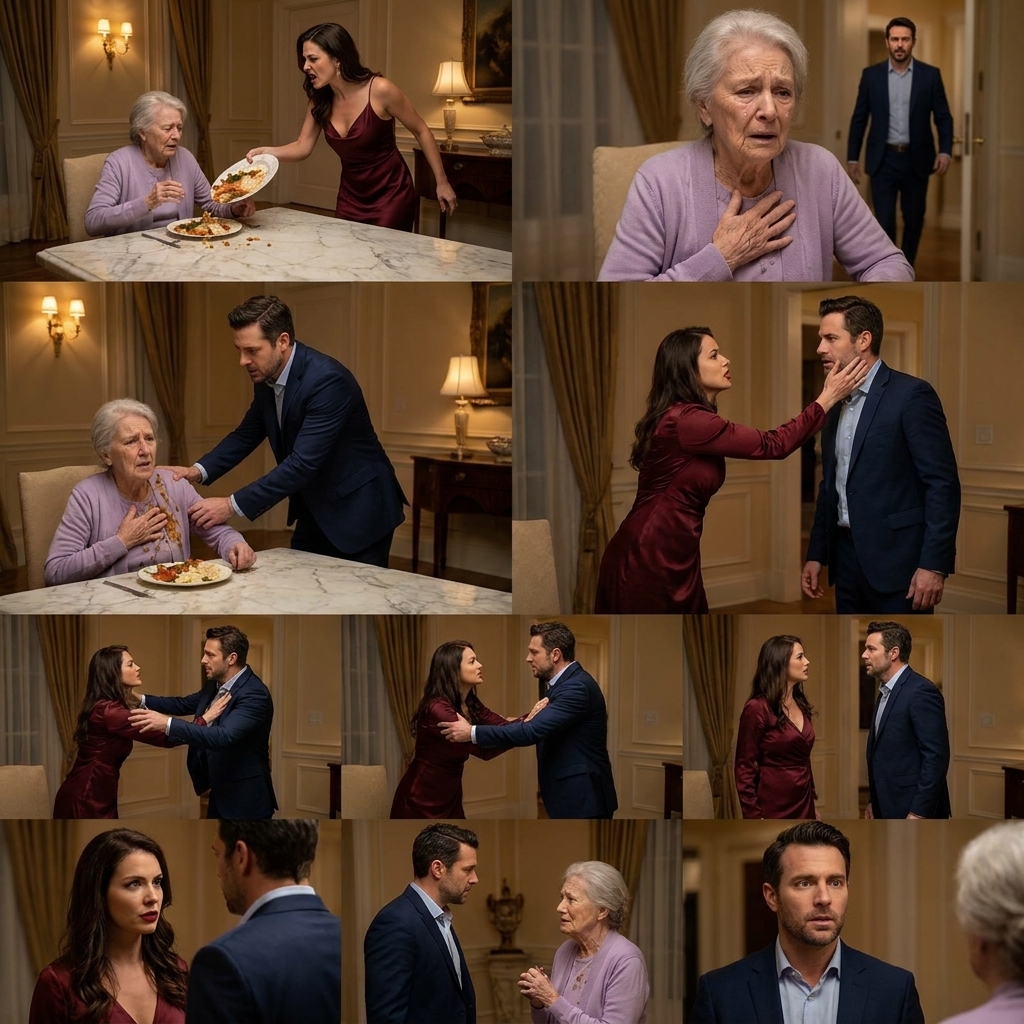
The kitchen smelled of rosemary and burnt butter, though Margaret had asked for nothing more than tea. Vanessa stood beside the dining table with a plate of yesterday’s cold potatoes and chicken, holding it like evidence in a trial. Margaret had lived in the Carter house longer than Vanessa had been alive.
She knew which floorboards creaked and where Daniel had marked his height in pencil as a child. Now she was being told she had no place at her own table.
“Eat it. That is all you deserve.”
Margaret wondered how a room filled with sunlight could feel so airless.
Daniel had spent much of his adult life solving problems by moving quickly. In business, a delayed decision could cost money; in a crisis, hesitation could be dangerous. But families did not respond to pressure like balance sheets.
A person might tell the truth in pieces because the whole truth was too painful to hold at once. He was learning to separate urgency from impatience. He could demand safety immediately while allowing evidence to emerge at the pace it required.
What unsettled Daniel most about the humiliating dinner was the contrast between what could be seen and what had to be inferred. A gesture might look deliberate from one angle and accidental from another. A document might carry an authentic signature but still record a false statement. “We need to check that,” came the quiet reply.
Nobody liked the delay. Yet the pause protected them from repeating the very mistakes that had allowed the secret to survive. They began to understand that care and certainty were not the same thing.
Margaret turned her face away. Vanessa tipped the plate; scraps fell across the lavender cardigan Daniel had bought his mother for her birthday. Margaret reached for the edge of the table, not to fight, but to steady herself.
The humiliation was worse because Vanessa had learned to wait until the household staff were gone. For weeks she had turned small cruelties into a routine: hiding medicine, taking away the telephone, laughing when Margaret asked whether Daniel was coming home.
“Please, Vanessa. I have never tried to take him from you.”
Vanessa seemed almost disappointed that the older woman had not shouted.
Vanessa told herself that she had been pushed into a corner, and sometimes she almost believed it. But a corner was not a hand that reached for someone else. Each cruel choice had required a separate moment of permission, a chance to stop, and a decision to continue.
The distinction frightened her because it left room for responsibility. She could point to debts, threats, and old wounds; none of them had moved her hands for her.
For a moment Margaret considered the easier story, the one in which a single villain explained every wound and a single discovery healed them all. Life refused to cooperate. the house and the emergency involved people whose motives changed over time, and actions whose consequences spread far beyond the original intention. “It isn’t that simple,” came an answer that sounded almost like a plea. “Then help me understand the complicated part,” Margaret replied. That invitation was difficult to accept.
It offered no guarantee of forgiveness, only the possibility of being heard.
The pressure arrived behind Margaret’s breastbone with terrifying suddenness. She struggled for breath, her hand closing around her cardigan. Vanessa stepped back, then looked toward the hallway as if deciding which version of events she would tell.
Margaret tried to call Daniel, but could produce only a thin, broken sound. She thought of a blue hospital blanket from thirty-eight years earlier, a memory she had spent decades trying to keep folded away.
“I cannot breathe.”
The sound of the front door opening cut through the room.
There were moments when silence was not an evasion but an effort to keep from saying something irreversible. Daniel began to recognize the difference in himself. He could feel anger rising, could imagine a devastating reply, and could choose to ask another question instead.
That choice did not make him weak. It made room for the person opposite him to answer without first defending against a fresh injury.
What unsettled Vanessa most about Daniel’s first recognition of danger was the contrast between what could be seen and what had to be inferred. A gesture might look deliberate from one angle and accidental from another. A document might carry an authentic signature but still record a false statement. “We need to check that,” came the quiet reply.
Nobody liked the delay. Yet the pause protected them from repeating the very mistakes that had allowed the secret to survive. They began to understand that care and certainty were not the same thing.
Daniel came through the dining-room doorway carrying his briefcase. He saw the food on his mother, the overturned plate, and Vanessa standing perfectly still. The briefcase fell from his hand.
He knelt beside Margaret, supported her shoulders, and called emergency services with fingers that would not stop shaking. When Vanessa caught his sleeve and told him his mother was exaggerating, Daniel tore free. His voice was louder than either woman had ever heard.
“Get away from her. Right now.”
Margaret tried to warn him not to waste precious seconds fighting.
The past was not a single locked room with one key. It was a corridor of decisions made by people who had been frightened, ambitious, loving, selfish, or simply mistaken. One revelation might explain a decision without forgiving it.
Another might overturn an accusation while leaving the harm intact. The family would need more than a dramatic confession to repair what had been broken. It would need patience, boundaries, and a willingness to let consequences remain real.
For a moment Daniel considered the easier story, the one in which a single villain explained every wound and a single discovery healed them all. Life refused to cooperate. the humiliating dinner involved people whose motives changed over time, and actions whose consequences spread far beyond the original intention. “It isn’t that simple,” came an answer that sounded almost like a plea. “Then help me understand the complicated part,” Daniel replied. That invitation was difficult to accept.
It offered no guarantee of forgiveness, only the possibility of being heard.
Vanessa slapped Daniel. He staggered, caught his balance, and pushed her away from the chair. She lunged back and seized his jacket, demanding he listen.
He blocked her hands and broke free, then put himself between her and his mother. He did not pursue her; he was watching Margaret’s face, counting the seconds between her breaths, listening for the approaching ambulance. Vanessa watched him protect the woman she had been trying to silence.
“You think you know who your father was?”
The question landed harder than the slap.
Nothing in the room announced that a decision was being made. There was no music, no audience waiting for the right line, no certainty that the choice would be rewarded. There were only people looking at one another and deciding whether to repeat a familiar pattern.
Sometimes the brave act was to leave. Sometimes it was to stay and listen. Sometimes it was to admit that an answer had not yet been earned.
What unsettled Margaret most about the house and the emergency was the contrast between what could be seen and what had to be inferred. A gesture might look deliberate from one angle and accidental from another. A document might carry an authentic signature but still record a false statement. “We need to check that,” came the quiet reply.
Nobody liked the delay. Yet the pause protected them from repeating the very mistakes that had allowed the secret to survive. They began to understand that care and certainty were not the same thing.
Margaret’s eyes opened wide. She caught Daniel’s wrist with surprising strength, and for a moment he thought she was begging him to stop Vanessa. But she was staring at the woman behind him, with a fear that belonged to a different time.
Daniel asked what Vanessa meant. Margaret’s lips moved without a sound. Outside, a siren drew closer.
Vanessa stepped back, certain she had changed the rules of the family forever.
“Daniel, there is something I should have told you.”
He had never heard his mother sound so afraid of the truth.
For years the family had treated difficult conversations as something to postpone until the timing was better. The timing never improved on its own. Every delay required another explanation, another change of subject, another polite smile across a table.
What had begun as a decision made under pressure slowly became the architecture of their lives. Now the architecture was cracking. No one could say with confidence which wall would fall next, only that pretending not to hear the noise would not make the house safe.
For a moment Daniel considered the easier story, the one in which a single villain explained every wound and a single discovery healed them all. Life refused to cooperate. Daniel’s first recognition of danger involved people whose motives changed over time, and actions whose consequences spread far beyond the original intention. “It isn’t that simple,” came an answer that sounded almost like a plea. “Then help me understand the complicated part,” Daniel replied.
That invitation was difficult to accept. It offered no guarantee of forgiveness, only the possibility of being heard.