Chapter 5 – The Girl Who Refused to Bow
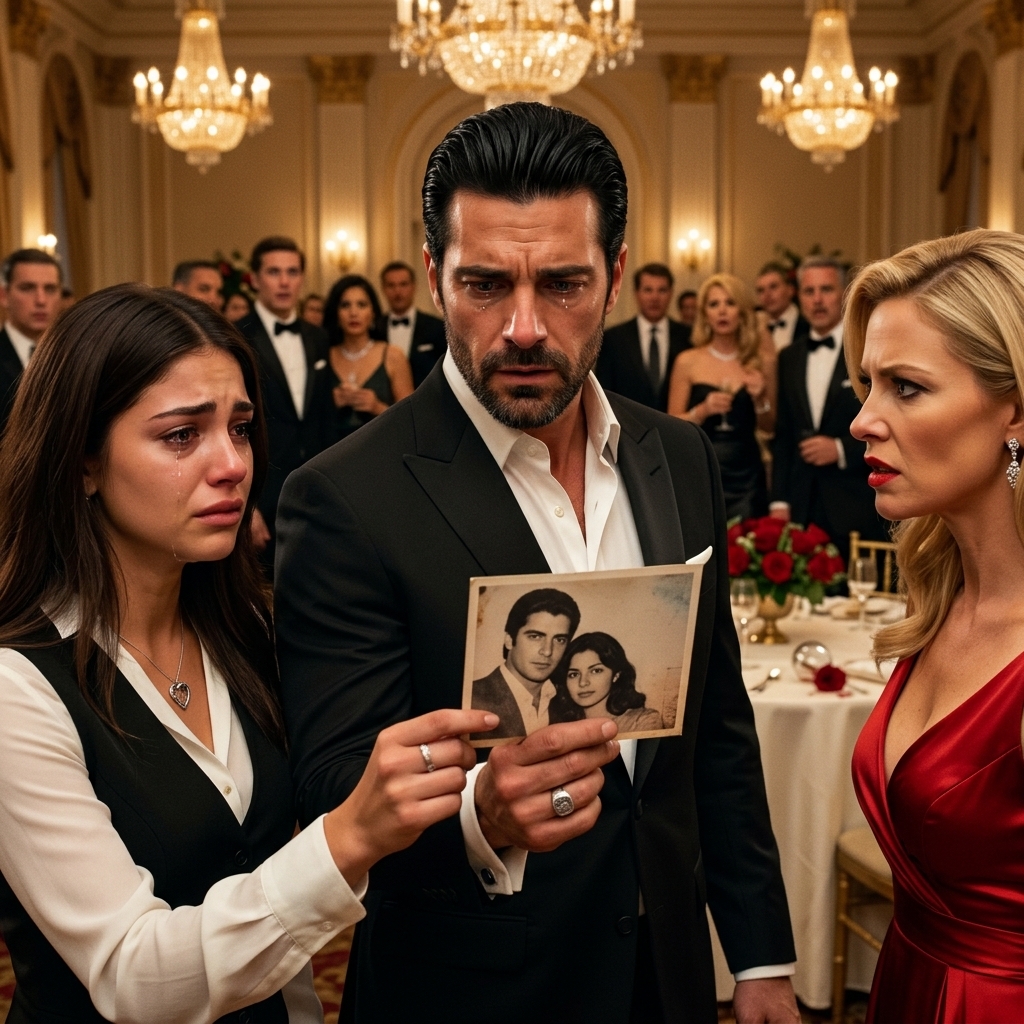
Sofia returned to the Grand Aurelia on a Tuesday morning, six days after the gala. The lobby smelled of lilies and fresh coffee.
Guests crossed the marble floor with rolling suitcases, unaware that the woman walking past them had become the subject of a thousand arguments online. Sofia wore dark trousers and a plain blue coat.
Her silver pendant rested beneath her collar. She had come to retrieve her final paycheck and speak with the hotel employees who had witnessed the assault.
The payroll clerk treated her kindly but nervously. A supervisor said the hotel was considering whether temporary workers involved in public controversies should be offered future shifts.
Sofia asked for the policy in writing. The supervisor searched his desk and found none.
Denise entered the office, set down a folder, and said the hotel would pay every hour Sofia had worked, including the time she spent giving a statement after the gala.
Sofia thanked her. Denise said gratitude was unnecessary; wages were not a favor.
The distinction stayed with Sofia as they walked toward the service corridor. She had grown up watching Elena work hard enough to make exhaustion look ordinary.
She understood how often people with money expected thanks for meeting their obligations.
Two men in dark coats waited near the staff elevator. They were not hotel security.
One stepped into Sofia’s path and said a representative of the Moretti family wanted a private conversation. Sofia asked for a name.
The man offered none. Denise moved beside her and told the men they were trespassing in a restricted area.
The taller man glanced toward the ceiling camera and shifted his stance.
Sofia felt fear move through her body like cold water. She also remembered Victoria’s fist in her hair.
She stepped toward the camera rather than away from it, took out her phone, and began recording. She asked the men to repeat who had sent them.
They turned and left without answering. Denise called hotel security and requested that the corridor footage be preserved before anyone could alter it.
At the legal clinic, Ruth reviewed Sofia’s recording. The men had not made an explicit threat, but their attempt to isolate her was concerning.
Ruth filed an incident report and shared the images with the investigators handling Elena’s disappearance. Sofia wanted to chase the men down herself.
Ruth reminded her that surviving intimidation was not the same as surrendering to it.
That afternoon Sofia found a text message on an old phone Elena had kept in a kitchen drawer. The device had not been charged since the disappearance.
Sofia had avoided turning it on because the last thing she wanted was to see the silence where her mother’s messages should have been.
Denise helped her connect it to a charger without altering the stored data, and Ruth arranged a forensic copy before they opened anything.
The final outgoing message was addressed to a lawyer named Miriam Cole. Elena had written that she possessed records connecting charity accounts to shipments at Pier 17.
She said Marco Bellini was using the foundation as cover for transactions she could not explain. The message ended with a request: If I miss our appointment, please contact my daughter before you contact Alessandro.
Miriam Cole had retired and moved to Connecticut. Ruth reached her through the state bar directory.
Miriam remembered Elena immediately. She described a frightened but meticulous woman who arrived with a binder of invoices and refused to leave the originals behind.
Elena had said she was afraid of a man who could make people disappear from records without making them disappear from the world.
Miriam had scheduled a second meeting for the Friday Elena vanished. Elena never arrived.
Two days later, someone called from an unlisted number claiming Elena had withdrawn her complaint. Miriam did not believe the caller.
She had preserved her notes, but without Elena’s cooperation and without proof of an immediate crime, the matter stalled. She offered to meet Sofia and Ruth in person.
Sofia traveled to Connecticut with Denise. The train ride passed through towns Elena had once pointed out from car windows during rare summer vacations.
Sofia remembered her mother inventing stories about the people who lived in houses beside the tracks. She had made even ordinary landscapes feel full of possibility.
Now Sofia watched the same houses and wondered whether Elena was alive somewhere beyond them.
Miriam lived in a small white house with books stacked on every surface. She gave Sofia tea and did not begin with legal questions.
Instead she asked what Elena had been like at home. Sofia described basil plants, handwritten birthday clues, and the way her mother listened without checking the clock.
Miriam smiled sadly. She said Elena had spoken about Sofia with the same fierce pride when they first met.
The lawyer produced her notes. Elena had identified three companies receiving foundation funds, including Bellini Strategic Holdings.
She had also mentioned a storage facility in New Jersey and a ledger with handwritten corrections. Miriam had urged her to bring the ledger to the next meeting.
Elena had promised she would, provided Sofia could be kept safe.
Sofia asked why Elena had not told Alex. Miriam answered that Elena believed someone inside his organization intercepted messages and watched her movements.
She feared that approaching him openly would reveal her daughter’s location to the wrong person. The explanation hurt Sofia.
It meant Elena had spent decades protecting her from a danger Sofia had never understood.
On the return train, Denise told Sofia that courage did not require facing every enemy alone. Sofia said she knew, but she was tired of being the person everyone protected by withholding information.
Denise acknowledged the difference. She promised to share what she knew unless doing so would endanger an active investigation, and to explain any limits rather than hiding behind them.
Back in Manhattan, Sofia attended a small gathering of hotel employees. The servers who had witnessed the gala wanted to apologize for not intervening sooner.
One young man admitted he had frozen when Victoria grabbed her. Sofia said she had frozen too, for half a second.
She did not need them to pretend they were heroes. She needed them to tell the truth if anyone asked.
They signed statements describing the sequence of events. A bartender recalled Victoria instructing a guard to remove Sofia before the champagne spilled.
A hostess remembered a man from Marco’s office watching the confrontation from the rear doors.
The details did not transform the assault into a conspiracy on their own, but together they showed how carefully Sofia’s arrival had been monitored.
Alex called that evening. He had learned about the men near the staff elevator and was furious.
Sofia asked him not to respond with threats. She wanted the men identified and questioned lawfully.
Alex agreed, then admitted how difficult it was to feel powerless when someone endangered his daughter. Sofia told him power was useful only if it made the right things possible.
They met for dinner at a quiet diner Elena used to love. Alex ordered coffee and barely touched it.
Sofia showed him Miriam’s notes. He recognized the storage company name and remembered Marco insisting that certain warehouses were exempt from routine audits because they held confidential donor materials.
Alex had accepted the explanation for years. Now he wondered how many lies had been disguised as efficiency.
Sofia asked whether Alex had ever loved Elena after believing she left. He answered that love had become a wound he tried to cover with work, anger, and eventually a different marriage.
Sofia did not offer comfort. She told him Elena had never married anyone else.
The knowledge settled between them, heavier than blame.
That night Sofia received a new message from an unknown number. It contained a photograph of the old storage facility and a single sentence: Your mother kept the second ledger where no one would look.
Beneath the sentence was a date from twenty-two years earlier.
Sofia showed Ruth before replying. Ruth advised her not to answer.
They traced the image to an archived property listing. The facility had changed owners twice, but one unit remained leased through a company tied to Marco.
The legal clinic assigned Sofia to organize intake forms for tenants facing unlawful eviction. At first she thought the work would feel small compared with searching for Elena.
Then she met a grandmother who had carried a plastic bag of notices across three bus routes because she did not know which paper mattered.
Sofia helped her place the documents in order and watched relief replace confusion on the woman’s face.
Her supervisor, a patient attorney named Nora, told her that dramatic courtroom speeches were rare. Most useful legal work involved dates, copies, patient questions, and making sure frightened people understood what came next.
Sofia recognized the lesson from her own search. She had wanted one explosive revelation; instead she was building a case from receipts, messages, and witnesses who had to be heard carefully.
That evening Sofia told Elena’s empty apartment about her first day, as she sometimes did when loneliness became unbearable. She described the grandmother’s gratitude and the smell of burnt coffee in the clinic kitchen.
Speaking aloud felt foolish until she remembered that Elena had always asked about ordinary details first. Sofia decided that if her mother returned, she would have more to tell her than fear.
Sofia stared at the picture. For the first time since Elena vanished, the search had a physical door she might be able to open.
She was afraid of what waited behind it. She was more afraid of letting someone else decide she should never find out.