Chapter 10 – The Family He Chose
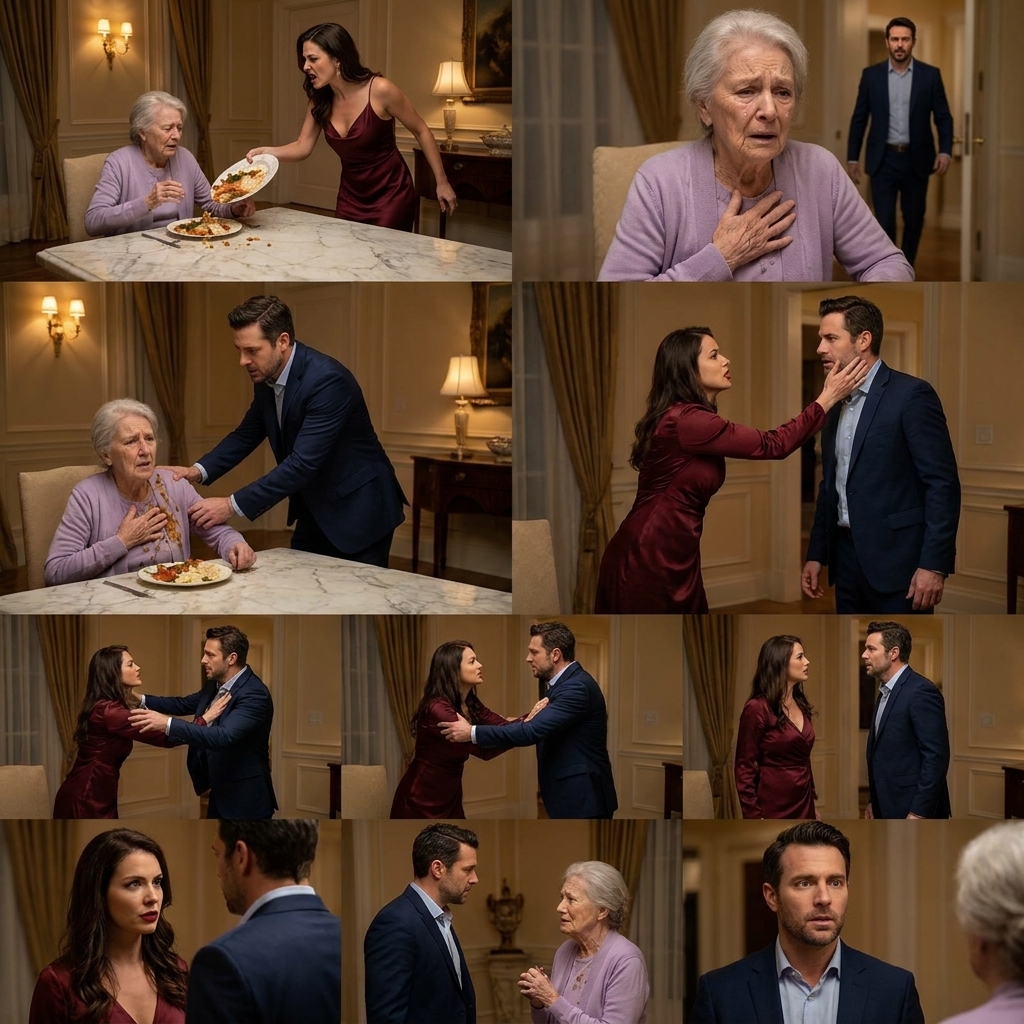
The mansion looked different after Daniel replaced the dining-room curtains and moved Margaret’s chair beside the window. He did not pretend that new furniture could erase what had happened. Margaret returned only after the locks were changed, her medication was accessible, and a home-care plan had been agreed with her doctor.
She chose which room she wanted and kept the key herself.
“I want this to feel like my home again.”
Daniel promised she would never have to ask permission to belong.
The documents were less dramatic than the arguments surrounding them. They contained dates, signatures, numbers, and blank spaces where someone expected an answer. A page could prove that a payment occurred without proving why it was made.
A photograph could establish that two people had met without explaining their relationship. Daniel forced himself to remember that evidence did not become stronger merely because he needed it to support his fear.
For a moment Daniel considered the easier story, the one in which a single villain explained every wound and a single discovery healed them all. Life refused to cooperate. the family’s new boundaries involved people whose motives changed over time, and actions whose consequences spread far beyond the original intention. “It isn’t that simple,” came an answer that sounded almost like a plea. “Then help me understand the complicated part,” Daniel replied. That invitation was difficult to accept.
It offered no guarantee of forgiveness, only the possibility of being heard.
Vanessa and Daniel finalized their separation with attorneys present. Vanessa accepted responsibility for the financial losses and agreed to the legal process concerning Margaret’s mistreatment. Daniel did not offer reconciliation as a reward for confession.
Vanessa said she was seeking counseling and working to repay what she owed. He hoped she would change, but he no longer needed to supervise the outcome.
“I loved you, and I hurt you anyway.”
Daniel answered that both parts could be true.
Outside the immediate argument, other lives continued. People walked dogs, opened shops, worried about bills, and prepared dinner. The ordinary world made the family’s private emergency feel both enormous and strangely invisible.
Daniel wanted a witness who could tell him what mattered. Instead he found that every witness carried only a fragment. He would have to put the fragments together without forcing them into a pattern they did not fit.
What unsettled Margaret most about the legal aftermath was the contrast between what could be seen and what had to be inferred. A gesture might look deliberate from one angle and accidental from another. A document might carry an authentic signature but still record a false statement. “We need to check that,” came the quiet reply.
Nobody liked the delay. Yet the pause protected them from repeating the very mistakes that had allowed the secret to survive. They began to understand that care and certainty were not the same thing.
The investigation into Mercer’s foundation continued. The recovered ledgers helped other families request corrections to their records. Helen Brooks submitted her notebook, and Samuel Reed gave a statement about the storm.
Vale testified about the consent forms he had challenged. Margaret was nervous before her interview but asked to speak in her own words. This time no one told her that silence was safer.
“I want the record to show that I said no.”
The interviewer waited while she gathered herself.
A person could love someone and still fail them badly. Margaret had understood that about herself long before Daniel did. The knowledge offered no comfort when she saw the hurt in his eyes, but it gave her a way to speak without claiming innocence.
She wanted him to know that her choices had been made in a world of fear and limited options. She also wanted to stop using those circumstances as a reason to withhold his own history.
For a moment Vanessa considered the easier story, the one in which a single villain explained every wound and a single discovery healed them all. Life refused to cooperate. the possibility of trust involved people whose motives changed over time, and actions whose consequences spread far beyond the original intention. “It isn’t that simple,” came an answer that sounded almost like a plea. “Then help me understand the complicated part,” Vanessa replied. That invitation was difficult to accept.
It offered no guarantee of forgiveness, only the possibility of being heard.
Daniel and Vale met for breakfast once a month. They talked about work, books, and the ordinary habits that could not be inherited through a chromosome. Vale did not ask to be called Dad.
Daniel did not promise that affection would arrive on a schedule. Sometimes they sat through long silences. The silences were different from the ones that had governed Margaret’s life: they were chosen, not enforced.
“Tell me what you were like at thirty-eight.”
Vale laughed and said he had been much less brave.
There was a particular cruelty in the way ordinary objects continued to look ordinary after a terrible thing had happened. A chair remained a chair, a door still opened onto the same hallway, and daylight did not dim to acknowledge what people had done. Yet the people who had been present carried the moment differently.
They remembered where each person stood, who spoke first, and which words were left unanswered. Later, when someone tried to reduce the incident to a misunderstanding, those details would matter. They would be the difference between a story designed to excuse behavior and an account of what actually took place.
What unsettled Daniel most about the family’s new boundaries was the contrast between what could be seen and what had to be inferred. A gesture might look deliberate from one angle and accidental from another. A document might carry an authentic signature but still record a false statement. “We need to check that,” came the quiet reply.
Nobody liked the delay. Yet the pause protected them from repeating the very mistakes that had allowed the secret to survive. They began to understand that care and certainty were not the same thing.
On Thomas’s birthday, Daniel and Margaret visited the cemetery with fresh flowers. Margaret told Daniel stories she had avoided because they seemed too small beside the great secret: Thomas burning pancakes, teaching Daniel to ride a bicycle, staying up all night to fix a broken science project. Daniel realized that the ordinary memories had never been threatened by the test results.
“He knew how to stay.”
Daniel answered that he was learning the same lesson.
The hardest part was not knowing which memory to trust. A sentence spoken in anger could be true and still be meant to wound. A tender promise could be sincere and still conceal an omission.
The people involved had reasons to protect themselves, and those reasons did not always align with the facts. The only way forward was to ask specific questions, listen to uncomfortable answers, and resist the temptation to turn the first plausible explanation into the final one.
For a moment Margaret considered the easier story, the one in which a single villain explained every wound and a single discovery healed them all. Life refused to cooperate. the legal aftermath involved people whose motives changed over time, and actions whose consequences spread far beyond the original intention. “It isn’t that simple,” came an answer that sounded almost like a plea. “Then help me understand the complicated part,” Margaret replied. That invitation was difficult to accept.
It offered no guarantee of forgiveness, only the possibility of being heard.
Months later the family gathered around the dining table for a quiet supper. Rosa brought bread from her sister’s bakery. Margaret served herself and laughed when Daniel offered to carry her plate.
Outside, evening settled over the garden. The house was not free of history, but it was no longer governed by fear. Daniel looked at his mother and understood that protecting her had begun with believing her.
“You do not have to be afraid to tell me things anymore.”
Margaret smiled, and this time the silence that followed was peaceful.
Margaret knew that fear changed the shape of time. Five minutes with someone angry could seem longer than an entire afternoon spent alone. She had learned to measure a day by footsteps, by the click of a latch, by whether the telephone was within reach.
She resented how small those calculations made her life. Somewhere beneath the fear was the woman who had raised a son, buried a husband, managed a household, and survived losses no visitor could see.
What unsettled Daniel most about the possibility of trust was the contrast between what could be seen and what had to be inferred. A gesture might look deliberate from one angle and accidental from another. A document might carry an authentic signature but still record a false statement. “We need to check that,” came the quiet reply.
Nobody liked the delay. Yet the pause protected them from repeating the very mistakes that had allowed the secret to survive. They began to understand that care and certainty were not the same thing.