Chapter 2 – The Camera Behind the Mirror
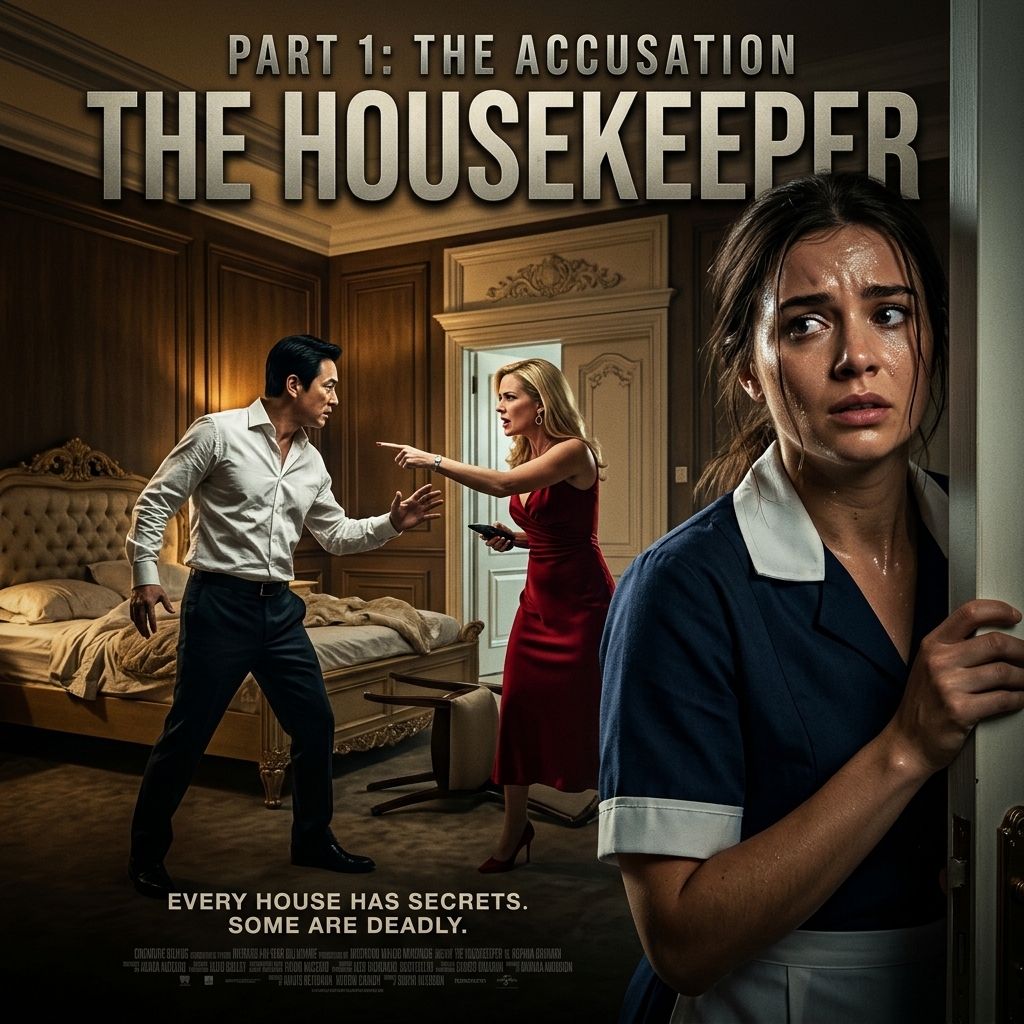
Victoria replayed the recording twice, not because she doubted Sophia, but because she could scarcely accept how much she had failed to notice. Richard moved deliberately between the young housekeeper and the door. Sophia pulled away. The chair fell. The vase rose between them.
Victoria saw her own entrance near the end of the clip, her red dress flashing across the screen. There was no audio, yet the gestures were unmistakable. She called Marcus Hale, the estate’s security manager.
“Who installed an interior camera in the east suite?”
Marcus hesitated.
“Mr. Westbrook ordered a security upgrade.”
“Without telling me?”
“He said the camera protected valuables.”
“Who can access the recordings?”
“You, Mr. Westbrook, and an administrator account.”
Victoria demanded that the footage and access logs be preserved. Marcus told her that someone had logged into the system late the previous night. The account was linked to Richard’s study.
Victoria exported a copy through the approved system, then contacted Officer Morales and an independent attorney about surrendering the original data. She knew that privately editing or circulating the video could damage its evidentiary value and Sophia’s privacy. Richard entered the dressing room before she finished the call.
“What are you doing?” he asked.
Victoria closed the panel.
“Trying to understand how long you’ve been lying to me.”
Richard looked toward the mirror. His face changed for a fraction of a second. It was enough.
“You had no right to install that camera,” Victoria said.
“It’s my house.”
“It was her workplace.”
Richard folded his arms.
“You’re taking an employee’s word over mine.”
Victoria met his gaze.
“I watched the recording.”
Sophia learned about the interior camera from Morales, who explained that investigators were taking steps to authenticate the footage. The officer did not promise that it would resolve every legal question. Sophia appreciated the distinction.
She had already begun to fear that people would demand a perfect recording of every moment before believing her. Her attorney, Amara Singh, advised her not to seek the footage independently or share speculation online.
“We can request preservation through formal channels,” Amara said.
“And we can document any retaliation.”
Sophia brought the unknown messages, the hotel email, and her handwritten notes. Amara reviewed each item without exaggerating its significance. The hotel rejection might have nothing to do with Richard. The messages might have come from someone else. The camera, however, raised serious concerns.
“Was I being watched while I worked?” Sophia asked.
“We need to establish when the camera was active and who accessed it.”
Sophia remembered cleaning the suite alone, replacing flowers, and changing linens. She felt violated by the possibility that someone had watched those ordinary moments. Elena drove her home and asked whether she wanted to talk.
“Not yet,” Sophia said.
Her sister accepted the answer. They stopped at a grocery store and argued gently over which apples were best for pie. The mundane conversation steadied Sophia. She did not want her life to become nothing but the mansion and what had happened there.
At home, she made a list of jobs to apply for and set aside an hour to complete applications. The work was slow. Every reference request reminded her that Richard had been her employer. She wondered what he might say if a hiring manager called.
She wrote down that worry too. At the estate, Marcus examined the access logs with an outside forensic specialist. They discovered that the administrator account had opened the east suite feed repeatedly over several months.
The logs also showed that someone had attempted to delete a group of recordings after the incident. The specialist cautioned that the logs needed independent verification, but the pattern concerned Marcus enough to contact investigators directly.
Victoria asked for the names of staff who had worked in the suite during the relevant period. She recognized Evelyn Price, a meticulous older housekeeper who had left suddenly after an accusation of theft. Richard had insisted Evelyn stole a diamond bracelet. Victoria had never seen evidence.
She found a forwarding number and called. Evelyn answered warily.
“Mrs. Westbrook?”
“I owe you a question I should have asked years ago. Why did you leave?”
Evelyn was silent. Then she said,
“Your husband told me he had video that could ruin my life.”
Victoria sat down.
“Did he threaten you?”
“He said I could leave quietly or face accusations nobody would question.”
Victoria closed her eyes.
“Would you speak to an investigator?”
“Maybe. But not if it means he finds my address.”
Victoria promised to pass the request through counsel and let Evelyn decide. She did not ask for forgiveness. After the call, she opened the personnel files and found two other employees who had left after unexplained disputes. Each departure had been handled by Richard’s office.
Each file included a confidentiality agreement. Victoria wondered how often she had accepted his explanations because the alternative was to question the foundation of her marriage. She called her attorney and asked for help ensuring that the records were preserved.
Richard’s public relations team moved faster than the investigation. A gossip site published a photograph of Sophia entering the mansion, paired with an anonymous claim that she had demanded money from the family. The photograph was genuine, but the story was unsupported.
Sophia saw it when a former coworker sent her the link with a worried message. Her stomach tightened. She wanted to answer every accusation, explain the schedule, show her notebook, and insist that she had not asked Richard for anything.
Amara advised her to preserve the article and avoid a public argument.
“You don’t need to prove your worth to strangers in a comment section,” she said.
Sophia turned off notifications. Mateo, the server who had helped her, called that evening.
“I told the police I saw you come out of the hallway,” he said.
“You were shaking. I remember.”
Sophia thanked him.
“You don’t have to put yourself in trouble.”
“I told them what I saw. That’s all.”
His words meant more than a dramatic declaration of loyalty. He had given a truthful account without claiming to know what happened behind the closed door. Elena made dinner, and Sophia managed to eat a full meal for the first time since the incident.
They watched an old comedy afterward. Sophia laughed unexpectedly at a ridiculous scene and then felt guilty for laughing. Elena noticed.
“You’re allowed to have a normal minute,” she said.
Sophia nodded. She had begun to understand that fear could coexist with laughter, work, and ordinary affection. Richard did not own every moment of her day. The forensic specialist called Victoria after midnight. He had identified a backup archive that the main interface did not display.
Several recordings appeared to have been exported to a private storage device. He could not say who had viewed them without additional examination, but he confirmed that the files covered more than one employee. Victoria asked him to preserve everything and provide the information to investigators.
Then she went to Richard’s study. He was seated behind a desk beneath a portrait of his father.
“There are recordings of other women,” she said.
Richard did not deny it.
“Security footage,” he replied.
“In private rooms?”
“You’re making this sound sinister.”
“It is sinister.”
He stood and moved toward her. Victoria stepped back into the hallway, where two staff members were working. She had learned from Sophia’s experience not to remain isolated during a confrontation. Richard stopped at the threshold.
“You’ll regret humiliating me,” he said quietly.
Victoria looked at the employees, then back at him.
“That sounds like a threat.” He said nothing.
The next morning Victoria gave a formal statement to Morales and supplied her attorney’s records of the camera system. She also announced that she would live separately from Richard while the investigation continued. When she returned to her room, a message awaited her from an unknown number.
It contained a photograph of Evelyn Price leaving her apartment. Beneath it were six words: SHE SHOULD HAVE STAYED QUIET TOO. Victoria forwarded the message to investigators immediately. The hidden camera had revealed more than Richard’s actions toward Sophia.
It had exposed a system built to make employees afraid of speaking. Marcus had joined the estate’s security staff after twenty years in corporate protection. He was accustomed to protecting executives from threats, not protecting employees from executives. That distinction troubled him as he examined the logs.
His job description emphasized confidentiality, but it did not authorize destroying evidence or concealing misconduct. He printed the access records, sealed a copy, and contacted his own attorney. The attorney told him to preserve the original system and cooperate with lawful requests.
Marcus returned to the control room and instructed his team not to alter any recording without a documented technical reason. A younger guard asked whether Mr. Westbrook would approve. Marcus answered,
“This isn’t about approval.”
For the first time, he felt the weight of all the occasions when staff had obeyed Richard without asking why. Later, Mrs. Collins approached him in the service corridor. She had heard that investigators were reviewing the east suite.
“I changed Sophia’s schedule because Mr. Westbrook told me to,” she said quietly.
“I didn’t know what he intended.”
Marcus urged her to tell the investigators directly. She looked frightened.
“I need this job.”
“I know,” he said.
“But if you have information, you deserve independent advice before deciding what to do.”
He gave her the contact details for an employment lawyer recommended by a former colleague. Mrs. Collins took the paper and folded it into her pocket. That night Marcus drove home without turning on the radio.
His teenage daughter was waiting at the kitchen table, working on a school project about ethics. She asked him what it meant to do the right thing when it could cost you something. Marcus looked at her for a long moment.
“It means you have to think about the person who pays if you do nothing,” he said.
The next morning he gave Morales a formal statement about the camera system and the schedule changes. He did not claim to know Richard’s intentions. He described the facts he could verify. It was less dramatic than an accusation and more useful.
Victoria learned of his cooperation from her attorney and thanked him. Marcus replied that he should have asked questions earlier. Victoria understood the feeling. It had become the refrain of everyone who had helped keep the household running.
In the days that followed, Marcus reviewed every request to access private recordings and insisted that the process be documented. He asked the technical team to identify any remaining unauthorized devices without disturbing evidence.
Victoria informed investigators of the review and declined Richard’s demand to restore his unrestricted access. Richard accused them of treating him like a criminal. Marcus answered that preserving evidence was a responsibility, not a verdict. The distinction mattered to him.
He had seen how quickly people confused suspicion with proof, and how easily that confusion could harm innocent employees. Mrs. Collins eventually gave a statement about the schedule change. She admitted that Richard had personally requested Sophia’s assignment but said she did not know why.
Morales thanked her for the factual account. Victoria offered to arrange independent legal advice for staff who wanted it, but the employees insisted that advisers be chosen outside the household. She agreed. Trust, she was learning, could not be ordered like fresh flowers or a replacement carpet.
It had to be earned through choices people could verify. Victoria also asked her lawyer to review the employment policies she had once approved without reading closely. The documents contained broad confidentiality provisions and unclear reporting procedures. She marked the sections that could discourage complaints.
The lawyer warned that changing policies would not resolve past conduct. Victoria agreed. She wanted independent staff representatives to review the revisions, and she understood that employees might distrust the offer. They had good reason.
She could not demand gratitude for beginning work that should have been done years earlier.