Chapter 1 – The Woman Who Arrived Without a Past
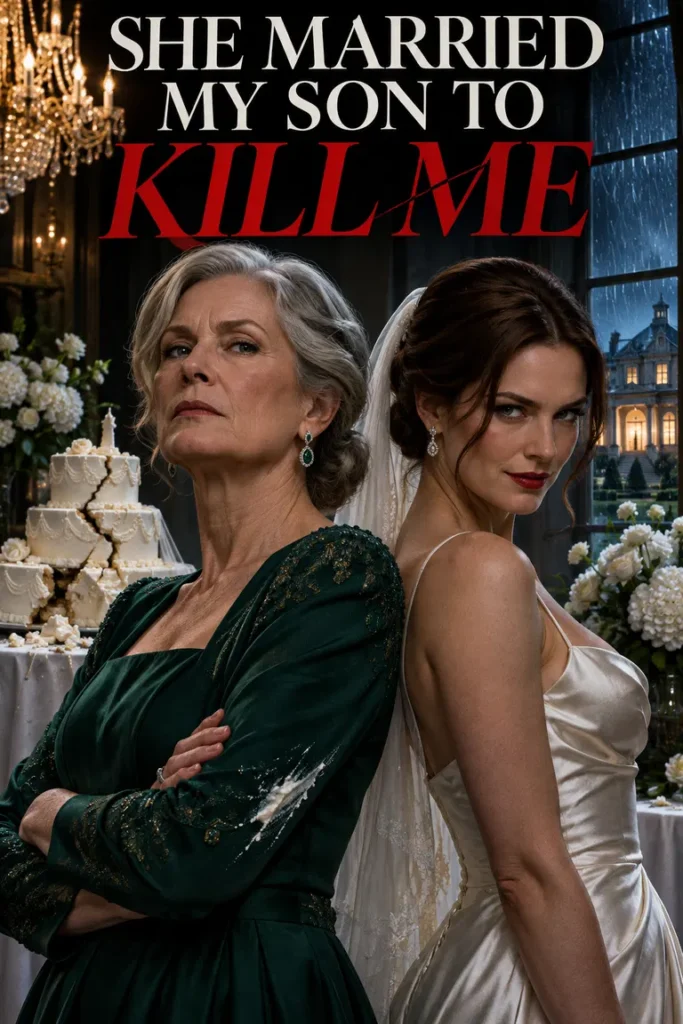
On the morning of her son’s wedding, Margaret Hale found a photograph that should not have existed.
It had been pushed beneath her bedroom door in an unmarked ivory envelope. At first she assumed it was another last-minute note from the florist. The wedding had turned Hale Point House into a small, elegant disaster: white roses in the stairwell, musicians tuning in the library, caterers arriving through the service entrance with enough silver trays to feed a regiment.
Then Margaret turned the envelope over. Across the flap someone had written four words in a hand that seemed to tremble.
*Ask her about Pennsylvania.*
The photograph showed a younger woman standing outside a courthouse in a navy jacket, her auburn hair loose around her face. She was thinner than the woman who would marry Ethan that afternoon, and her eyes held none of the carefully practiced warmth Margaret had come to associate with Natalie Cross. But the narrow scar above her right eyebrow, the tilt of her mouth, and the small gold earrings were unmistakable.
Under the photograph was a photocopy of an article about an investigation into a trust-fund fraud. The headline named a woman called Claire Voss. The clipping was ten years old. Several lines had been marked in red, among them a single sentence: *Investigators believe the suspect approached vulnerable estate owners through their adult children.*
Margaret read the sentence twice.
She was sixty-two, a widow of twelve years, and had spent most of her life learning which disasters could be fixed by a check and which demanded a witness. This one demanded both. Her late husband, Henry, had left the family an architectural restoration company, a weather-beaten estate on the Connecticut coast, and an uncomfortable amount of money. Margaret had also inherited the responsibility for the Hale Family Conservation Trust, whose holdings included Hale Point House. Ethan, her only son, was named as successor trustee, but not until her death or formal incapacity.
Natalie had asked about the trust on her second visit to the house.
At the time Margaret had thought it an awkward question from a woman hoping to understand the family she was joining. Now she remembered precisely how Natalie had put it.
“When something happens to you, Ethan takes over everything, doesn’t he?”
The answer Margaret had given was measured and factual. “He will be responsible for it. That isn’t the same as owning it.”
Natalie had smiled without asking another question.
Someone knocked. Grace Keller, the house manager who had kept Hale Point running through storms, funerals, and six disastrous Christmas parties, stepped into the room.
“The bride’s makeup artist is asking for more light,” Grace said. Then she saw the photograph. “Oh.”
Margaret looked up. “You recognize her.”
Grace closed the door behind her. She was fifty-eight, sturdy and discreet, with an instinct for trouble that had kept the old house from burning down more than once. “I was going to tell you after the ceremony.”
“Tell me now.”
Grace explained that a man had come to the service entrance before dawn, asking for Natalie. He wore a cheap raincoat and carried a package with a Philadelphia return address. When Natalie met him outside the kitchen, Grace heard part of the conversation through the open service window.
“He called her Claire,” Grace said. “She told him never to use that name here. Then she took the package and sent him away.”
Margaret thought of the old photograph and of Natalie leaning against the conservatory window a month earlier, asking whether the estate could be sold without the trustees’ approval.
“Who brought this envelope?” she asked.
“I don’t know. It was under your door when I came up.”
“Find Daniel. Quietly.”
Daniel Reed was the family attorney. He knew where every document was kept, including documents Margaret’s husband had never trusted to a computer. By nine thirty, he arrived in her sitting room with a folder under his arm and the tight expression of a man who regretted being correct.
“I wasn’t certain yesterday,” he said, “which is why I didn’t accuse anyone. But I had our investigator compare the photograph with an older file. Claire Voss was associated with a network that targeted family trusts. The original case was never brought to trial against her. There was a witness who withdrew.”
“Is Natalie Cross a real person?”
“There are people with that name. Whether the person marrying Ethan today is legally who she says she is requires verification.”
“And the papers she showed us?”
Daniel opened the folder. “The copy of your signature on the proposed estate refinancing authorization is not yours. Your actual signature has a long downward stroke on the H. This version doesn’t. We haven’t authenticated the original, but the discrepancy is significant.”
Margaret stared at the forged curve. The form proposed a large bridge loan against development rights connected to the family land. Natalie had presented it as a way to pay for renovations to the guest cottages. Margaret had refused to sign.
“Who has the original?” she asked.
“Possibly the lender. I’ve told them to freeze action until they verify everything.”
They heard laughter in the corridor. Ethan walked past with two groomsmen, his voice bright with the kind of happiness Margaret had not heard from him since Henry died. He stopped when he saw the open door.
“Mom? Everything all right?”
Margaret closed the folder before he could see it. “I need to talk to you privately.”
“After the ceremony?” Ethan checked the watch Henry had given him when he turned twenty-one. “Natalie’s a wreck. One of her relatives pulled out, and she thinks someone is trying to ruin the wedding.”
That was when Margaret understood that Natalie had anticipated a threat. She had already prepared the person Ethan was most likely to believe.
“This can’t wait,” Margaret said.
For a second Ethan looked like the little boy who had run to her when he broke his first window, certain she would know how to fix it. Then the expression vanished.
“Please,” he said. “Don’t do whatever you’re thinking of doing in front of everyone.”
He left before Margaret could answer.
The ceremony went ahead beneath a thousand white roses. Natalie came down the aisle in ivory satin, her auburn hair secured in a neat low bun, a short veil lifting behind her. She looked directly at Margaret and smiled. In that smile Margaret saw no nerves at all.
Later, when the guests began drifting toward the reception room, Margaret went to the side passage to catch Natalie alone. Through the half-open door she heard the bride speaking into a phone.
“You told me she wouldn’t find out,” Natalie said. A pause. “No. I can still make this work. But if Margaret won’t move, I’ll make her move.”
Margaret felt the envelope in her hand soften under her grip.
She stepped into the passage. Natalie’s phone dropped to her side.
“Who is Claire Voss?” Margaret asked.
For the first time all morning, the bride stopped smiling.
And then, from the reception room behind them, came the sound of guests applauding for the first dance.