Chapter 5 – The Girl in the Cellar
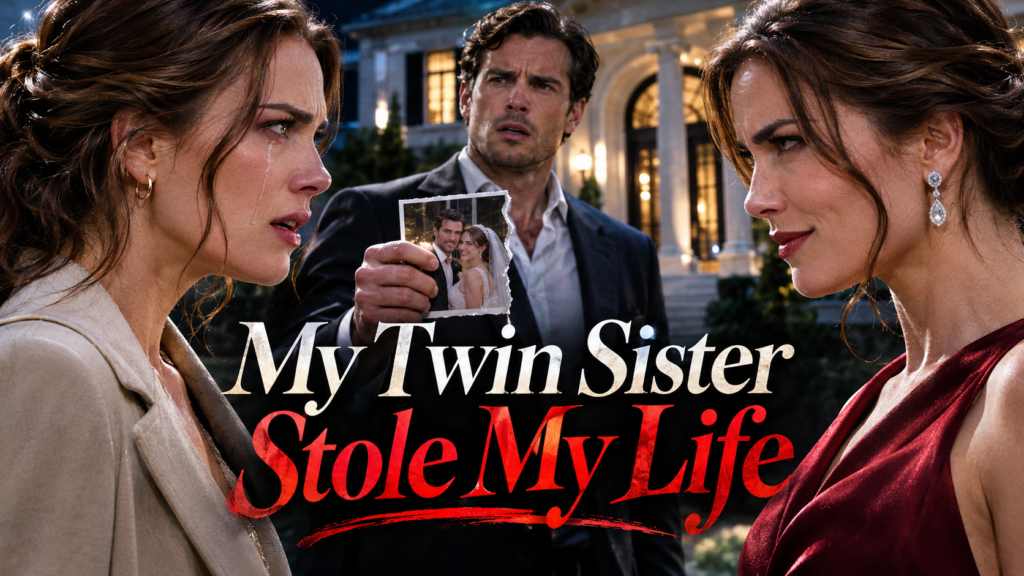
On Monday morning, Mara stood outside the Bellwether courthouse while a summer storm assembled over the river. The building’s stone columns had survived two world wars, a flood, and generations of lawyers. She found herself staring at them because it was easier than thinking about the woman inside who would soon tell a judge that Mara did not exist.
Elise was filing for emergency protection of the trust property. The hearing was limited, and no one expected a final ruling on identity. But every hour of delay mattered. If Victor Shaw obtained an uncontested transfer before a proper investigation, the mill could be stripped of legal safeguards through a series of complicated business transactions.
“You know the facts,” Elise said as they entered. “Don’t argue with her face. Argue with the records.”
Mara nodded. She wore one of June’s navy jackets and carried a folder of travel receipts. The jacket was a size too large. It made her feel younger, as though she were a student borrowing clothes for a first job interview.
Iris was already in the hallway.
She wore Mara’s charcoal suit, Mara’s pearl earrings, and the gold wedding band Daniel had put on Mara’s finger eight years earlier. She had pulled her hair into the low knot Mara used for formal presentations. Next to her stood Victor Shaw, tall and silver-haired, with a polite smile that made Mara’s skin crawl.
Iris looked at June. “Still rescuing her, Junie?”
June took one step forward. Elise lightly touched her elbow.
“My client has nothing to say to yours in the hallway,” Elise told Iris’s lawyer.
“I’m not your client,” Iris replied sweetly. “You’re representing my sister.”
Mara met her eyes. “Then tell them your real name.”
“I have.”
“Tell them your fingerprints. Tell them where you slept last Thursday. Tell them what your mother called you when you were little.”
Iris’s smile thinned.
“She called me her difficult girl,” Iris said. “You remember that, don’t you?”
Mara remembered her mother saying it only once, after Iris smashed a music box Mara had been given for winning a competition. She also remembered their mother apologizing. A single sentence had become an entire identity in Iris’s memory.
The courtroom door opened. The judge’s clerk called them inside.
Over the next hour Elise presented the forged authorization, the disputed medical letter, the conference records, and the pending fingerprint comparison. Opposing counsel argued that the materials were insufficient to identify which twin was the legitimate trustee and that the other woman’s claims threatened a major commercial transaction.
Judge Helen Ward looked at both sisters for a long moment.
“For purposes of today’s hearing,” she said, “the court need not decide the entire identity dispute. The question is whether a credible challenge exists and whether irreparable harm may occur before it is examined.”
She ordered a short temporary restraint on any transfer of the disputed trust interests and set an expedited hearing later in the week. She also required preservation of relevant documents and directed the parties to cooperate with a neutral identity-verification procedure.
Mara felt relief move through her so suddenly that she almost laughed.
The judge raised one finger. “This order does not determine who is telling the truth. I expect counsel to return with admissible evidence, not theatrics.”
Outside, Victor Shaw approached Elise.
“The project employs hundreds of people,” he said. “I hope your client understands the financial damage of delay.”
“A properly signed transaction shouldn’t be afraid of verification,” Elise answered.
Shaw turned his eyes toward Mara. “Your grandmother was a stubborn woman. She could never distinguish a preservation principle from a personal grudge.”
“You knew her?” Mara asked.
“Our families did business for years.”
“Then you must know why she protected the mill.”
“Because she enjoyed making powerful people wait.”
He walked away before Mara could respond. Iris followed him but stopped long enough to lean close.
“You shouldn’t have gone to the cottage,” she murmured.
“How did you know I was there?”
“You always go back to places where somebody hurt you.”
Mara held her sister’s gaze. “Who sent the man after us?”
Iris’s expression shifted for an instant. Not triumph. Fear.
Then she said, “Ask Daniel,” and hurried after Shaw.
The fear bothered Mara more than the threat. It was the first sign that Iris might not control the machinery she had set in motion.
Before leaving the courthouse, Mara paused beside a row of old framed photographs in the public corridor. One showed the riverfront before the warehouses existed: a low bank, a wooden footbridge, and workers in hats standing beside a pile of stone. She remembered Evelyn showing her that same picture and saying that preservation was not an argument against change. It was an argument for remembering who paid for the first version of the town.
Mara had repeated those words in grant applications for years. Now she wondered whether she had heard them only as a beautiful phrase. Evelyn had protected the mill partly because documents hidden inside its walls might expose a crime. Sometimes a public principle and a private fear could grow from the same root.
She photographed the frame for later, then followed Elise outside. Their work had become bigger than one fraudulent sale.
After the hearing, Elise took a call from the trust’s senior administrator, Ada Keene. Ada was seventy-three and had worked at Harbor Ridge since before Mara was born. She had discovered that one of the annex’s catalog entries, B-17, had been flagged for relocation by a person using Mara’s credentials.
“Did the box leave?” Elise asked.
The answer was no. A recent court notice had frozen the archive-transfer authorization. Ada could provide supervised access to the records as long as they documented every item removed.
Mara insisted on visiting that afternoon. June came with her, and Elise arranged for an independent records officer to witness the opening. No solitary trips, no unlabeled envelopes, no dramatic thefts from dusty shelves. This time they would do everything properly.
The records annex stood behind the old mill beside a channel where water still ran over stones. Inside, the air was cool and dry. Tall metal shelves held engineering plans, historic payroll books, and the personal papers of families who had worked along the river.
Ada greeted Mara with a look of astonishment.
“Child,” she whispered. “I saw you on television this morning. Twice.”
“I wish I had a less interesting explanation.”
Ada squeezed her hand. “Your grandmother said I’d know when someone came looking for B-17. She told me not to let anyone leave with it alone.”
In a locked cabinet near the rear wall, Ada retrieved a brown archive box with a handwritten tag: BENNETT FAMILY / PRIVATE CORRESPONDENCE / 2007–2019. The records officer photographed the seal before opening it.
Inside lay a stack of letters, a compact cassette tape, and a folded diagram of the old family house. The diagram showed the cellar, pantry, rear stairwell, and an external fuel line once connected to a furnace.
Mara touched the edge of the map. “I didn’t know there was a service entrance to the cellar.”
“There was,” Ada said. “They boarded it up after the fire.”
The first letter was written by Mara’s mother, Caroline Bennett, three weeks before her death. It described finding discrepancies in a land option prepared by the Shaw family. Her husband, Thomas, was pressured to sign documents selling access rights that did not belong to him. Caroline threatened to disclose the arrangement to the trustees.
A second letter, addressed to Evelyn, said Caroline had begun to fear a man named Peter Shaw, Victor’s father. He had visited the house twice and demanded to see the original trust deed.
“My mother was investigating him,” Mara said.
Ada nodded grimly. “Your grandmother knew Caroline was frightened. She told me later that she should have taken it more seriously.”
Mara picked up the cassette. A paper label read CAROLINE / JULY 2007 / COPY.
“Can we play it?”
“Not on the old machine,” the records officer said. “We should have it professionally digitized to avoid damaging it.”
Elise agreed by phone. The tape was placed in a protective sleeve for transfer to an accredited audio specialist, with the original retained under documented custody. Mara hated the delay but was beginning to understand that careful procedure could be a form of courage.
At the bottom of the box was a separate envelope containing a photograph of Iris in a hospital bed after the fire. There was a second person in the frame: Evelyn, sitting beside her with both hands around Iris’s fingers. Iris was looking at the camera with an expression of terror.
On the back Evelyn had written: **She believes I shut the door. I did not.**
Mara read it aloud. June’s hand covered her mouth.
“Did Iris tell you that?” Ada asked.
“Yesterday. She said Grandma locked her in the cellar.”
Ada shook her head. “Evelyn wasn’t at the house when the fire started. But after it, Iris kept saying a woman in a blue coat had closed the service door. Evelyn had a blue coat. So did half the women in Bellwether that year.”
“Someone told her it was Evelyn.”
“Someone certainly wanted her to believe it.”
Mara found another note written in Evelyn’s distinctive slanted handwriting. It described a private conversation with Iris shortly before the sisters stopped speaking. Iris insisted that Mara had seen Evelyn lock the door and then lied to protect her inheritance. Evelyn wrote that she could not convince Iris otherwise.
“Why didn’t Grandma show us all this?” Mara asked.
Ada lowered her eyes. “Because there was a man who promised he’d ruin both girls if she made trouble. She told me she was waiting for proof strong enough to survive him.”
“Peter Shaw?”
“She never said.”
Mara looked toward the dark mill windows. The women in her family had spent years protecting one another by keeping secrets, and every secret had made the next lie easier.
The records officer sealed the cassette for its transfer. Elise arranged to have the documents scanned and stored in multiple secured locations. Ada insisted on remaining with the originals until a court could review them.
Outside, a delivery truck turned through the mill gates. A man in a gray jacket stepped out and asked Ada to sign for a parcel. She went toward the office window while Mara and June waited by the cars.
Mara noticed the man’s boots. Thick rubber soles covered in pale plaster dust. The same boots she had glimpsed beneath the trousers of the man at the cottage.
“June,” she whispered. “Get in the car.”
The man turned toward her. He recognized her immediately.
“Mrs. Vale,” he said.
Mara grabbed June’s sleeve. They moved toward the Subaru, but the driver stepped sideways, blocking the front door.
“I only want to talk.”
“Then talk to the police,” June said, lifting her phone.
The man lunged—not at them, but at Mara’s canvas document bag. He caught the strap and pulled. Mara stumbled against the hood. June slammed the car alarm button on her key fob, and a piercing horn filled the courtyard.
Mara let the bag go rather than be dragged. The man stumbled backward with it, found nothing but a sandwich wrapper and a paperback inside, and hurled it away.
“Where’s the tape?” he demanded.
“Safe,” Mara answered.
Ada emerged from the office. The records officer was already calling emergency services. The man ran toward the delivery truck, but a maintenance worker swung the gate halfway shut. The truck scraped the gatepost, reversed, and sped out along the service lane.
Mara memorized the partial license plate before it vanished.
When the police arrived, they collected statements and the video from the annex’s exterior cameras. The man had not touched the archive box. The tape was still safe.
Mara stood on the wet gravel and realized her hands were shaking. Not because she’d nearly been hurt. Because the man had asked for the tape by name.
Someone knew what Caroline had recorded.
Someone was frightened enough of that recording to chase her through two properties in three days.
That night, while June made tea, Mara received a message from an unknown email address. It contained a single scanned page from a ledger. The entry was dated July 16, 2007, the night of the fire, and identified a payment from Shaw Holdings to a private security contractor.
The line beneath the amount read: **Bennett residence — after-hours access.**
Mara stared at the page. Then another message arrived.
**Come to the gala tomorrow. If you want to know who locked the cellar door, stand where everyone can see you.**
For the first time she did not wonder whether Iris had written it.
She wondered whether her sister was trying to warn her.