Chapter 2 – The Photograph Behind the Mirror
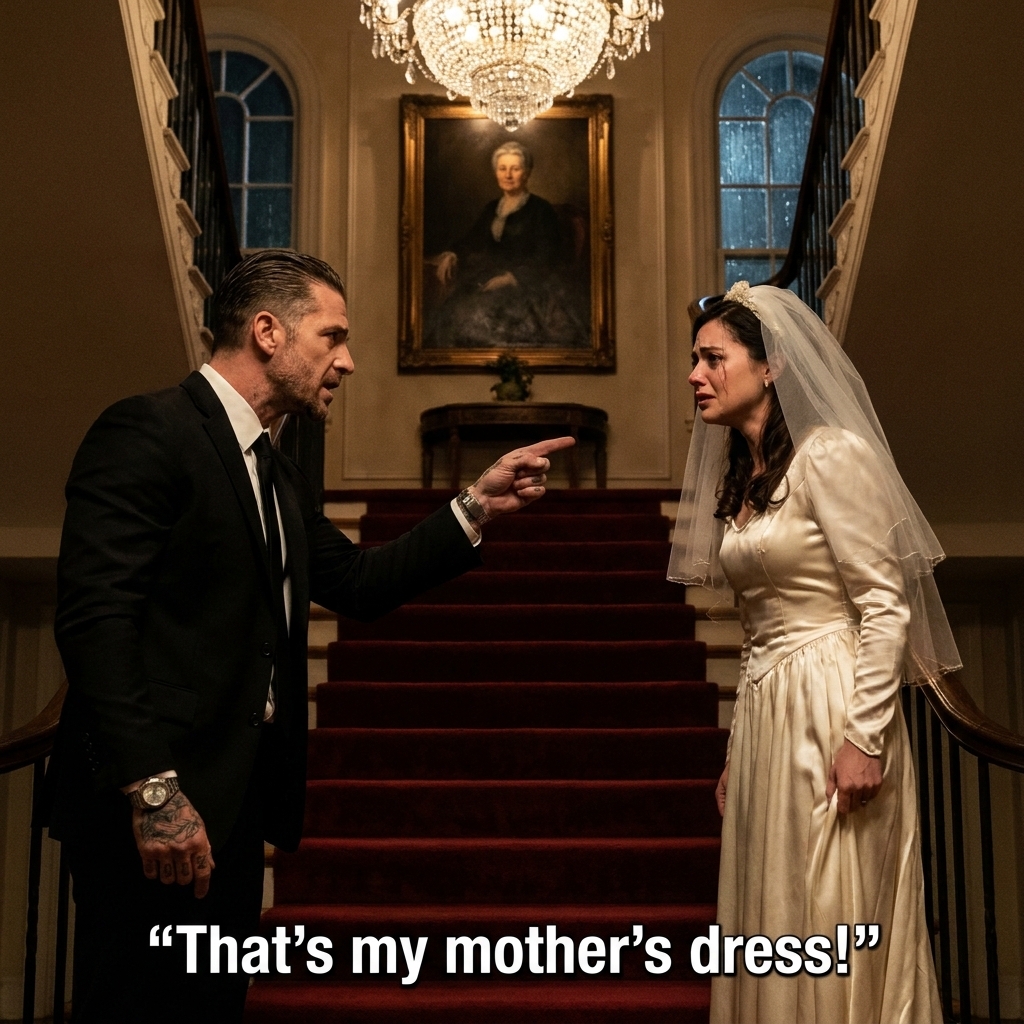
Vincent ordered the mansion sealed until morning. No one was to touch the portrait, the gown or the envelope. Clara refused to surrender the photograph without a witness, so he called his family attorney, Mara Velez, whose first loyalty was to facts rather than the Moretti name.
Neither anger nor loyalty could settle the question. Their attention returned to Mara’s insistence on a documented chain of custody. The object or testimony was specific enough to be checked, unlike the stories that had circulated through the household for years. The next question was no longer whether the story was comfortable, but whether its documents could be trusted.
Mara arrived through the rain and photographed the damaged edges of the print. She noticed the tear was too straight to be accidental, and the paper had been folded around a second document.
“Someone removed a person, not just a corner,” Mara said.
Vincent wanted to call it a trick. But he had seen Edward’s face when Clara spoke, and that expression could not be forged.
They could not take the previous explanation on faith. Their attention returned to Mara’s insistence on a documented chain of custody. The object or testimony was specific enough to be checked, unlike the stories that had circulated through the household for years. No one could restore the years already lost, but they could stop another decision from being made in secret.
Even the smallest physical detail had become evidence. Their attention returned to the hospital bracelet Edward remembered. The object or testimony was specific enough to be checked, unlike the stories that had circulated through the household for years. The silence did not resolve their disagreement; it gave each of them a reason to ask a more precise question.
Clara changed into her plain black-and-white maid uniform, keeping the pearl pin in a small cloth pouch. Vincent had expected her to flee after the confrontation; instead she asked permission to examine Isabella’s portrait.
For a moment, no one rushed to fill the silence. Their attention returned to the sealed mirror and the old family room. The object or testimony was specific enough to be checked, unlike the stories that had circulated through the household for years. It was the first time anyone had insisted that the evidence matter more than the family name.
He nearly refused. Then he remembered the photograph and let her lead him upstairs, though he insisted that Mara accompany them.
“I want the truth, not your money,” Clara said.
Her anger had not disappeared with the wedding dress. It had simply become more focused, and Vincent found that harder to dismiss.
The pause was brief, but it made the next choice deliberate. Their attention returned to the sealed mirror and the old family room. The object or testimony was specific enough to be checked, unlike the stories that had circulated through the household for years. The possibility of another false record made the people in the room cautious about every confident claim.
The room offered no protection from the implications. Their attention returned to Mara’s insistence on a documented chain of custody. The object or testimony was specific enough to be checked, unlike the stories that had circulated through the household for years. Vincent would have preferred a simple enemy; instead he had to listen and decide what could actually be proved.
Behind the portrait they discovered a shallow recess with a rectangular mark where a packet had once rested. The dust had been disturbed recently. Edward admitted he had kept a second copy of the photograph there until a week earlier.
They could not take the previous explanation on faith. Their attention returned to the torn edge of the family photograph. The object or testimony was specific enough to be checked, unlike the stories that had circulated through the household for years. No one could restore the years already lost, but they could stop another decision from being made in secret.
Vincent asked who had entered the gallery. Security logs showed his cousin Luca had requested access during a charity event.
“Why would Luca care about a photograph of my mother?” Vincent said.
The question sounded foolish as soon as he asked it. In his family, inheritance had made men interested in far smaller things.
What stayed with them was not the accusation but its consequence. Their attention returned to the torn edge of the family photograph. The object or testimony was specific enough to be checked, unlike the stories that had circulated through the household for years. Whatever happened next, they would need the original document rather than another recollection of it.
There was a practical decision beneath the argument. Their attention returned to the sealed mirror and the old family room. The object or testimony was specific enough to be checked, unlike the stories that had circulated through the household for years. Clara refused to let someone else turn her uncertainty into an admission of guilt.
Mara traced the photograph to a studio that had closed twenty years earlier. The photographer’s daughter, Helen Price, kept an archive of negatives in a storage unit in Queens.
The pause was brief, but it made the next choice deliberate. Their attention returned to the hospital bracelet Edward remembered. The object or testimony was specific enough to be checked, unlike the stories that had circulated through the household for years. The possibility of another false record made the people in the room cautious about every confident claim.
Clara and Vincent went together, each suspicious of the other. Helen remembered Isabella because she had insisted on paying for two copies and had cried when asked the children’s names.
“She told my father that one day somebody would need proof,” Helen said.
Vincent could hear a quiet desperation in the story that contradicted every polished account of his mother’s happy marriage.
Even the smallest physical detail had become evidence. Their attention returned to the hospital bracelet Edward remembered. The object or testimony was specific enough to be checked, unlike the stories that had circulated through the household for years. The silence did not resolve their disagreement; it gave each of them a reason to ask a more precise question.
The detail changed how the room felt. Their attention returned to the torn edge of the family photograph. The object or testimony was specific enough to be checked, unlike the stories that had circulated through the household for years. Edward knew that delaying an answer would only make the eventual confession harder to believe.
The recovered negative showed Isabella holding Clara as a little girl while a boy stood beside them, his face turned away. A handwritten note on the sleeve read: For the children, if they ever ask.
What stayed with them was not the accusation but its consequence. Their attention returned to Mara’s insistence on a documented chain of custody. The object or testimony was specific enough to be checked, unlike the stories that had circulated through the household for years. Whatever happened next, they would need the original document rather than another recollection of it.
Clara recognized the little girl as herself from a scar on her wrist. Vincent could not identify the boy. The dates on the negative made the old family chronology impossible.
“Why did she keep us apart if she loved us?” Clara said.
She had asked that question in orphanage offices and empty bedrooms. Here, for the first time, someone else had to hear it.
The room offered no protection from the implications. Their attention returned to Mara’s insistence on a documented chain of custody. The object or testimony was specific enough to be checked, unlike the stories that had circulated through the household for years. Vincent would have preferred a simple enemy; instead he had to listen and decide what could actually be proved.
Every claim now needed to survive a second look. Their attention returned to the hospital bracelet Edward remembered. The object or testimony was specific enough to be checked, unlike the stories that had circulated through the household for years. They agreed to distinguish what they had witnessed from what they had merely been told.
Back at the mansion, Luca arrived without an invitation and accused Clara of extortion. Vincent told him to leave, but Luca pointed to the bloodless cut at Vincent’s lip and asked whether the maid had assaulted him.
Even the smallest physical detail had become evidence. Their attention returned to the sealed mirror and the old family room. The object or testimony was specific enough to be checked, unlike the stories that had circulated through the household for years. The silence did not resolve their disagreement; it gave each of them a reason to ask a more precise question.
Clara stepped forward and admitted she had struck Vincent after he grabbed her. She would not apologize for resisting, and Vincent surprised both of them by confirming her account.
“You do not get to use her fear against her,” Vincent said.
The sentence cost him a fraction of his authority among the men listening outside the door, but it gave Clara reason to believe he might change.
There was a practical decision beneath the argument. Their attention returned to the sealed mirror and the old family room. The object or testimony was specific enough to be checked, unlike the stories that had circulated through the household for years. Clara refused to let someone else turn her uncertainty into an admission of guilt.
Neither anger nor loyalty could settle the question. Their attention returned to Mara’s insistence on a documented chain of custody. The object or testimony was specific enough to be checked, unlike the stories that had circulated through the household for years. The next question was no longer whether the story was comfortable, but whether its documents could be trusted.
Edward finally disclosed that Isabella had kept a small mirror in her private sitting room, a mirror that had been moved after the fire. Behind it was a handwritten inventory of objects she wanted protected.
The room offered no protection from the implications. Their attention returned to the torn edge of the family photograph. The object or testimony was specific enough to be checked, unlike the stories that had circulated through the household for years. Vincent would have preferred a simple enemy; instead he had to listen and decide what could actually be proved.
The inventory mentioned a birth certificate, a hospital bracelet and a sealed letter addressed to a boy under a different surname.
“I never saw what was inside the letter,” Edward said.
Vincent no longer believed that Edward’s ignorance was complete, but the old man’s terror suggested the threat was real.
The detail changed how the room felt. Their attention returned to the torn edge of the family photograph. The object or testimony was specific enough to be checked, unlike the stories that had circulated through the household for years. Edward knew that delaying an answer would only make the eventual confession harder to believe.
For a moment, no one rushed to fill the silence. Their attention returned to the sealed mirror and the old family room. The object or testimony was specific enough to be checked, unlike the stories that had circulated through the household for years. It was the first time anyone had insisted that the evidence matter more than the family name.
The mirror had been installed in Luca’s guest suite. Mara secured a legal order to examine it, avoiding a confrontation that could destroy evidence. Beneath its backing they found a strip of paper bearing a name and a number from a municipal adoption ledger.
There was a practical decision beneath the argument. Their attention returned to the hospital bracelet Edward remembered. The object or testimony was specific enough to be checked, unlike the stories that had circulated through the household for years. Clara refused to let someone else turn her uncertainty into an admission of guilt.
The surname was not Moretti. Vincent read it twice while Clara watched his face change.
“This is not proof of parentage, but it is proof someone filed a record,” Mara said.
Outside, thunder rolled over the estate. Inside, Vincent understood that the next question could not be settled by a family argument.
Every claim now needed to survive a second look. Their attention returned to the hospital bracelet Edward remembered. The object or testimony was specific enough to be checked, unlike the stories that had circulated through the household for years. They agreed to distinguish what they had witnessed from what they had merely been told.
They could not take the previous explanation on faith. Their attention returned to the torn edge of the family photograph. The object or testimony was specific enough to be checked, unlike the stories that had circulated through the household for years. No one could restore the years already lost, but they could stop another decision from being made in secret.
Helen called with one final discovery: the original negative sleeve carried a faint indentation from a second label. Under angled light, the words became visible: Adrian Vale—transfer authorized.
The detail changed how the room felt. Their attention returned to Mara’s insistence on a documented chain of custody. The object or testimony was specific enough to be checked, unlike the stories that had circulated through the household for years. Edward knew that delaying an answer would only make the eventual confession harder to believe.
Vincent repeated the name aloud. Edward closed his eyes as though a door had finally opened onto a room he feared.
Neither anger nor loyalty could settle the question. Their attention returned to Mara’s insistence on a documented chain of custody. The object or testimony was specific enough to be checked, unlike the stories that had circulated through the household for years. The next question was no longer whether the story was comfortable, but whether its documents could be trusted.
The pause was brief, but it made the next choice deliberate. Their attention returned to the hospital bracelet Edward remembered. The object or testimony was specific enough to be checked, unlike the stories that had circulated through the household for years. The possibility of another false record made the people in the room cautious about every confident claim.
“That was the name on the hospital bracelet,” Edward said.
Clara reached for the table to steady herself. The boy in the photograph had a name, and Vincent had never heard it before.