Chapter 7 – The House That Stayed Standing
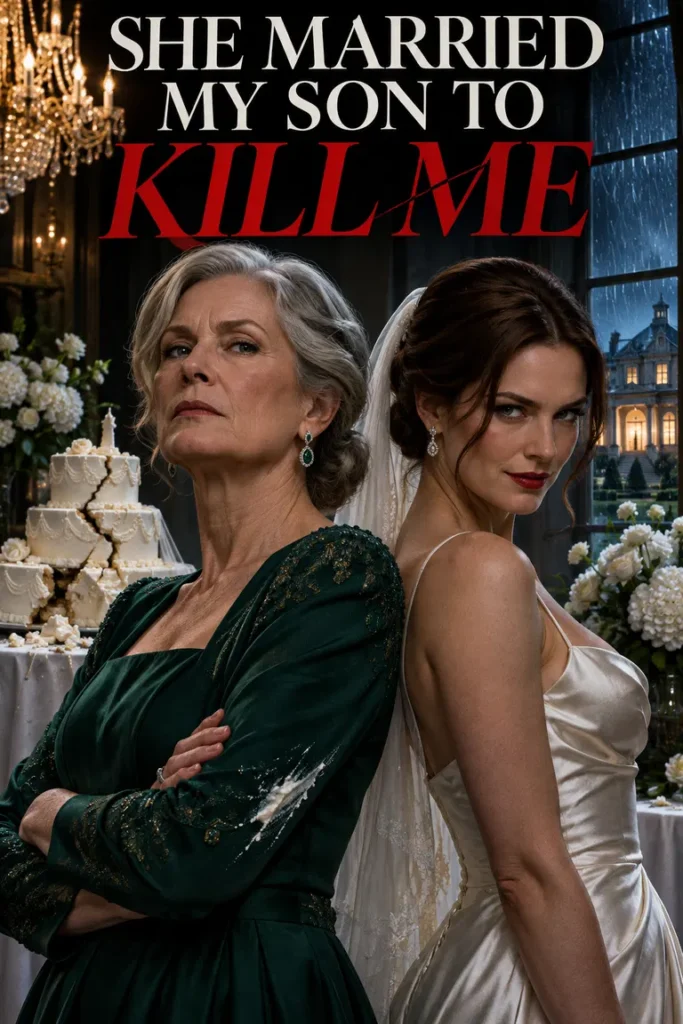
Three weeks after the wedding, the last white rose was removed from Hale Point House.
It had dried inside the frame of a hallway mirror, trapped where a florist’s assistant had tucked it for decoration. Grace found it while cleaning the landing. She carried it into the kitchen as though it were evidence of a crime, then dropped it into the compost with enormous satisfaction.
The damaged wedding cake had long since been thrown away. The banquet table was back in storage. The old archive door had a new, code-compliant emergency release and no exterior slide bolt. Margaret insisted that the entire house be inspected for similar hazards. She would not leave another device in place merely because Henry had once meant to repair it.
The legal aftermath was neither swift nor tidy. Natalie faced allegations arising from the attacks and the attempted financial scheme. Gavin Price was being investigated over the questionable financing arrangement, but investigators had not completed their work. The lender had frozen the transaction; the original trust records and copies supplied by Daniel were preserved. No court had yet decided every claim, and Margaret refused to confuse an arrest with an ending.
The family lawyers were also examining how Ethan might challenge the marriage in light of what he had learned. Margaret did not ask for updates unless Ethan offered them. He had endured enough people using his future as a prize.
One cold morning he joined her on the veranda where Henry used to drink coffee before sunrise. The sea was gray and restless beyond the stone wall. Ethan carried two mugs and set one beside her.
“I read the letters,” he said.
Margaret knew which ones he meant. Daniel had finally assembled every surviving document about the Philadelphia housing fund, including statements from the Voss family and Henry’s notes. A detective had also interviewed a woman named Olivia Voss, Claire’s aunt, who admitted leaving the anonymous envelope under Margaret’s door. Olivia had suspected Claire was involved in something dangerous. She had sent the warning because she could not bear the thought of another family suffering for what had happened to hers.
“Olivia said Ruth never blamed you personally,” Ethan continued. “She blamed the people who took the money. Claire didn’t want to believe that.”
“Sometimes anger becomes the only thing a person thinks they still own,” Margaret said. “Giving it up can feel like losing the person they were angry for.”
Ethan studied the ocean. “I keep wondering whether I should have known.”
“You should have listened when I asked for help,” Margaret said. “That’s something we can be honest about. But you are not responsible for her decision to hurt me.”
He nodded slowly. She could tell the distinction was painful. It would take time to absorb.
“I’m sorry,” he said. “For the cake. For the stairs. For believing the story she told about you.”
Margaret’s fingers tightened around her mug. She had been waiting to hear those words, though she had never intended to demand them.
“Thank you,” she said.
She did not say everything was fine. The bruise on her side was gone, but sometimes she still startled when a heavy door closed somewhere in the house. Recovery was not a scene that ended with an embrace and a soaring musical score. It happened in ordinary decisions: sleeping through a storm, walking the north staircase without looking back, asking Ethan to check the locks rather than pretending she was not frightened.
He turned toward her. “Do you think you could ever forgive her?”
Margaret watched a gull dip across the rocks. “I don’t know. Forgiveness is not something I owe somebody because they had reasons. And whatever I decide one day won’t change the consequences of what she did.”
Ethan accepted that. It was a relief not to have to turn every painful question into a simple answer.
In the afternoon Margaret visited Daniel’s office. The investigator had recovered enough records to confirm that the financing proposal contained false statements about the trust’s authority. The exact division of responsibility among Natalie, Gavin, and their associates remained for the authorities and courts to determine. Margaret signed a statement describing what she had personally seen and heard. She was careful to distinguish evidence from suspicion. She had learned, painfully, how much damage a convincing story could do when it was treated as proof.
Daniel handed her a small box before she left. “Henry asked me to give you this if we ever finished reviewing the Philadelphia files. I think he meant for a different sort of ending.”
Inside was an ordinary brass key and a note written in her husband’s familiar blue ink.
*For the room we keep locked because we’re afraid of what people will think when they see what’s inside: open it. If the truth costs us our reputation, the reputation wasn’t worth keeping.*
Margaret laughed once through her tears. Henry had been maddeningly certain of his principles and hopeless at replacing a broken latch. She wished she could tell him that both qualities had nearly destroyed her, and that one of them had saved her son.
That evening she went to the archive. The new lock clicked softly behind her, and she left the door open. She placed Henry’s note beside the Voss family’s documents and began organizing them for a proper review. The families harmed by the old scandal deserved more than a private folder and a forgotten promise. Margaret instructed Daniel to explore whether additional records could be disclosed to investigators and whether a transparent restitution effort was possible without compromising the legal case.
It could not erase what happened to Ruth Voss. It might, however, keep another family from being told that their suffering was merely paperwork.
Ethan appeared at the doorway carrying a box of labeled folders. “Grace said you were down here. She also told me that if I leave you working alone all night, she’ll quit.”
“Grace has threatened to quit every six months for twenty years.”
“She says this time she means it.”
Margaret smiled. “Then we’d better give her less to complain about.”
He set the box on the table. Together they worked until the light outside the small archive window turned blue. Nothing dramatic happened. No one shouted. No door slammed. And for once, the quiet felt like a gift.
As they climbed the north staircase afterward, Ethan slowed at the first step. He knew what had happened there. Margaret knew he knew. Neither needed to name it.
He offered her his arm.
“I can manage,” she said.
“I know.”
She took his arm anyway.
At the top landing they paused by the old portrait of Henry. Downstairs, Grace was turning off the chandeliers one by one. Hale Point House had survived a hundred storms, a dozen financial panics, and now a wedding that nearly ended in murder. Its walls still stood. More importantly, the people inside had begun to tell the truth to one another.
Later, people would ask Margaret why she had suspected her son’s bride. They wanted a single clever clue, a moment of feminine intuition, a secret visible only to mothers. Margaret never gave them one. What saved her was not intuition. It was a photograph she checked, documents she refused to sign, witnesses she listened to, and a son who eventually chose evidence over the story he wanted to believe.
Sometimes she would look at the emerald dress hanging at the back of her closet. A faint white stain remained on the left sleeve, stubborn against every careful cleaning. She could have had the fabric replaced. She left it as it was.
Not because she wanted to remember the woman who attacked her.
Because she wanted to remember the instant she refused to fall.
**The End.**