Chapter 10 – No More Memorials
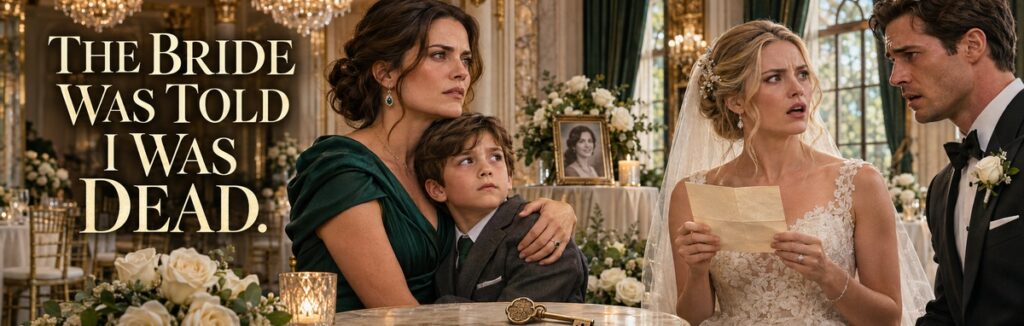
Six months later, the front door of Bellwether House stuck in the rain.
Miles blamed the weather. The carpenter blamed an old repair. Rose blamed anyone who suggested replacing a door that had survived longer than all of us.
In the end, the carpenter adjusted it, the rain stopped, and the door opened properly.
I liked the unremarkable solution.
For too long, every difficulty in my life had been presented as a choice between accepting Ethan’s plan and losing everything.
Most problems deserved a little more patience than that.
The hotel was still standing.
It had fewer rooms available while repairs continued. The old library wing remained intact. A modest renovation plan moved forward in stages, with real approvals, clear costs, and fewer promises.
Rose sold Seabrook Cottage after deciding that living at the hotel, with appropriate support and a room she could reach comfortably, suited her better.
She mourned the garden.
She did not pretend the decision had cost her nothing.
Miles placed pots of the same orange flowers near her window. She complained about the arrangement and then watered them every morning.
The staff learned that the new management meetings would include questions they were allowed to ask.
Some people left for other jobs. Others stayed. Bellwether House did not become perfect because its owner returned.
It became more honest about the work required to keep it open.
My commission grew into an ongoing part-time role maintaining the archive and restoring selected materials. I kept my private clients. I kept our apartment. I kept the ability to say a project did not fit the time I had available.
The first time I declined extra work, nobody threatened to withdraw the affection attached to it.
That still surprised me.
Noah turned nine in the spring.
We celebrated with a cake shaped vaguely like a lighthouse, mostly because my attempt at a ship collapsed while cooling. Jo called the result architectural. Noah said it looked like a potato with a window.
He loved it.
His grandmother attended and complained that the candles leaned.
“So does the lighthouse,” Noah told her.
She laughed hard enough to need a sip of water.
There were no cameras pointed at him unless he agreed. There was no announcement about becoming a whole family. We ate cake, opened a few presents, and cleaned frosting from the table.
His relationship with Ethan continued under arrangements developed with appropriate advice and support. Changes depended on what happened over time, not on the size of a gift or the urgency of a promise.
I did not use my son to measure whether Ethan was sorry enough.
I also did not ask Noah to ignore what frightened him because his father loved him.
Both truths could exist.
Ethan’s business and personal disputes took months to resolve. Some involved repayment and correction of records. Others required their own formal processes. The incidents involving violence were addressed separately from the hotel’s finances.
I learned only what affected my own rights, safety, and responsibilities. I stopped treating knowledge of every consequence as something I needed in order to sleep.
He no longer managed Bellwether House.
He had to build whatever came next without using his mother’s authority or my silence as a substitute for permission.
That was a consequence large enough to matter.
One afternoon, Noah returned from a visit carrying a paper boat.
“We made it,” he said.
I cleared a space on the windowsill.
“Do you want to put it here?”
He nodded.
The boat was uneven. One side folded higher than the other.
I did not improve it.
Later, Noah told me his father had said something.
“He said he shouldn’t have told people you were dead.”
I sat beside him.
“That’s true.”
“He said I didn’t have to keep it secret.”
“You never should have had to.”
Noah looked at the boat.
“I told him I already knew.”
I let the conversation end there. An apology was something Ethan owed his son. It was not a ceremony Noah owed his father.
Vivian completed the consequences required in the separate matter involving the slap and continued to acknowledge what she had done without asking me to call it understandable.
She returned to her own work.
We were not close friends. We exchanged occasional messages about the photographs and letters. Once, she sent a picture of Grace’s drawing framed in her apartment.
The frame was plain. There was no printed tribute explaining what the drawing was supposed to mean.
I was glad she had let it remain her mother’s small, ordinary picture.
For the archive opening, Rose invited Vivian and Richard.
She asked me first whether their presence would make working difficult.
“I can work with them in the room,” I said.
“That isn’t the same as wanting them here.”
I thought about it.
“Invite them. Just don’t make it a reunion for anyone else’s benefit.”
Rose nodded.
The opening was small. Staff, former employees, a few neighbors, and people whose families had contributed materials. We displayed only what the owners or appropriate family representatives had agreed to share.
A week before the opening, Noah had asked to see the ballroom.
We were leaving after an afternoon with Rose. He stopped beside the corridor and looked toward the double doors.
“Is there another wedding?”
“Not today.”
“Can we look?”
I wanted to ask why. I wanted to know what he was remembering so I could prepare exactly the right answer. Instead, I asked Miles whether the room was available, and he opened the doors.
It smelled faintly of furniture polish. The tables had been stored against one wall. Afternoon light made pale rectangles on the floor.
Noah stayed on the threshold.
“It looks smaller.”
“There aren’t as many things in it.”
He took a few steps, then turned to check that I was following. I let him choose where to go.
The table that had held my photograph was gone. In that corner stood a trolley with folded linen and a chair with one loose ribbon tied to its back.
“Where did the candle go?”
“I don’t know. The staff put the wedding things away.”
“Good.”
I waited while he walked to the center of the room. He looked up at the chandelier, then down at his shoes.
“I thought if I said you were my mom, everybody would understand.”
“They should have listened.”
“I said it more than once.”
“I know.”
His mouth tightened. I crouched beside him without touching him until he leaned against my shoulder.
“You didn’t say it wrong,” I told him. “The grown-ups were wrong.”
He rubbed a finger over the seam of my sleeve.
“Can we go now?”
“Yes.”
We left at once. I did not ask him to stay until the room felt different or promise that the memory would stop hurting. In the lobby, he asked whether we had enough time to buy pencils before the shop closed.
We did.
That evening, he used the new blue pencil to draw the first page of the little book he would later bring to the archive. He did not explain what it was for, and I did not make him.
The next morning, Rose found me testing the display labels. I had placed the brass key to Room Seventeen beside my notebook.
“Miles says you keep borrowing his.”
“Mine was with the things I brought home after the wedding. I brought it back today. I’ve been meaning to return it.”
“Keep it. We’ll record that you have it.”
I looked up.
She seemed to hear the hesitation I had not spoken.
“For work,” she added. “It doesn’t mean you have to answer every time I call.”
I laughed, surprised by the accuracy.
“You called three times yesterday.”
“I couldn’t find my glasses.”
“I was at a client’s house.”
“I know. Martha found them in the refrigerator. Don’t tell Miles.”
I promised nothing.
Rose watched me align a label, then asked whether we could have lunch on Sunday. She said she would understand if Noah and I had other plans.
We did have other plans: the beach with Jo, sandwiches already discussed, a promise of enough time to build something before the tide came in.
“Could we do the following Sunday?” I asked.
“Of course.”
She wrote it in the calendar she now kept herself. When she left, I realized I had not offered a second explanation or invented an obligation more impressive than sandwiches.
I put the key beside my work supplies and finished the label. Outside the library, somebody was laughing at a story I did not need to manage. I listened for a moment, then returned to the sentence in front of me.
Private letters remained private unless there was a clear reason and permission to do otherwise.
I had become stubborn about that.
The House Book lay in a protective case, open to a page showing the hotel kitchen long before I was born. Nearby hung the photograph of my mother and Grace, with their names and the year.
No invented last words.
No borrowed blessing.
Just two women who had worked hard and laughed together beside a reception desk.
Vivian stood in front of it for a long time.
When she turned toward me, her eyes were wet.
“Thank you for putting their names.”
“They belonged there.”
She nodded.
Richard read the label, then began telling Miles about the winter he helped repair the heating system. For once, his story included the people who had lent tools, made dinner, and allowed a young couple to get through a difficult month.
Rose listened from her chair.
She corrected one detail.
Everyone laughed.
I stayed near the display of restored registers, answering questions about the work. A visitor asked whether I could remove a stain from a letter her grandmother wrote.
“I’d need to look at it carefully,” I said.
“I want it to look new.”
“We may be able to make it more stable and easier to read. New isn’t always the right goal.”
She considered that.
“I suppose it isn’t new.”
“No.”
We arranged a consultation.
I wrote the appointment in my own calendar.
It was a small act, but it contained the life I had been trying to recover: work I understood, promises I could choose, a future that did not depend on being easy to manage.
Near the end of the afternoon, Noah brought me a thin book.
He had made it from folded paper and cardboard, with Jo’s help binding the spine.
On the cover, he wrote: People Who Are Here.
Inside were drawings of Rose, Miles, Lena, Jo, and me. There were rooms for people he had not drawn yet. On one page, he pasted a photograph of the paper boat.
“It’s for the library,” he said.
“Are you sure?”
“People can look, but they have to ask before taking pictures.”
I smiled.
“I’ll write that down.”
He watched while I did.
Then he pointed to a new guest book on the reception desk.
“Are you signing?”
“I work here.”
“You can still be here.”
The sentence was so simple that I had no answer ready.
Rose heard him.
“He’s right.”
Miles opened the book to its first blank page.
It was not an official register. It was a place for people to leave a thought after visiting the archive, if they wanted to.
I held the pen.
For a moment, I remembered my name printed beneath the graduation portrait. I remembered how strange it felt to stand in front of a sentence announcing that I could no longer speak.
The old card remained with the records connected to what happened. It would never become part of this display.
This room was for lives people had actually lived.
I wrote my name.
Clara Bennett.
Then I added a line beneath it.
I came back to finish my work.
Noah read the words over my shoulder.
“You’re not finished yet.”
“No.”
“Good.”
He took my hand and pulled me toward the garden, where Jo was trying to photograph Rose without being corrected about the angle.
The front door opened easily.
Behind us, people continued reading, talking, and asking questions. There was no single voice explaining what every other life meant.
My mother’s ring rested against my chest.
My son’s hand was warm in mine.
When a visitor called my name from the doorway, I turned around.
This time, I answered for myself.