Chapter 3 – The Man Who Hired My Sister
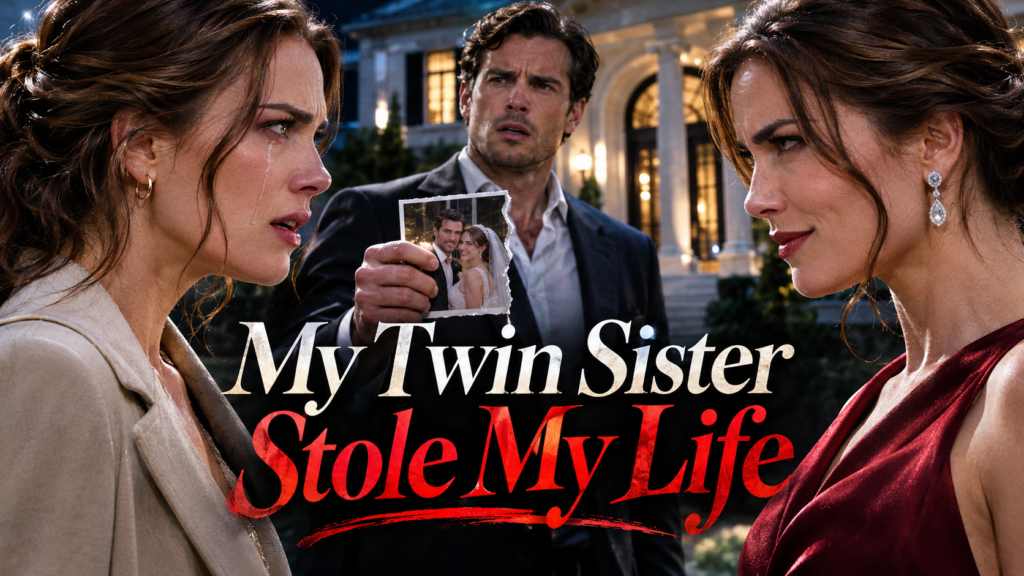
Theo Mercer insisted on meeting in daylight, in public, and without Daniel Vale anywhere nearby. Those conditions would once have sounded melodramatic to Mara. After a night sleeping on June’s couch, they sounded almost ordinary.
The meeting place was a waterfront diner overlooking the harbor. A ferry eased toward the terminal beyond the window, leaving a pale wake in the gray water. Mara chose the booth with a view of the door. June sat beside her. Elise Park, who had rearranged two appointments to come, took the seat opposite.
Theo arrived carrying a battered leather briefcase and a folded newspaper. He was in his late forties, with tired blue eyes and the careful posture of someone who had spent years in rooms where the wrong answer cost money. He checked the exits before setting down his coffee.
“I’m not here to make friends,” he said.
“That’s fortunate,” Elise answered. “We’re here to establish whether your evidence is authentic.”
Theo smiled briefly. “Fair enough.”
He had worked as a risk analyst for Vale Development until April. His job involved evaluating environmental liabilities and contractor payments for large projects. Daniel had fired him after Theo objected to a proposed transfer of waterfront access rights. More specifically, Theo had objected to the name on the transfer documents.
“Mara Bennett-Vale,” Theo said. “The trustee who spent years refusing to sell the mill. Then suddenly her signature appeared on every approval form. It was too convenient.”
“Those forms aren’t mine,” Mara said.
“I know.”
Elise leaned forward. “How?”
Theo opened his briefcase and produced a printed invoice. The vendor name was Eastbank Consulting. The payment description read temporary identity verification services. The amount was forty thousand dollars, with half payable in advance.
“Eastbank is a shell company,” he said. “I found the invoice in the company accounting folder I was assigned to review. I retained the records I was authorized to audit, and the company still has the originals. I’m not claiming I can access their systems now.”
“Who’s behind Eastbank?” June asked.
“The account’s registered manager is a woman named Anna Cross. She lived in New Haven until this spring. Then she vanished from that address.”
“Iris,” Mara said.
“That’s my theory. I haven’t got a certified identity record yet.”
He slid the ferry-terminal photograph across the table. The image came not from the terminal’s internal police cameras but from a licensed marina photographer who captured the public boardwalk while documenting waterfront construction. Theo had purchased a legal copy after recognizing Daniel in a contact sheet.
“You can verify the photographer and date,” he told Elise. “I’ll give you the original file metadata and receipt.”
Mara stared at Daniel’s relaxed smile. He had claimed to be at a supplier meeting that day. She remembered because he had missed her grandmother’s memorial luncheon. When she complained, he had brought flowers and explained that the contract kept everyone at the firm employed.
“Why send this anonymously?” she asked.
“Because I didn’t know whether you’d believe me. And because I’m afraid of the person behind Daniel.”
“Who?”
Theo’s gaze moved toward the harbor. “Victor Shaw.”
Mara knew the name. Shaw was a developer who had spent the last decade buying neglected industrial properties throughout Connecticut. His public speeches celebrated revitalization. His projects typically replaced old neighborhoods with luxury glass towers, private parking decks, and commercial plazas where local businesses could no longer afford the rent.
Daniel had told Mara he was negotiating with Shaw but had promised the Harbor Ridge mill was protected.
“Shaw’s lender wants the riverfront access parcel clear of trust restrictions,” Theo explained. “Without it, the development financing doesn’t close. Daniel has leveraged nearly everything he owns, including his shares in Vale Development, against that financing. If the deal fails, he could lose his company.”
“So he hired my sister to sign it.”
“That’s what the invoice suggests.”
June shook her head. “But why take Mara’s whole life? Why not sign one document and disappear?”
Theo opened another folder. Inside was a draft contract bearing the title RESIDENTIAL IDENTITY VERIFICATION AND PERSONAL SUPPORT.
The language was vague, but one clause specified that the contractor would occupy the principal residence and maintain the public appearance of the named trustee for at least thirty days after closing.
Mara felt sick. “He planned for her to live with him.”
“He planned for the transaction not to be challenged immediately,” Theo said. “Those aren’t necessarily the same thing.”
“They were married,” Mara said, looking at the photograph. “Or pretending to be.”
Elise laid one hand over the contract. “We need the original communications that explain the arrangement. We also need to stop the closing. Theo, will you give a formal statement and preserve everything in its original form?”
“Yes. I want the court to see the truth.”
“Then we’ll proceed carefully.”
Mara asked Theo what had happened to Anna Cross after the invoice. He said a forwarding address led to a rented office in Southport, but no business operated there now. A caretaker had reported seeing two women with the same face coming and going at different times. Theo hadn’t believed it until he learned Mara had an estranged twin.
He knew too much about her family. Mara told him so.
“I know the parts Daniel paid someone to research,” he admitted. “Your grandmother’s trust, your old medical records, your sister’s history. It wasn’t all company business.”
“Show me the history.”
Theo hesitated, then gave her a slim envelope.
Inside was a photocopy of a newspaper clipping from 2007: **FIRE DESTROYS BENNETT FAMILY HOME; MOTHER DIES IN EARLY-MORNING BLAZE.** A second page contained a handwritten note from someone who had interviewed a neighbor. It claimed Iris had been seen running from the rear door moments before the fire spread.
Mara pushed it away.
“That’s a lie.”
“I’m not saying it’s true.”
“I know what happened. Our mother was in the upstairs bedroom. Iris was trapped in the pantry. I broke the window and pulled her out. The firefighters couldn’t reach our mother.”
“Did the police determine the cause?” Elise asked.
“Faulty wiring. That’s what my father told everyone.”
The old memory arrived as fragments. Smoke folding along the ceiling. Iris banging on glass. Mara’s wrist opening against a broken pane. A man’s shadow near the cellar stairs. For years she had told herself that the last image was the shape of her father moving through the fire.
Her father had denied being home that night. He said he was working an overnight shift at the mill.
“I haven’t thought about that shadow in years,” she said.
Theo looked at her sharply. “What shadow?”
“Someone was near the back stairs. I was sure it was Dad.”
“Your father signed a land option with Shaw’s father two weeks before the fire. The option was later canceled.”
Mara went cold. Her father had died six years ago, taking most of his explanations with him. She had spent her adult life believing that protecting the mill was her grandmother’s tribute to their lost family. Perhaps Evelyn had known something the rest of them didn’t.
“You think the fire is connected to the development?”
“I think Shaw is interested in more than one piece of land. Whether that has anything to do with a fire eighteen years ago, I can’t tell you.”
Elise closed the folder. “We don’t jump ahead. The impersonation is provable now. The fire is an unresolved historical question.”
Mara nodded. She was grateful for the boundary, even if she hated it.
After the meeting, June wanted Mara to come straight back to the apartment. Mara asked for one stop: the boarded-up Bennett family house on the north side of Bellwether. The foundation had remained after the fire, and a small caretaker’s cottage beside it held boxes of papers Evelyn had been too stubborn to throw away.
“The place is locked,” June reminded her.
“I have the cottage key. I never put it on my house key ring.”
“Why not?”
“I didn’t like going there.”
They drove past manicured streets and new shopping developments until the landscape turned to untended hedges and rusted fences. The old lot waited beneath a canopy of maples. Ivy climbed through a collapsed porch, and the black outline of the chimney rose against the afternoon sky.
The cottage smelled of wood polish and cold stone. Dust covered the furniture. Mara opened the shutters and followed a narrow corridor to a metal filing cabinet. Inside were bank statements, recipes, family photographs, and handwritten letters tied with ribbons.
She found a picture of herself and Iris at age twelve, holding a birthday cake. Their mother stood behind them, smiling with both hands on their shoulders. Iris’s smile was wider, but Mara remembered that Iris had cried that night because their mother praised Mara’s piano performance.
“We used to know each other’s thoughts,” Mara said.
June studied the photograph. “You knew each other’s expressions. That’s not the same.”
Mara lifted the next bundle. On top lay a letter from Evelyn addressed to her and Iris together. The envelope had never been opened.
She broke the yellowed seal with trembling hands.
*My girls, if you find yourselves on opposite sides of a door, remember that the person who built the door has something to gain from keeping you apart.*
Mara read the line three times.
The rest of the letter was less poetic. Evelyn wrote that the twins had been told different stories about their mother’s death and that she regretted allowing the division to harden into silence. She urged both girls to read an archived account kept at the mill’s records annex, under reference B-17.
“Why didn’t she tell me?” Mara whispered.
June touched her shoulder. “Maybe she tried.”
At the bottom of the letter Evelyn had added a date: October 2019, two years before she died. A notation identified a sealed envelope in the annex and warned that duplicate keys had been distributed to the trust’s independent administrators.
Mara folded the letter into her bag. She had been angry with Iris for fourteen years, but the letter suggested that someone had helped create that distance.
The cottage door slammed downstairs.
June froze.
“Wind?” she whispered.
Mara listened. A floorboard creaked in the front hall. Then another. Heavy footsteps, not the small irregular tapping of a loose shutter.
“Stay behind me,” June said, grabbing the cast-iron doorstop.
A man’s voice called, “Mrs. Vale? I know you’re in here.”
Mara backed toward the rear window. “Who are you?”
“Someone who wants that envelope.”
June’s hand tightened on the iron. Mara saw that the rear window opened onto a garden path and that her own car wasn’t in the driveway. They had taken June’s Subaru. Whoever had arrived could have blocked the narrow exit.
“The police know we’re here,” Mara lied.
“Then they should get here fast.”
The footsteps came up the stairs. Mara pushed the window open, stepped onto the low roof of the wood shed, and helped June climb through. Together they dropped into wet leaves and ran toward the overgrown orchard behind the property.
A figure appeared at the upstairs window. He wore a dark cap and held a phone, not a weapon. Mara saw him photograph the ground where they had landed.
June didn’t stop until they reached the back fence. They scrambled over a fallen section and emerged on the neighboring road, breathless and streaked with mud.
“Call Elise,” Mara said.
June pulled out her phone. “What do we tell her?”
Mara looked back at the chimney, a black finger against the trees.
“That someone else knows about Evelyn’s letter.”
Her own phone had been stolen, her husband had lied, and her sister was wearing her wedding ring. But now the secret was older than all of them.
A message appeared on June’s screen before she could dial. It came from Mara’s familiar number, the one Iris had taken over.
**The past burned once, Mara. Don’t make it burn again.**
Below it was a photograph, taken only minutes earlier, of June’s silver Subaru parked in front of the cottage.