Chapter 8 – The Second Reception
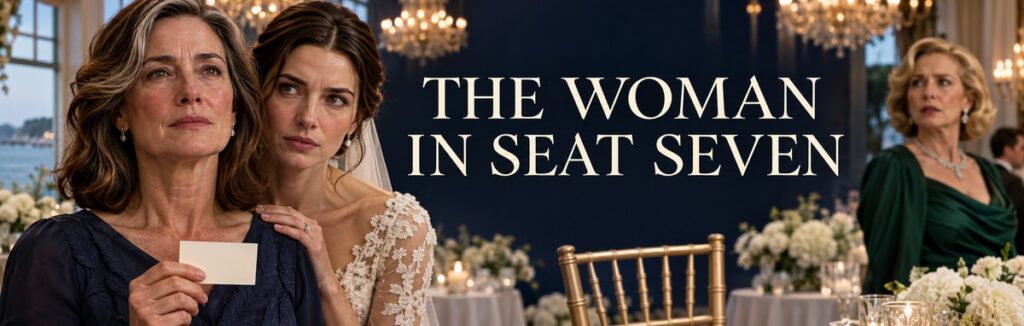
Vivian’s hand struck Tessa’s cheek with a sound Ethan recognized before he saw it.
He stepped forward immediately, placing his body between them. Tessa backed against the audiovisual console. On the screen behind her, the first frame of the wedding recording waited to play.
“Delete it,” Vivian said.
Ethan held one hand out, palm open, keeping distance between his mother and his sister. “You don’t touch her again.”
Tessa’s eyes filled, but she did not reach for the keyboard.
“I kept the whole video,” she said.
The technician had already signaled hotel security. Guests near the entrance stopped moving. For the second time in a month, Vivian’s anger had made a room full of people remember that wealth did not make violence less visible.
Nora reached Tessa before anyone began explaining. She asked whether she wanted to sit, whether she needed ice, whether she wanted to leave. She did not ask whether the presentation should continue. A young woman had been hit. The rest could wait.
Tessa pressed a trembling hand to her face. “Don’t let her take the card.”
“It’s secure,” Ethan said. “And there are preserved copies.”
Vivian turned toward the arriving security manager. “This is a family matter.”
He glanced at Tessa, then back at Vivian. “Please come with me.”
“Do you know who I am?”
“Yes, ma’am. We need some space.”
He did not drag her away or stage a spectacle. He asked her to move to the lobby with another employee present while the incident was documented. She obeyed only after the independent board chair, Elaine Porter, joined them and made clear that the event would not proceed under threat.
Thomas stood near the bar, looking at the darkened presentation screen. Nora saw him reach for his phone.
Tessa sat in a side room with Claire. Ethan remained at the door. The position would once have looked familiar: women absorbing the damage while men managed the explanation. This time Tessa decided what happened next.
“I want to report it,” she said. “And I don’t want her coming in here.”
Ethan nodded. The appropriate calls were made. A staff member brought ice, and Tessa accepted it without apologizing for causing trouble.
Nora stayed beside her until her breathing settled.
“You don’t have to stay for the dinner,” she said.
“I know.”
“You don’t have to prove anything by watching that screen.”
Tessa looked at the doorway. “I want to. But I want to sit with you.”
Nora took her hand. “Then you will.”
The program began nearly forty minutes late. Elaine addressed the guests briefly. She acknowledged that an incident had occurred, that staff were responding, and that anyone who preferred to leave could do so. The employee fundraiser would continue, but the planned correction to the public record would come first, with the consent of those involved.
No one was asked to donate as proof of loyalty. No legal settlement was announced. Nora had insisted on both points when the program was planned.
The ballroom looked almost exactly as it had on the wedding day. White flowers stood beneath amber chandeliers. Waiters moved between tables with practiced care. There was no wedding cake, but Nora still found herself looking toward the place it had occupied.
Table seven was near the center of the room.
Claire had asked the organizers to seat them there. Nora had agreed after a long silence. Avoiding the table forever would have allowed Vivian to keep a small piece of the room.
Beside Nora sat Tessa. Claire and Ethan were across from them. An empty chair held a photograph of Daniel in his work clothes, smiling into sunlight outside the unfinished hotel.
Elaine introduced Nora without embellishment. She described her as a founding participant whose continuing rights were the subject of legal proceedings and whose treatment at the wedding had been misrepresented in a widely shared clip. She made clear that the court would resolve the disputed legal questions.
Then Nora walked to the microphone.
She had written three pages and brought one. In the end, she barely looked at it.
“When my daughter was married in this room,” she began, “she saved a chair for her father. That was the reason for the empty seat. I was not trying to interrupt the wedding. I was trying to keep his name where she had put it.”
She paused. The room stayed quiet.
“Some of you saw a short video afterward. It left out what happened before I raised my hand. With my permission, and with the permission of the person who recorded it, you will see the relevant sequence in its original order.”
Thomas stepped toward the aisle. “There are ongoing proceedings,” he said loudly. “This is highly inappropriate.”
Elaine moved beside the stage. “The material has been reviewed for this presentation. You may direct your concerns through counsel.”
“You’re prejudicing—”
“You may leave if you wish.”
He stopped. Nora could see him calculating the cost of walking out while everyone watched.
The screen lit.
There was Nora, younger by only a few weeks and apparently older by years. There was Thomas with the binder. His request to sign before the toast filled the ballroom through the speakers.
Nora heard her own recorded voice: “I want to read the other pages.”
Vivian entered the frame. “Do this for Claire. Don’t embarrass your daughter over paperwork.”
A woman at the next table lowered her glass.
The recording continued. Vivian took the memorial card. Nora reached for it. The slap followed. Then Claire entered and crossed the room, gathering her dress, kneeling for the fallen card.
The edited clip had ended before that part. Here, everyone watched the bride put her father’s place back at the table.
When the screen went dark, nobody applauded. Nora was grateful. She did not want applause for surviving something that should never have happened.
“There are financial questions being examined,” she said. “They will be answered with records. I have also disclosed a document I signed years ago that I should have questioned and should not have certified as I did. I won’t ask you to trust a version of me with the difficult parts removed.”
Claire looked up at her.
“But my mistakes do not make someone else’s violence acceptable. They do not make an edited accusation true. And they do not erase the work my husband and many people in this room put into this hotel.”
Nora turned slightly toward the staff standing along the wall.
“Daniel knew this place existed because people worked here. He would have wanted their names remembered too.”
She returned to her seat without announcing that she owned the building, controlled the company, or had defeated anyone. Her hands were shaking so badly that Tessa quietly moved a water glass toward her.
In the lobby, Vivian had watched the presentation on a monitor used by event staff. After the immediate response to the incident, she had been asked to leave the premises. Her attorney had spoken with the appropriate people, and she was waiting for her car under supervision when Nora came out with Claire.
“You enjoyed that,” Vivian said.
Nora stopped several feet away. Claire remained beside her. A staff member stood within hearing distance.
“No.”
“You always wanted people to think you were better than us.”
Nora looked at the woman who had once called her a friend during the hotel’s first difficult summer. Vivian had brought sandwiches to the construction site. Nora had watched Ethan as a toddler while Vivian handled a supplier crisis. Their lives had not begun with cruelty. That made what followed more painful, not less real.
“I wanted you to stop,” Nora said.
Vivian’s face twisted. “I kept that place alive. Charles had ideas. Daniel had his projects. You had land you inherited. I kept the rooms filled. I negotiated with people who wouldn’t look at me unless I made them.”
“You worked hard.”
The acknowledgment unsettled Vivian more than an insult would have.
“And when Daniel died,” she continued, “everything could have collapsed. Thomas said there was a way to manage the money until things stabilized.”
Nora felt Claire’s hand tighten around her arm.
“You knew there was money.”
Vivian looked away.
“I knew there were accounts. I knew you were getting help.”
“You knew it came from something that belonged to me.”
A car rolled beneath the entrance canopy. Its headlights swept across the floor.
“You don’t know what it costs to keep a family safe,” Vivian said.
Nora thought of selling Daniel’s truck. Of delaying dental work. Of sewing until dawn so Claire could attend a program her teachers recommended.
“I do,” she said. “I know exactly what it costs. That’s why you should have let me choose what to do with my own money.”
Vivian opened her mouth, then closed it. For once, she had no audience willing to help turn the sentence into something else.
Nora did not pursue a confession. She did not block the car. She later made a careful note of the exchange and gave it to Maya, allowing the lawyers to decide what relevance it had. The more important records were already being obtained through the process Vivian could no longer control.
Inside, Ethan was speaking with Thomas near the coat check. Their conversation was quiet until Thomas said, “Your father signed off on those arrangements.”
Ethan’s face went pale.
“Then provide the records.”
“You’re prepared to destroy his reputation?”
“I’m prepared to know what he did.”
Thomas looked toward Nora as though she had taught the entire room a dangerous new language. Then he took his coat and left.
The dinner resumed in a subdued way. People ate because meals had been prepared and staff still had work to finish. The employee fund received donations, though no one treated the amount as a verdict on the dispute.
Marisol had been invited as one of the residents’ representatives. She sat beside Luis, wearing a dress Nora had altered that week. When the main course arrived, she looked toward the kitchen doors before picking up her fork.
“Hard to be on this side?” Nora asked.
“I keep counting how many plates are left to come out.”
They smiled. Luis offered to switch seats so she could not see the service station. Marisol shook her head and began to eat.
Across the room, a donor complained that the program had been uncomfortable. Nora heard the word and looked at the people around her table. Some had spent years making comfort for strangers while worrying about their own homes. She let the donor’s complaint pass without rescuing him from it. For one evening, discomfort had found someone with room to carry it.
Several guests approached Nora to apologize for sharing the edited clip. Some apologized clearly. Others explained how easily they had been misled. Nora thanked the first group and listened briefly to the second. She did not have to make everyone comfortable before going home.
Dawn came to the table near the end of the evening.
“My father couldn’t come,” she said. “He sent this.”
She handed Nora a small photograph of the old cottages. On the back, in uneven writing, were the names of the families who had lived there.
Nora read them slowly. “We’ll keep these.”
“He thought somebody should.”
After the guests left, Claire walked onto the empty dance floor. Ethan followed only when she held out her hand. There was no band playing. The staff were gathering linens, and a vacuum started near the far wall.
They moved together anyway.
Nora watched from table seven. Tessa sat beside her with ice against her cheek and a blanket around her shoulders. She had given her statement and would leave with a friend. She looked exhausted, relieved, and younger than she had all month.
“Do you think they’ll be okay?” she asked, nodding toward her brother.
Nora watched Ethan listen as Claire said something close to his ear.
“I think they’re finally asking the right questions.”
Her phone vibrated. It was a message from Maya: the records custodian had located an earlier version of the purported transfer document. The version in Thomas’s production appeared to contain a signature image copied from a different page. A specialist would need to examine the originals and electronic history before anyone drew final conclusions.
Nora read the message twice. The case had moved beyond what people remembered and into what somebody might have altered.
She put the phone away for a moment and looked at Daniel’s photograph.
The empty chair beside it no longer felt like a place from which they had been expelled. It was a place they had returned to, carrying the whole truth they could bear, with more still waiting to be found.