Chapter 2 – The Woman in the Photograph
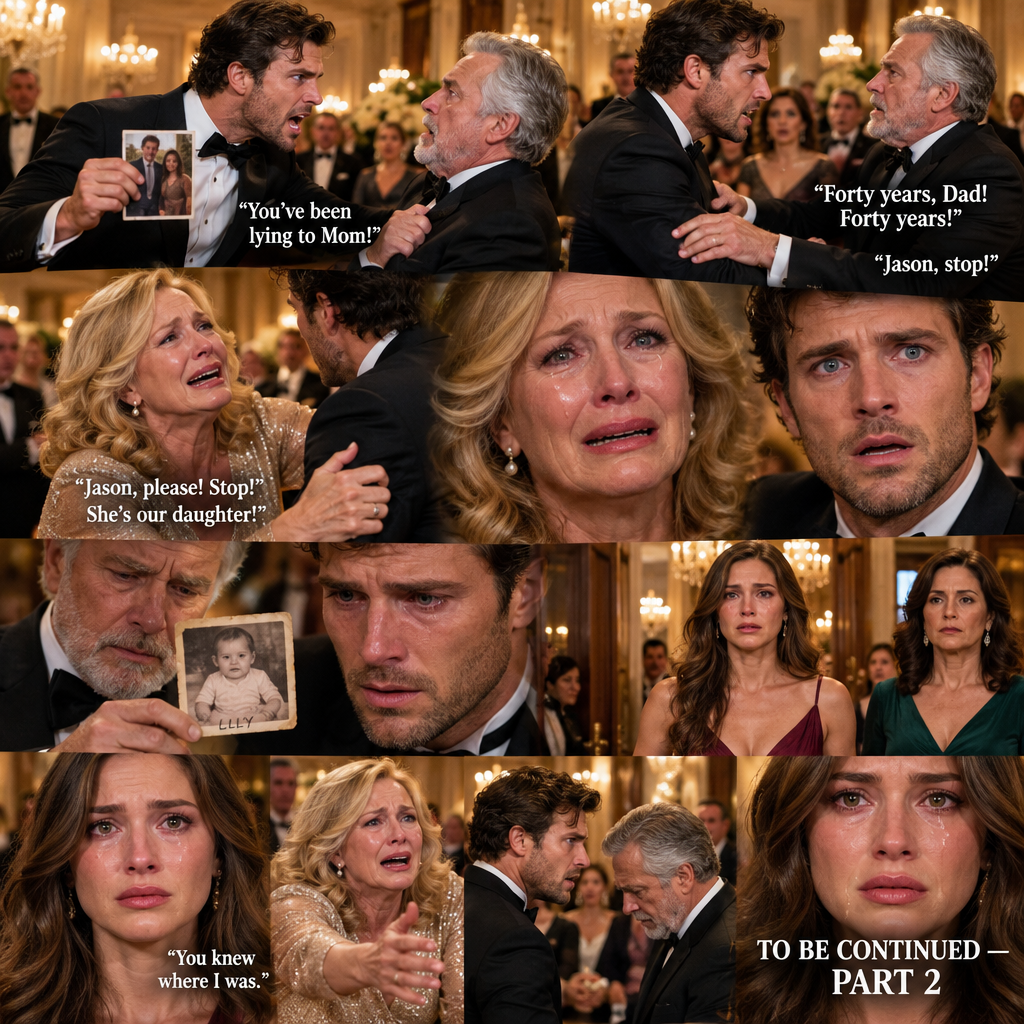
Morning did not make the previous night seem reasonable. Jason woke with the sensation of still holding his father’s jacket, his fingers stiff around an imaginary lapel. On his phone, messages from relatives accumulated faster than he could read them.
Some demanded an apology. Others wanted gossip. None asked the question that had kept him awake: who had sent the photograph, and why had the sender chosen the anniversary?
Jason turned the phone facedown and drove to the hotel. The family had left behind a room full of flowers, a damaged celebration, and a daughter nobody had known existed.
Jason had expected the hotel service corridor to feel different. Instead, the ordinary world continued its ordinary work while an old secret pressed against the present. The sight of the photograph of Richard and Margaret made it difficult to pretend that the next few minutes would pass without consequence.
Even the light seemed indifferent, falling across the scene as though no one had anything to lose.
“Tell me what happened that night.” Jason heard the sentence land and wished, for one brief second, that it could be pulled back and said differently.
But it was the right question, or the nearest thing to one. Nobody moved to rescue the conversation with a joke. Nobody offered a convenient explanation.
The room seemed to be waiting for an answer that would cost something.
What made the moment unbearable was not merely the discovery itself. It was this: the picture was taken only three weeks earlier. That fact changed the meaning of conversations that had once seemed harmless.
Ordinary holidays, photographs, birthdays, and small family arguments suddenly belonged to a larger story. Jason wondered how many people had noticed the gaps and mistaken them for privacy.
And then Richard says he was meeting someone who could find Lily. It was not an ending. It was the sort of moment that divided a day into before and after, even when the people living through it had not yet found the words to explain why.
There would be time for blame later; for now, they had to decide what to do with what they knew.
For a while Richard said nothing at a quiet hotel office. Silence could be useful when it gave someone room to think, but it could also become a hiding place. A handwritten list of dates sat at the center of the moment, a reminder that evidence did not speak for itself.
Somebody had to explain where it came from, who had touched it, and why the explanation had taken so long.
“I met Margaret because she had a lead,” Richard said, keeping the voice steady with an effort that would have been invisible to a stranger.
A few seconds passed. It was astonishing how much could happen in that interval: suspicion could become certainty, affection could turn defensive, and an old memory could suddenly acquire a new meaning.
It would have been easier to treat the matter as a misunderstanding, but he fears that a true explanation will sound like an excuse. The distinction mattered. Misunderstandings could sometimes be corrected by finding the right words.
Decisions required accountability. Even those made in fear left marks on people who had never been allowed to participate in them.
The next step came almost quietly: Jason demands proof. Richard understood that trust was not something a person could demand as payment for telling the truth. It would have to be earned through the unremarkable work of returning, answering questions, and allowing another person to say no.
There were times when the hotel office doorway seemed to contain two different lives: the one people showed each other and the one they carried privately. Margaret felt that division keenly while looking at a folded receipt from a private investigator. The past was no longer a story told at a safe distance.
It had become a question with a living person on the other side of it.
“I did not come here to protect him.” The sentence surprised even Margaret.
It had been forming for a long time, behind polite greetings and practical questions, and now it stood in the open. There was no way to soften it without making it less true. The silence afterward felt less like refusal than the beginning of a difficult reckoning.
What made the moment unbearable was not merely the discovery itself. It was this: her work with Richard began years ago. That fact changed the meaning of conversations that had once seemed harmless.
Ordinary holidays, photographs, birthdays, and small family arguments suddenly belonged to a larger story. Margaret wondered how many people had noticed the gaps and mistaken them for privacy.
By the time the conversation shifted, she refuses to give Jason the full file without Lily. Nobody celebrated the small movement forward. They had learned that an answer could open another question, and that getting closer to the truth did not always feel like relief.
Still, something had changed: a thing previously spoken about in whispers had been placed where everyone could see it.
At an empty guest lounge, Lily noticed the kind of details that became memorable only after a terrible day: a faint mark on a tabletop, a draft near a door, the dry sound of paper moving. Then there was a photograph of Eleanor at twenty-six. Whatever happened next, that image would remain, fixed in memory beside the words nobody could take back.
“I knew her face before she knew mine,” Lily said.
The words came out more plainly than intended. There was no dramatic speech waiting behind them, only the hope that someone might finally answer without changing the subject. The reply did not arrive at once.
That hesitation mattered. In a family, people learned to recognize each other’s pauses long before they understood the reasons for them.
It would have been easier to treat the matter as a misunderstanding, but she grew up studying strangers who resembled her. The distinction mattered. Misunderstandings could sometimes be corrected by finding the right words.
Decisions required accountability. Even those made in fear left marks on people who had never been allowed to participate in them.
Before anyone could pretend the exchange had settled matters, she remembers a childhood box of clippings. The consequence was immediate, but its meaning would take longer to understand. Lily held on to one practical thought: whatever came next had to be faced without inventing another comforting lie.
Eleanor had been rehearsing an explanation on the way to a hotel restroom, but rehearsed explanations seldom survived the presence of another human being. The sight of mascara washed away by tears interrupted every tidy sentence. Here was a life that had continued while other people made decisions, kept secrets, or simply failed to ask the next question.
“I thought I was keeping you safe.” Eleanor heard the sentence land and wished, for one brief second, that it could be pulled back and said differently.
But it was the right question, or the nearest thing to one. Nobody moved to rescue the conversation with a joke. Nobody offered a convenient explanation.
The room seemed to be waiting for an answer that would cost something.
What made the moment unbearable was not merely the discovery itself. It was this: she must confront how silence shaped Jason. That fact changed the meaning of conversations that had once seemed harmless.
Ordinary holidays, photographs, birthdays, and small family arguments suddenly belonged to a larger story. Eleanor wondered how many people had noticed the gaps and mistaken them for privacy.
And then Jason says secrecy was not safety. It was not an ending. It was the sort of moment that divided a day into before and after, even when the people living through it had not yet found the words to explain why.
There would be time for blame later; for now, they had to decide what to do with what they knew.
The trouble with a deserted staircase was that it made everything appear orderly from a distance. Up close, nothing was orderly. Jason could hear the small sounds beneath the larger ones: a chair shifting, fabric brushing against a sleeve, somebody drawing a breath and deciding not to speak.
The detail that held the moment together was the photograph enlarged on his phone. It was ordinary enough to overlook, and yet it had become impossible to ignore.
“Who took this picture,” Jason said, keeping the voice steady with an effort that would have been invisible to a stranger.
A few seconds passed. It was astonishing how much could happen in that interval: suspicion could become certainty, affection could turn defensive, and an old memory could suddenly acquire a new meaning.
It would have been easier to treat the matter as a misunderstanding, but he notices a reflection in the window behind Richard. The distinction mattered. Misunderstandings could sometimes be corrected by finding the right words.
Decisions required accountability. Even those made in fear left marks on people who had never been allowed to participate in them.
The next step came almost quietly: the answer points toward a deliberate invitation. Jason understood that trust was not something a person could demand as payment for telling the truth. It would have to be earned through the unremarkable work of returning, answering questions, and allowing another person to say no.
By the time Margaret reached outside the ballroom, the day had acquired the strained quality of a conversation nobody wanted to finish. There was an invitation printed in Lily’s name, stubbornly present among all the things that might have been said instead. It seemed strange that so much history could gather around one small thing.
A person could spend years arranging life around a silence and still be surprised when the silence finally broke.
“I did not send this.” The sentence surprised even Margaret.
It had been forming for a long time, behind polite greetings and practical questions, and now it stood in the open. There was no way to soften it without making it less true. The silence afterward felt less like refusal than the beginning of a difficult reckoning.
What made the moment unbearable was not merely the discovery itself. It was this: someone arranged for Lily to arrive at the anniversary. That fact changed the meaning of conversations that had once seemed harmless.
Ordinary holidays, photographs, birthdays, and small family arguments suddenly belonged to a larger story. Margaret wondered how many people had noticed the gaps and mistaken them for privacy.
By the time the conversation shifted, Lily admits she received it anonymously. Nobody celebrated the small movement forward. They had learned that an answer could open another question, and that getting closer to the truth did not always feel like relief.
Still, something had changed: a thing previously spoken about in whispers had been placed where everyone could see it.
At the parking garage, Richard tried to concentrate on what could actually be seen. There was an old blue file box in his car; there were the faces of people who had their own versions of the same history; and there was the stubborn fact that the versions did not agree. Memory had never been a clean record.
It was a collection of moments made sharper by fear and softer by time.
“I should have shown you this before,” Richard said.
The words came out more plainly than intended. There was no dramatic speech waiting behind them, only the hope that someone might finally answer without changing the subject. The reply did not arrive at once.
That hesitation mattered. In a family, people learned to recognize each other’s pauses long before they understood the reasons for them.
It would have been easier to treat the matter as a misunderstanding, but the file contains years of failed searches. The distinction mattered. Misunderstandings could sometimes be corrected by finding the right words.
Decisions required accountability. Even those made in fear left marks on people who had never been allowed to participate in them.
Before anyone could pretend the exchange had settled matters, Jason opens it and finds a page torn out. The consequence was immediate, but its meaning would take longer to understand. Richard held on to one practical thought: whatever came next had to be faced without inventing another comforting lie.
In the parking garage, Jason held the torn file page against the light. The missing section had been removed cleanly, not lost to age. On the remaining edge, a single word appeared in Richard’s handwriting: Oakridge.
Jason called Lily, then stopped before the phone connected. He had spent the night demanding answers. Now he was beginning to understand that some answers would belong to her first.